When most travelers think of Japan, they picture cherry blossoms in Kyoto, neon lights in Tokyo, or snow monkeys in Nagano. And yes—those are incredible. But beyond the postcard views and packed tourist trails, there’s another Japan. A quieter, deeper, more intimate one.
It’s the Japan where rice farmers wave from terraced fields, where centuries-old tea houses serve matcha without a single Instagram photo being taken, and where quiet mountain villages feel like they’ve stood still for generations.
We asked our local partners—the guides, food makers, and lifelong residents who know every alleyway and secret path—to share their favorite under-the-radar spots. These aren’t just hidden gems; they’re places that capture the soul of Japan.
Here are 10 truly special experiences only locals know about.
1. Tucked-Away Onsen in Kiso Valley (Nagano)
Why it’s special:
Tucked deep in the Japanese Alps, the Kiso Valley is part of the historic Nakasendo trail—a walking route used by merchants and samurai during the Edo period. While many hike the popular Magome-Tsumago section, few continue to Yabuhara, where an old wooden inn called Honjin offers a private onsen with panoramic valley views.
Local tip:
Stay overnight at this family-run ryokan. The owner serves homemade miso soup while sharing stories passed down through generations. No crowds. Just silence, steam, and the sound of the river below.
Best time to visit: Spring (April–May) or autumn (October–November).
2. The Floating Torii of Itsukushima (Miyajima Side Entrance)
Yes, Miyajima is famous—but not like this.
Why it’s special:
Most visitors enter Miyajima Island through the main ferry terminal and head straight to the iconic red torii gate floating in the sea. But locals know to take the back entrance via Omote-sando's lesser-known alleys, where you’ll find smaller shrines, family-run sweet shops selling momiji manju (maple-shaped cakes), and a quiet forest path leading to Daisho-in Temple at sunset.
Local tip:
Go early morning or late afternoon to avoid crowds. Walk past the main shrine and follow the stone steps up Mount Misen’s lower trails—you’ll have the peaceful woods almost entirely to yourself.
Best time to visit: Weekday mornings in spring or fall.
3. Sado Island’s Satoyama Cycling Route (Niigata)
Why it’s special:
Sado Island, off the west coast of Honshu, was once home to exiled poets and gold miners. Today, it’s a haven for artists and nature lovers. Skip the well-trodden gold mine tour and rent a bike to explore satoyama countryside roads—gentle paths winding between rice paddies, bamboo groves, and traditional farmhouses.
Local tip:
Stop at Kunimi Coffee Farm, run by a former city worker who moved here to grow beans using organic methods. Enjoy your brew with a view of the Sea of Japan—and maybe spot dolphins offshore.
Best time to visit: May–June (rice planting season) or September (harvest light).
4. Ouchi-juku: Step Back in Time (Fukushima)
Why it’s special:
This preserved Edo-era village feels like stepping onto a movie set—except it’s real. With no vending machines or modern signs in sight, Ouchi-juku has kept its thatched-roof buildings intact since the 17th century. It served as a rest stop for travelers crossing the mountains, and today, it’s beloved by locals seeking nostalgic charm.
Local tip:
Try wappa meshi, a regional specialty: hot rice served in a wooden box with pickled vegetables and grilled fish. Eat it at one of the tiny roadside stalls—it’s humble, delicious, and deeply comforting.
Best time to visit: Winter (January–February), when snow blankets the roofs and the village hosts a magical lantern festival.
5. The Secret Tea Fields of Wazuka (Kyoto Prefecture)
Why it’s special:
While tourists flock to Nishiki Market, true tea lovers head to Wazuka, a small town south of Kyoto known for producing some of Japan’s finest tencha (the raw leaf used in matcha). Most tea farms don’t advertise, but we partnered with a fourth-generation farmer who welcomes small groups for private tea-picking tours followed by a tasting in his home.
Local tip:
After picking leaves together, sit cross-legged on tatami mats as he whisks fresh matcha right in front of you. You won’t taste anything quite so vibrant—not even in Uji.
Best time to visit: Late April–early May (first harvest) or October (autumn flush).
6. Iya Valley’s Vine Bridges (Tokushima, Shikoku)
Why it’s special:
On remote Shikoku Island lies the Iya Valley, a dramatic gorge carved by emerald rivers and connected by two swaying vine bridges (kazurabashi). Built centuries ago for protection, these bridges now offer one of Japan’s most thrilling—and peaceful—adventures.
Local tip:
Stay at a secluded minshuku (family guesthouse) near Oboke Gorge. Your host might invite you to join them cooking dango-jiru, a hearty dumpling soup made with wild herbs gathered from nearby hills.
Best time to visit: Autumn (for foliage) or summer (to cool off by the river).
7. Tottori Sand Dunes’ Sunrise Meditation (Tottori)
Why it’s special:
Japan’s only major sand dune system stretches along the Sea of Japan coast—and yet it rarely feels crowded. Most visitors come midday, but locals rise before dawn to walk barefoot across the cool sands as the sun peeks over the horizon.
Local tip:
Join a silent sunrise meditation session hosted by a local guide trained in Zen practices. Afterwards, warm up with soba cha (buckwheat tea) and handmade yaki-manju (grilled buns) from a beachside stall.
Best time to visit: March–May or September–November.
8. Kanazawa’s Ninja District Backstreets (Ishikawa)
Why it’s special:
Everyone visits Kenrokuen Garden and the gold-leaf workshops in Kanazawa. But fewer explore the maze-like lanes behind Nagamachi, the former samurai district. Here, tucked between preserved homes, are centuries-old teahouses open only to regulars—or those introduced by a local.
Local tip:
Ask your guide to take you to Kiku-matsuri, a tiny seasonal tea house that opens just three weeks each spring. They serve delicate hanami dango (cherry blossom dumplings) and locally brewed sake beneath blooming trees.
Best time to visit: Early April (cherry blossom season).
9. Yakushima Island’s Mossy Forest Trails (Kagoshima)
Why it’s special:
Made famous by Studio Ghibli’s Princess Mononoke, Yakushima is covered in ancient cedar forests and draped in emerald moss. While many hike the main trail to Jomonsugi—the oldest tree on the island—locals prefer quieter routes like Shiratani Unsuikyo Ravine, where wooden boardwalks float above carpets of green.
Local tip:
Visit after rain, when the forest comes alive. Mist hangs low, waterfalls swell, and the air smells rich with earth and pine. Bring a waterproof jacket—and your camera.
Best time to visit: June–July (lush greenery) or October–December (fewer crowds).
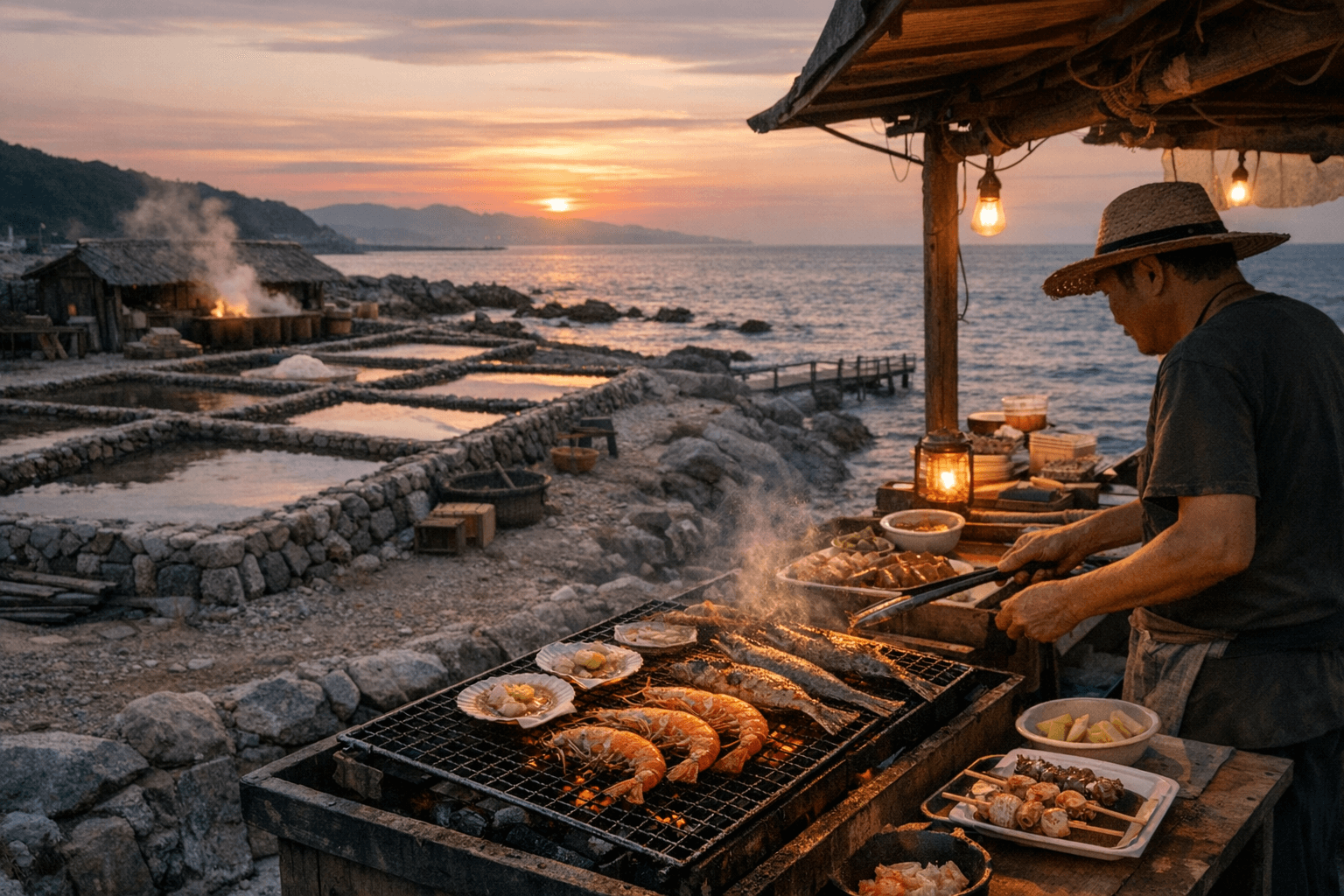
10. Awaji Island’s Salt Farms & Seafood Stalls (Hyogo)
Why it’s special:
Between Osaka and Kobe, Awaji Island sits quietly in the Seto Inland Sea. It’s known for onions, but locals swear by its forgotten coastline, where families still hand-harvest sea salt using traditional agehama techniques.
Local tip:
Book a short workshop with a salt farmer, then head to Tsukumi Beach, where fishermen grill freshly caught squid, oysters, and sea urchin over open flames. Eat seaside, toes in the sand, with nothing but the sound of waves around you.
Best time to visit: Summer evenings (July–August) for seafood grills.
Final Thoughts: Travel Like a Local
Japan rewards curiosity. The deeper you go beyond the highlights, the more you discover—not just beautiful places, but meaningful moments shared with people who call these places home.
At VistaVoyage, we partner only with verified local operators who love their regions and want to show them authentically. Whether it’s sipping matcha in Wazuka or watching the sunrise over Tottori’s dunes, these experiences aren’t staged. They’re lived.
So next time you visit Japan, skip the selfie sticks. Ask a question. Take a back road. Say “yes” to the invitation you weren’t expecting.
Because sometimes, the best memories begin exactly where the map ends.
Ready to explore Japan like a local?
👉 Browse Our Handpicked Experiences in Japan
💬 Questions? Our travel specialists are here to help—just reach out.