
Some links in this article may earn ToursZoom a commission at no extra cost to you — see our affiliate disclosure.
Last updated: April 2026
For first-time cruisers, the Seine is one of the most forgiving river routes in Europe: a single country, a compact itinerary, manageable ship sizes, and ports close enough to walk from the dock. The main decisions are trip length, time of year, and which excursions to prioritize — this guide covers all three.
- Why the Seine Works Well for First-Timers
- Types of Seine Cruise: Know the Difference
- What to Expect Day by Day
- The Experiences First-Timers Remember Most
- Practical Tips Before You Go
- Common First-Timer Mistakes (and How to Avoid Them)
- Frequently Asked Questions
Why the Seine Works Well for First-Timers
River cruising has a learning curve that most people do not anticipate. Everything is more intimate than ocean cruising: the ships are small, the cabins are compact, the group is tight. If that sounds appealing, great. If it sounds claustrophobic, you want to know before you book.
The Seine route is a particularly good first test because the scale is human. Ships carry 100 to 190 passengers — you will know most people’s faces by day two. The ports are small enough to walk independently; you are never dropped into a bewildering megacity without support. The whole cruise stays in France, which means one currency, one language to navigate, and a cuisine that runs consistently from Paris to Honfleur. There are no dramatic sea crossings, no turbulence — the Seine is calm, and the motion at night is nearly imperceptible.
The other factor: the Seine is genuinely beautiful and historically dense. Even a traveler who has been to Paris before will find new perspectives sailing the river. Normandy — the D-Day coast, the Impressionist landscapes, the medieval towns — is not well served by any other form of travel. A river cruise is one of the few ways to see this region without a rental car.
Types of Seine Cruise: Know the Difference
Before booking, it helps to distinguish between two different types of “Seine River cruise.” They share a name but deliver entirely different experiences:
Short Paris sightseeing cruises (1–3 hours)
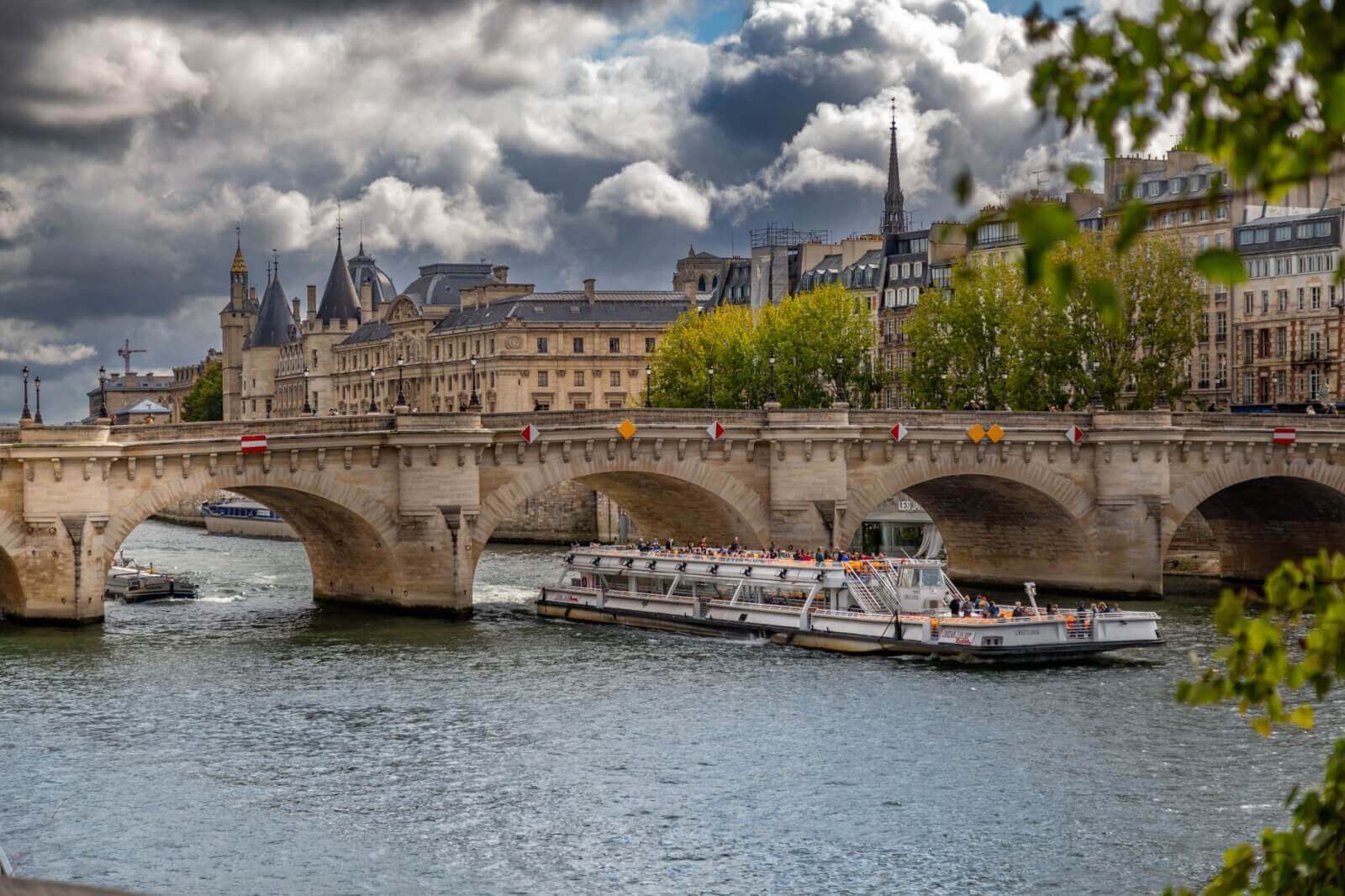
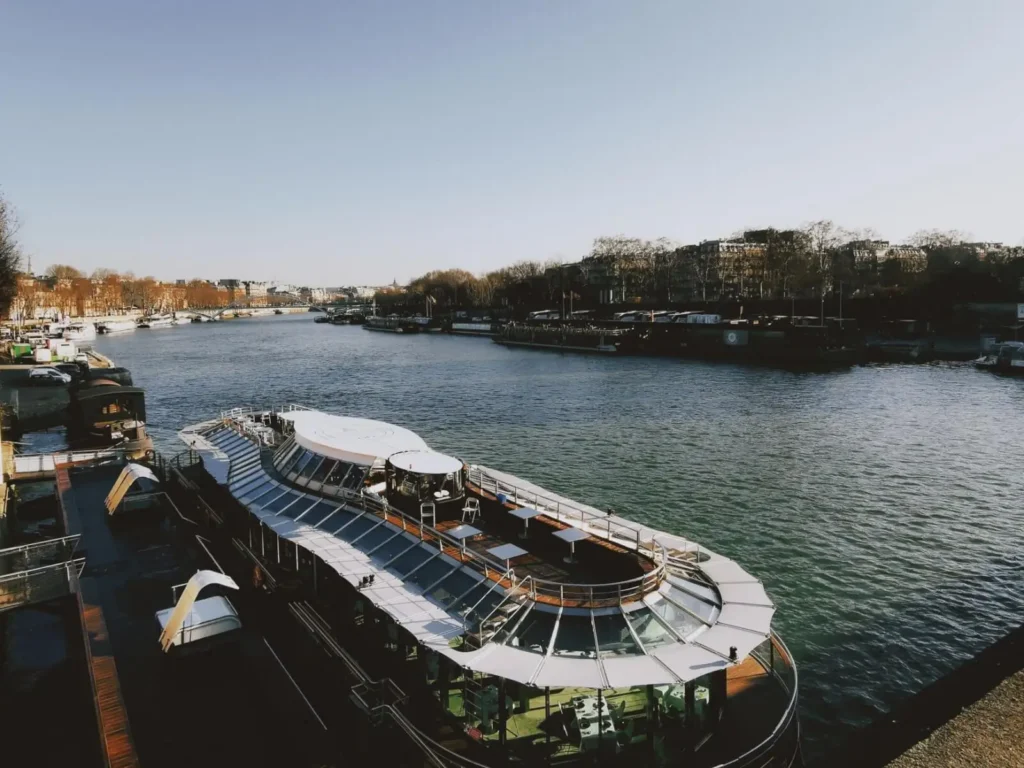
These are the glass-topped boats — Bateaux Mouches, Bateaux Parisiens, and similar operators — that depart from the Eiffel Tower or Pont de l’Alma and circuit the central Paris waterfront. Short sightseeing cruises run about an hour; lunch cruises 1.5 to 2 hours; dinner cruises 2 to 2.5 hours. These are excellent ways to see Paris from the water and work well as a standalone activity, but they do not go to Normandy. The ship stays within the city limits.
Multi-day river cruises (7–11 nights)
These are the expedition-style river cruise ships that sail the full length of the Seine from Paris to the Normandy coast and back. Passengers sleep on board, meals are included, and the ship docks at different ports each day. These are the itineraries that visit Giverny, Rouen, Les Andelys, Caudebec, and Le Havre. If you want to see Normandy, this is the format you need.
Both are valid; just know which one you are booking.
What to Expect Day by Day
The rhythm of a multi-day Seine cruise settles quickly into a routine that most first-timers find genuinely comfortable.
Mornings: Breakfast is served on board, usually from around 7:00 or 7:30 am. The ship either docks at the day’s port overnight (so you wake up there) or arrives in the morning. Shore time typically begins mid-morning. Many passengers take the included or optional guided excursion; others walk off independently to explore on their own timetable.
Afternoons: Most ports offer four to six hours ashore. Larger stops like Rouen reward the full afternoon; smaller ones like Caudebec-en-Caux can be covered in a couple of hours. The ship’s upper sundeck is open when weather permits — sailing between ports in the afternoon, with Normandy farmland or chalk cliffs going past, is one of the pleasures of the route that travelers do not expect to enjoy as much as they do.
Evenings: Dinner on board is a social event. Tables are typically arranged for four to eight passengers, and conversations cross easily. After dinner, some travelers head back ashore if the ship is still docked; others stay on board for a drink and an early night. Sailings between ports occasionally happen overnight.
Cabins: River cruise cabins are smaller than hotel rooms. The category you book matters — a French balcony (floor-to-ceiling sliding glass doors that open inward slightly rather than an outdoor balcony) adds natural light and air. First-timers often find standard cabins perfectly adequate for the amount of time spent in them; you are rarely in the cabin except to sleep.
The Experiences First-Timers Remember Most
Giverny in bloom
Claude Monet’s garden at Giverny, reached by a short transfer from Vernon, is the single most-cited highlight by first-time Seine cruisers. The water-lily pond, the Japanese bridge, the cottage garden explosion of color — it is more vivid and more tended than most people expect. Visit in May or early June for peak bloom. Book your excursion early; spots fill quickly.
Sailing under the Normandy Bridge
The Pont de Normandie is a cable-stayed bridge spanning the Seine estuary near Le Havre, completed in 1995. When your ship passes underneath it — the deck just clears the waterline clearance — it is a quietly dramatic moment. It marks the transition from the inland river to the coastal estuary, and the light and landscape change noticeably on the other side.
The D-Day beaches
For many travelers, this is the emotionally heaviest part of the trip and the most memorable. Omaha Beach, Pointe du Hoc, and the Normandy American Cemetery at Colleville-sur-Mer are approximately 45 to 60 minutes by road from Le Havre. The site is quieter than many visitors expect, which gives it weight. The rows of white crosses at the American Cemetery, set on a bluff above the beach, are not something you forget. Allow a full day; half a day is not enough.
Rouen at dusk
Ships usually moor in Rouen for a full day and overnight. Walking the old center in the evening — after the tour groups have left and the restaurants have opened — gives a different Rouen from the daytime. The cathedral facade is lit up after dark. The narrow medieval streets around Rue Damiette, lined with antique shops and timbered houses, are quieter and more atmospheric at 8:00 pm than they are at noon.
Honfleur harbor
Honfleur is compact, photogenic, and good for wandering without a plan. The old harbor (Vieux-Bassin) is ringed by tall, narrow houses from the seventeenth century, most painted in muted creams and grays. Seafood restaurants line the quay. It takes about an hour to walk the main streets and another hour to eat a proper lunch. That leaves time, if the itinerary allows, to visit the Boudin Museum or the wooden Sainte-Catherine church — the largest timber-framed church in France, built by shipwrights after the Hundred Years’ War using boatbuilding techniques.
Practical Tips Before You Go
- Book excursions early. Popular slots — especially Giverny and D-Day — sell out weeks before departure. Most cruise lines open excursion booking when final payment clears. Log in and reserve as soon as that window opens.
- Pack for the upper deck. Even in June, an evening on the open sundeck can be 10–12 degrees C. A light down jacket, a fleece, or a windproof layer earns its weight.
- Bring comfortable walking shoes. You will cover more ground on foot than you expect. Rouen alone can easily mean 8 to 10 kilometers of walking in a day. Cobblestones are uneven; leave fashion footwear at home.
- Notify your bank before you travel. Cards are widely accepted throughout France, but some rural excursion stops — roadside cafes near the D-Day beaches, for instance — are cash-only. Carry some cash for these.
- Consider travel insurance. River water levels can occasionally affect itineraries in spring. Insurance that covers cruise-specific disruptions (missed ports, itinerary changes) provides useful peace of mind.
- Arrive in Paris at least one day early. Flight delays happen. Missing embarkation because of a late-arriving transatlantic flight is an avoidable disaster. One night in Paris before the cruise also lets you visit sites the ship does not linger at.
Common First-Timer Mistakes (and How to Avoid Them)
Overpacking: River cruise cabins have limited storage. Experienced river cruisers travel with one medium suitcase and a day bag. You do not need formal evening wear on most Seine lines; smart casual is the standard dress code even for dinner.
Skipping the sailing time: Some passengers treat the ship only as a floating hotel and spend every sailing hour in the cabin or lounge. The time actually on the water — watching the chalk cliffs of Les Andelys go by, or seeing the Eiffel Tower recede as you leave Paris — is part of what you paid for. Bring a book to the sundeck.
Ignoring the smaller ports: Caudebec-en-Caux and Vernon are not Paris or Rouen, and some travelers dismiss them as filler. They are not. Caudebec has one of the finest Gothic churches in Normandy; Vernon’s market town streets are genuinely pleasant. The smaller ports are where the cruise slows down most, and that slower pace is its own reward.
Not reading the excursion options carefully: Some excursions cover the same ground at different price points. A “panoramic city tour” of Rouen by bus is not the same as a walking tour of the medieval center — and the walking tour is usually better. Read descriptions before booking.
Frequently Asked Questions
How far in advance should I book a Seine River cruise?
For popular sailing dates — May, June, September — booking six to twelve months in advance is common. Late availability does sometimes exist, particularly on less-known departure dates, but cabin categories and excursion slots are more limited. If you have specific dates or cabin preferences, book early.
Is a Seine River cruise physically demanding?
Not generally. Daily walking distances are moderate — typically four to eight kilometers depending on what you choose to do in each port. The ship is stable and level. Château Gaillard at Les Andelys involves a steep uphill walk that can be skipped without missing the rest of the itinerary. Passengers with mobility concerns should confirm accessibility details with operators before booking.
Can I do a Seine cruise without joining group excursions?
Yes. Most ports are small enough to explore independently without a guide. Giverny requires a short bus or taxi transfer from Vernon; the D-Day beaches require either a rental car or a guided tour from Le Havre. For everything else — Rouen’s old town, Honfleur harbor, Caudebec — you can simply walk off the ship and explore on your own.
What is included in the cruise fare?
This varies by operator. Most mid-range and premium lines include accommodation, breakfast and dinner daily, some shore excursions, and port fees. Alcoholic drinks, optional excursions, gratuities, and flights or hotel stays before and after the cruise are typically extra. Read the inclusions list carefully before comparing prices between operators.
Is the Seine cruise better than a Paris-only trip for a first visit to France?
Different, not better or worse. A Paris-only trip gives you more depth in the capital. A Seine cruise gives you breadth — Paris plus Giverny plus medieval Normandy plus the D-Day coast — at the cost of fewer days in any one place. First-time visitors who have already done Paris often find the cruise more revealing. Those who have never been to Paris at all sometimes find the quick pass through the city leaves them wanting more time there.