
Table of Contents
- Why 10 Days Is the Real Minimum for Japan
- The Backbone of the Classic Japan Route
- Tokyo: How Much Time It Actually Needs
- The Kyoto, Nara, and Osaka Corridor
- The Optional Add-Ons: Worth It or Not?
- Should You Buy the Japan Rail Pass?
- Food: What to Plan Around, Not Just Stumble Into
- The Pacing Mistake Most First-Timers Make
- How a Guided Tour Changes the Japan Experience
- Frequently Asked Questions
Why 10 Days Is the Real Minimum for Japan
Ten days gives you just enough time to cover the classic Japan route without rushing, but barely. Japan Tourism Agency data shows the average international visitor stays 9.5 nights, and most experienced travelers say they wish they'd had more. A week is survivable. Ten days is where the trip starts making sense.
I spent six months after my trip telling friends the same thing: Japan is bigger than it looks on a map. Tokyo alone is the most populated metropolitan area on earth, home to roughly 37 million people. (Japan Tourism Agency, 2024). The city doesn't compress well. You can't skim it.
Ten days also gives your brain time to calibrate. The first 48 hours in Japan involve sensory overload that no amount of research prepares you for. The transit systems, the signage, the etiquette, the sheer density of things happening at once. You need a day just to stop feeling disoriented. That's not wasted time. It's the price of admission.
Browse Japan tours on ToursZoom to find guided options covering the classic route.
The Backbone of the Classic Japan Route
The classic Japan itinerary 10 days follows a linear path: Tokyo in the east, the Kyoto-Nara-Osaka corridor in the west, connected by Shinkansen. This backbone covers what Japan does better than anywhere else: ancient temples, modern cities, extraordinary food, and living cultural traditions that are still genuinely alive.
The Shinkansen, Japan's bullet train network, makes this route not just possible but comfortable. The Tokaido Shinkansen line between Tokyo and Osaka runs multiple times per hour and covers the distance in about two and a half hours. (JR Central, 2025). Once you understand that, the geography clicks into place.
Think of the route as two anchors. Tokyo is the eastern anchor, where you land, orient yourself, and experience urban Japan at its most intense. The Kyoto-Osaka corridor is the western anchor, where the cultural weight of the country concentrates. Everything else, Hiroshima, Hakone, Nikko, branches off from these two poles.
After speaking with dozens of first-time Japan visitors over six months, the near-universal regret was spending too many nights in transit cities and too few nights in one place. Moving every night consistently ranked as the trip's biggest mistake.
What the Classic Route Actually Covers
The classic route isn't a checklist. It's an experience arc. You start overwhelmed by Tokyo, find your footing, then arrive in Kyoto and feel Japan shift register entirely. Quieter streets. Wooden machiya townhouses. The smell of incense at Fushimi Inari Taisha before the crowds arrive at 6am. Osaka at night feels like a different country again, all neon izakayas and street food chaos on Dotonbori. The contrast is the point.
Tokyo: How Much Time It Actually Needs
Most first-timers under-allocate Tokyo, arriving with two days planned and leaving wishing they'd had four. Tokyo has 23 distinct wards, each with its own character, food scene, and things worth half a day of your attention. (Tokyo Metropolitan Government, 2024). Three full days is the minimum that lets you breathe.
The mistake is treating Tokyo as a single thing to tick off. Shinjuku, Shibuya, Asakusa with Senso-ji temple, Harajuku, Akihabara, Yanaka, the teamLab digital art spaces — these are not stops on a conveyor belt. Each one is its own half-day decision. You'll get maybe four or five of them in three days if you pace it right.
Walking Asakusa on a Tuesday morning at 7am, before the tour buses arrived at Senso-ji, was one of the quieter and more striking hours of the entire trip. The temple grounds were mist-covered and mostly empty. An hour later it was packed. Timing in Japan is everything, and nobody tells you that in advance.
What Actually Takes Time in Tokyo
Transit takes more time than you expect. Japan's train system is world-class — the Tokyo Metro alone serves 6.84 million passengers per day (Tokyo Metro Annual Report, 2024) — but navigating it as a first-timer adds 20 to 30 minutes to every journey. Budget that into your day. A place that looks "nearby" on a map often requires two train changes and 40 minutes of travel.
Food also takes time, but in the best way. A proper ramen lunch, a depachika basement food hall wander, a standing sushi counter at Tokyo Station — these aren't quick stops. They're the trip. Rushing them to fit in another temple makes no sense.
The Kyoto, Nara, and Osaka Corridor
Kyoto, Nara, and Osaka sit within 90 minutes of each other by train, which is why treating them as a single base rather than separate stops is the smarter 10 day Japan travel plan. Kyoto has 17 UNESCO World Heritage Sites within its city limits (UNESCO, 2024). That's not a day's work. That's a week's work with careful selection.
Most first-timers split their nights between Kyoto and Osaka. Kyoto is quieter, closer to temples and shrines, and genuinely beautiful. Osaka is louder, cheaper, and has better street food per square meter than almost anywhere else in the world. Both arguments are correct. Many people base in Osaka for cheaper accommodation and day-trip into Kyoto, which works well.
Kyoto: What to Prioritise
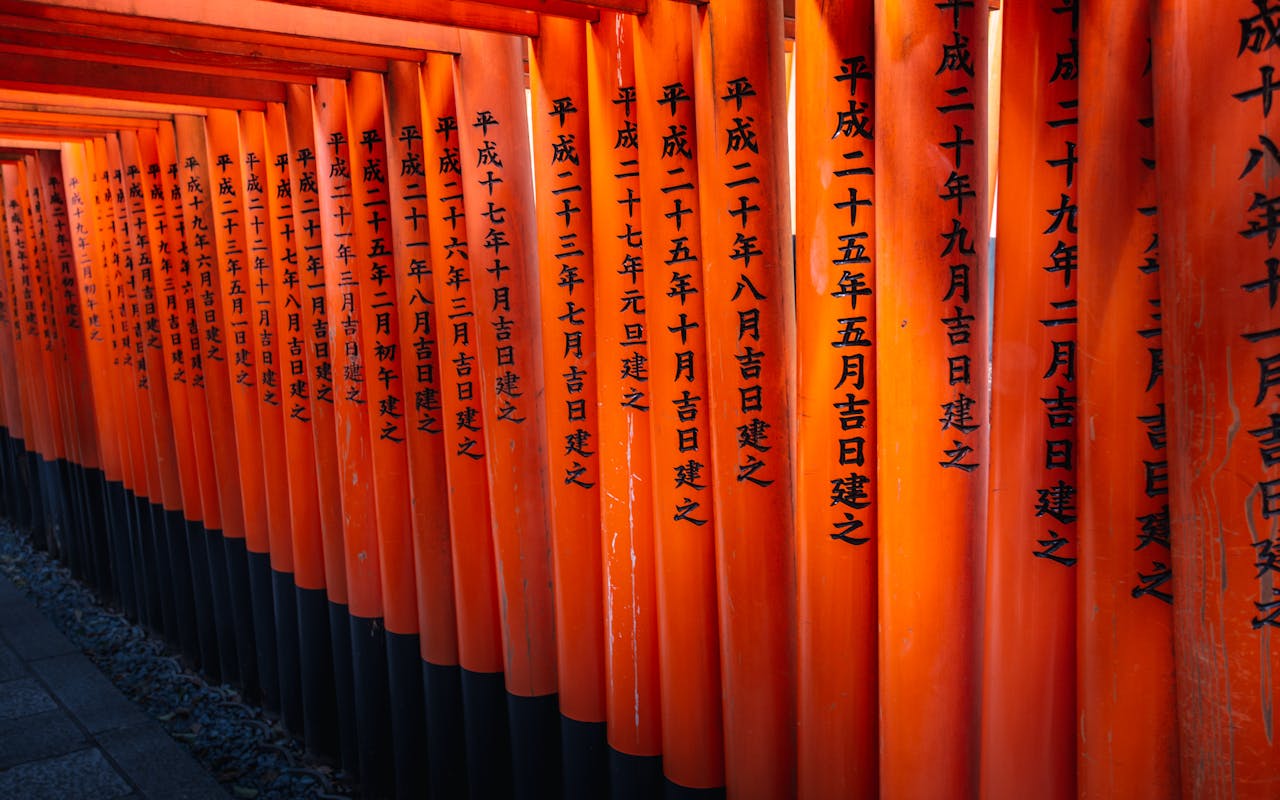
Kinkaku-ji, the Golden Pavilion, and Fushimi Inari are the two non-negotiables for most first-timers, and for good reason. Kinkaku-ji is genuinely as striking in person as in photographs, which is rarer than you'd think. Fushimi Inari's 10,000 torii gates trail through forest up a mountain, and the upper sections are quiet even when the entrance is crowded. Go early, keep walking.
The Arashiyama bamboo grove is worth visiting but won't take more than an hour. Build a half-day around the wider Arashiyama neighbourhood instead: the Tenryu-ji temple gardens, the monkey park, lunch at a tofu restaurant along the river. That's a full and satisfying morning.
Nara: The Half-Day That Earns Its Place
Nara works perfectly as a half-day from either Kyoto or Osaka. The famous bowing deer, the Todai-ji temple housing Japan's largest bronze Buddha statue at 15 meters tall (Todai-ji Temple, 2025), the quiet lanes of Naramachi — it's compact, walkable, and unlike anything else on the route. Don't skip it trying to squeeze in another Kyoto temple. One Nara afternoon is worth three rushed Kyoto hours.
The Optional Add-Ons: Worth It or Not?
Hiroshima with Miyajima Island, Hakone with Mount Fuji views, and Nikko with its ornate shrines all appear in every Japan first timer 10 days list. The honest answer: each one is genuinely worth the detour, but only if you don't attempt all three. Pick one. Adding two or more on a 10-day trip means you spend more time on trains than anywhere worth visiting.
Hiroshima and Miyajima
This pairing is the most commonly added detour, and it earns it. The Peace Memorial Park and Museum in Hiroshima is heavy, important, and genuinely moving. Miyajima Island with its floating torii gate and wild deer is one of Japan's most photographed sights for good reason. The two together make a full and meaningful day from Osaka or Kyoto via Shinkansen. JR West covers this route under most Japan Rail Pass inclusions, making it cost-effective.
Hakone
Hakone is best positioned between Tokyo and Kyoto, as a one or two night stop. On a clear day, the views of Mount Fuji across Lake Ashi are spectacular. On a cloudy day, which is statistically likely since Mount Fuji is only clearly visible around 80 days per year (Japan Meteorological Agency, 2024), you're looking at a beautiful ryokan stay and an onsen experience without the centrepiece. It's still wonderful. Just temper expectations around the mountain.
Nikko
Nikko is a full day trip from Tokyo, two to three hours each way. Its Tosho-gu shrine complex is one of Japan's most ornate and genuinely surprising. The issue is it's in the opposite direction from the rest of the classic route. If Tokyo is your final stop (returning flights), Nikko fits. If you're doing Tokyo first and heading west, it costs you a full day before your trip has even started finding its rhythm.
Should You Buy the Japan Rail Pass?
The 7-day Japan Rail Pass costs 50,000 yen for an ordinary class pass. (Japan Rail Pass official pricing, 2025). A single Tokyo-to-Osaka Shinkansen ticket costs around 14,000 yen each way. If you're doing the classic route with one or two detours, the math usually favours buying the pass — but only if you time the activation correctly.
The pass is validated for consecutive days from first use, not from purchase. This is where people lose money. Activate it on the morning you take your first long-distance Shinkansen, not the day you arrive in Tokyo. Use the local Tokyo subway (not covered by JR Pass) for your first few days in the city and save the pass for when the long journeys begin.
If your trip is Tokyo-only, or you're staying predominantly in one city, the pass won't pay off. The IC card (Suica or Pasmo) is the right tool for local transit everywhere, and it works on buses, convenience store purchases, and most urban rail lines across Japan.
The 14-day pass is rarely discussed for 10-day trips, but it's worth calculating. If you plan a Hiroshima detour AND Hakone AND potentially one northern Kyoto day trip to Arashiyama by JR, the 14-day pass at 70,000 yen can still break even compared to individual tickets, and removes all the per-trip decision fatigue.
Food: What to Plan Around, Not Just Stumble Into
Japan has the highest number of Michelin-starred restaurants of any country on earth, with Tokyo alone holding more stars than Paris. (Michelin Guide Japan, 2024). But the most memorable meals on a 10-day trip often cost under 1,500 yen and happen at standing counters, market stalls, and basement ramen shops with six seats and a queue at noon.
The food categories worth planning around deliberately, not eating by accident, include: a proper kaiseki dinner in Kyoto (book two weeks ahead minimum), conveyor belt sushi at a quality kaiten-zushi restaurant, at least one izakaya evening with yakitori and cold beer, a ramen lunch at a specialist shop, and the Nishiki Market food walk in Kyoto. These aren't tourist traps. They're the actual food culture.
Osaka's Dotonbori strip is mandatory but survivable in a single evening. Takoyaki (octopus balls), kushikatsu (battered deep-fried skewers), and okonomiyaki (savoury pancakes) are the three things you eat there. Get them all from different vendors. The eating in Osaka is competitive, fast, and excellent.
The best meal of the entire trip was a bowl of tonkotsu ramen at a shop in Fukuoka Station's basement food hall, eaten alone at a counter at 11:30am. It cost 980 yen. I'd eaten at significantly more expensive restaurants throughout the trip. Nothing touched it.
The Pacing Mistake Most First-Timers Make
Research consistently shows that traveler regret correlates most strongly with overpacking an itinerary, not under-packing one.(Skyscanner Travel Trends Report, 2023). The classic Japan route has exactly this failure mode built in.
The itinerary that looks perfect on paper — Tokyo 3 nights, Hakone 1, Kyoto 3, Nara half-day, Osaka 2 — starts breaking down when train delays happen, when a neighbourhood you stumbled into is too good to leave, when you need a slow morning because the pace has caught up with you. Japan isn't a place that rewards being rushed. It rewards patience and presence.
The travelers who return from Japan most satisfied are almost never the ones who ticked off the most sites. They're the ones who found a great coffee shop in Yanaka and spent an hour there, who climbed Fushimi Inari past the tourist scrum and found the quiet upper trails, who accepted getting slightly lost in Osaka's Shinsekai neighbourhood and had a genuinely unscripted hour. Leave space. Japan fills it.
What "Going Deep" Actually Means
Going deep on fewer places means spending two to three nights somewhere instead of one. It means seeing a neighbourhood at different times of day. Asakusa at 7am and at 9pm are completely different places. It means eating lunch at the same ramen counter twice because the first bowl was that good. The trip's texture comes from repetition and familiarity, not from novelty stacking.
How a Guided Tour Changes the Japan Experience
Japan is arguably the destination where a good local guide adds the most value of any country in the world. The language gap alone — Japanese is rated among the most difficult languages for English speakers by the US Foreign Service Institute (FSI Language Learning Data, 2024) — means a meaningful percentage of Japan's cultural depth is simply inaccessible without someone to bridge it.
That's not about being unable to navigate. Train apps handle navigation well enough. It's about the context that transforms a temple from a beautiful building into a living piece of history. The difference between standing at Kinkaku-ji and understanding why it matters, versus reading a plaque and moving on, is the difference a guide makes.
Japan's cultural etiquette layer is also genuinely dense. When to bow, how deeply. What you don't do at a temple. Why you separate your chopsticks a certain way. How to behave in an onsen. A good local guide handles all of this invisibly, so you spend zero mental energy on it and can focus on the experience itself. Explore local-guided Japan tours on ToursZoom to find operators who specialise exactly in this.
If you're visiting during one of Japan's major festivals, a guide becomes even more valuable. The cultural context around events like the Gion Matsuri in Kyoto or the Awa Odori in Tokushima is rich enough to fill a book. For more on Japan's festival calendar, read our full guide to Japan's most exciting festivals in 2027.
"The moment I stopped trying to understand everything myself and just listened to our guide was the moment Japan actually opened up. The first two days I was reading every sign. After that I was watching what was happening." — First-time Japan visitor, 2025
Frequently Asked Questions
Is 10 days enough for Japan as a first-timer?
Yes, 10 days covers the classic route comfortably. It's enough for Tokyo, Kyoto, Nara, and Osaka, plus one optional add-on like Hiroshima. Most first-timers wish they'd had more time, but 10 days gives you a complete and satisfying trip.
How many days should I spend in Tokyo on a 10-day Japan itinerary?
Three to four days. Tokyo is consistently underestimated by first-timers. With 23 distinct wards and a transit system serving millions daily, three days lets you breathe. Four days lets you actually enjoy it.
Do I need to book accommodation in advance for a Japan trip?
Yes, especially for Kyoto. Popular ryokan (traditional inns) and budget accommodation in Kyoto fill months ahead, particularly during cherry blossom season (late March to early April) and autumn foliage season (November). Book at least 3 months out.
Is the Japan Rail Pass worth buying for a 10-day trip?
Usually yes, if you're doing the full Tokyo-Kyoto-Osaka route with one detour. A single Tokyo-Osaka Shinkansen ticket costs around 14,000 yen each way. The 7-day pass at 50,000 yen pays off quickly across multiple long-distance journeys.
Should I hire a guide for Japan or explore independently?
A local guide adds real value in Japan specifically, because the cultural and language gap is significant. Independent travel works for logistics. A guide unlocks the cultural depth that makes Japan different from every other destination.