
Some links in this article may earn ToursZoom a commission at no extra cost to you — see our affiliate disclosure.
Last updated: April 2026
A Dubai desert safari takes you into the Arabian Desert — vast, silent, and visually unlike anything in the city. Experiences range from high-adrenaline dune bashing to quiet camel rides at sunset and traditional Bedouin camp dinners under open skies. Choosing the right type of safari and timing it well makes the difference between a checkbox and a memory.
In This Guide
- Why the Desert Is Worth Your Time
- Types of Dubai Desert Safari
- Best Time of Day — and Year
- What Actually Happens on a Safari
- How to Make the Most of It
- Frequently Asked Questions
Why the Desert Is Worth Your Time in Dubai
Dubai’s skyline is extraordinary. But the city was built on desert, and the desert is still there — vast, quiet, and 45 minutes from the downtown skyscrapers. For many visitors, the desert turns out to be the most genuinely memorable part of their time in the UAE.
The Arabian Desert, of which Dubai’s dunes are a small part, covers approximately 2.3 million square kilometers across six countries. The section closest to Dubai — the Lahbab Desert near Al Faya, about 65 kilometers from the city — rises to dunes some 300 meters high. These are not gentle sand hills. They are dramatic, shifting landscapes that look different every hour as the sun moves across them.
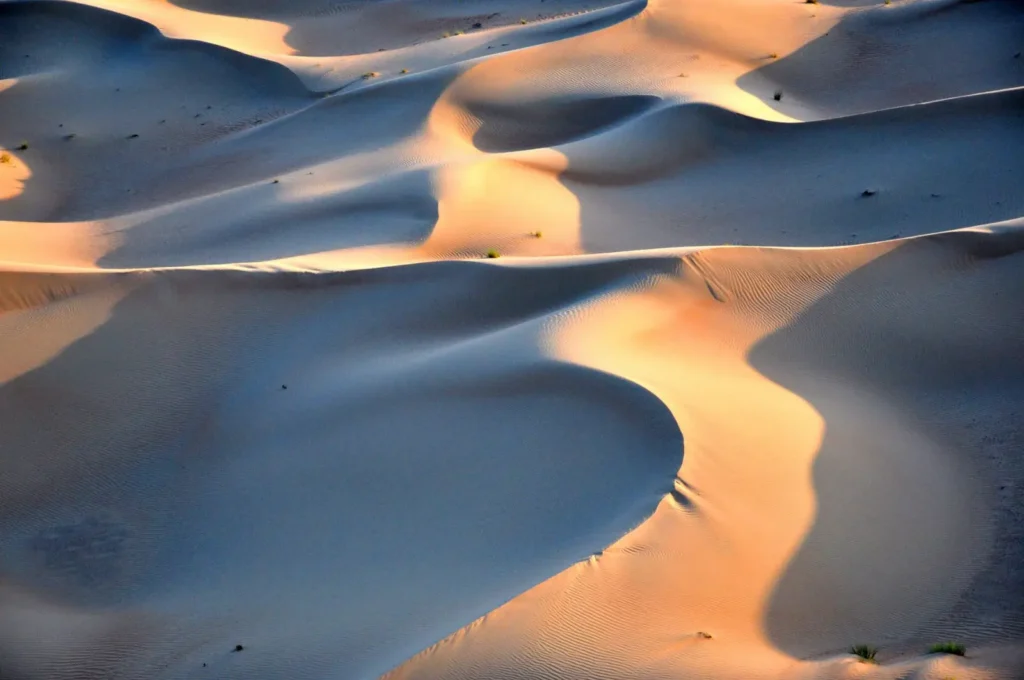
The experience of sitting in silence on a dune crest at sunset, with no city visible in any direction, is one that surprises almost every visitor who thought they were coming for the skyscrapers. Give the desert time. It earns it.
Types of Dubai Desert Safari
The term “desert safari” in Dubai covers a wide range of experiences. Understanding the categories helps you choose what actually matches what you want to feel, rather than defaulting to the most marketed option.
Evening Safari (most popular)
The standard Dubai desert safari runs from mid-afternoon to around 9–10pm, combining three or four activities into a single excursion: dune bashing, a traditional Bedouin camp visit, camel riding, and dinner under the stars. This is the most accessible format — suitable for families, first-timers, and anyone who wants a range of experiences in one session.
What makes an evening safari: the timing is deliberately built around sunset, which in Dubai’s desert hits differently than anywhere else. The dunes turn deep amber and then a quiet rose-gold, followed by a sudden shift to purple and then the extraordinary clarity of a desert sky without light pollution.
Best for: First-time visitors, families, anyone who wants a curated introduction to the desert with dinner included.
Morning Safari
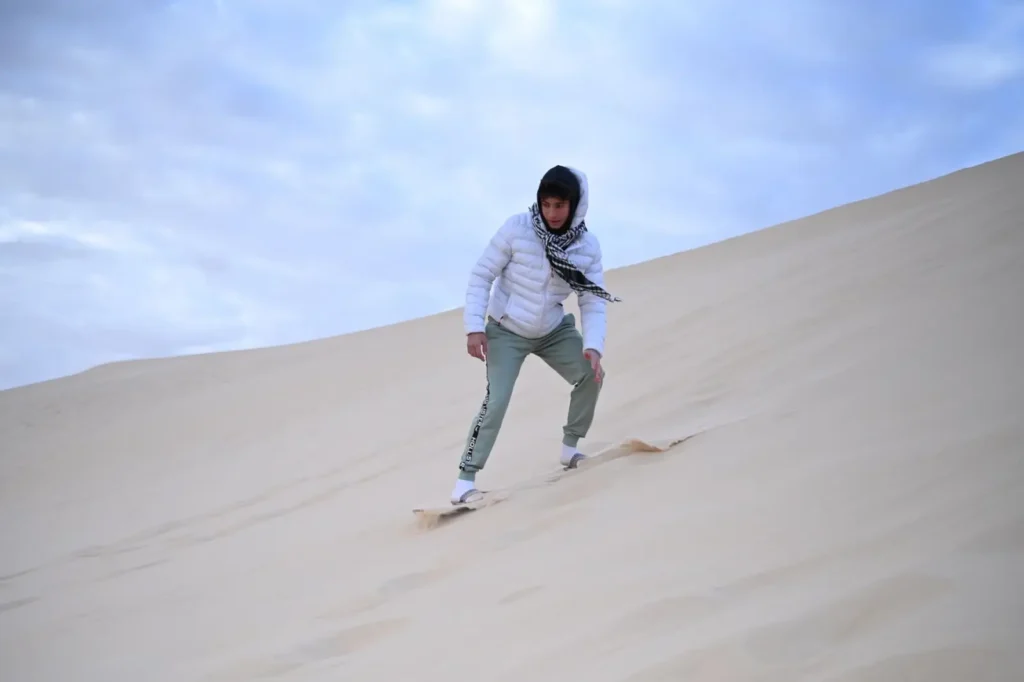
The morning safari is the underrated option. It runs from roughly 8am to noon, before the full heat of the day arrives. The light in the desert at 8am is extraordinary — long shadows, cool air, a different quality of silence than the evening. Dune bashing feels different in the morning: less theatrical, more visceral. Sandboarding is a morning activity that’s almost never offered in evening packages.
One honest trade-off: morning safaris don’t include the sunset or the Bedouin camp experience, which many visitors find the most atmospheric part of the evening version. They do, however, leave your evening free.
Best for: Travelers who want the physical activities (dune bashing, sandboarding) without the theatrical evening presentation, or those whose evenings are already planned.
Overnight Desert Safari
The overnight safari is a genuinely different category. You arrive in the late afternoon, watch the sunset, have dinner at a Bedouin camp, and sleep in the desert under the stars — typically in a traditional tent or on a mattress on open ground. You wake at dawn to silence, a breakfast of dates and chai, and the slow golden arrival of morning light over the dunes.
This is the format that produces the stories people tell for years. The silence of a desert night, with a sky full of stars and not a sound from the city, is unlike almost any urban travel experience. It is also, predictably, the most expensive format and requires genuine comfort with outdoor sleeping conditions.
Best for: Travelers who want depth over breadth, couples, anyone who has done a standard evening safari before and wants to go further.
Private Desert Safari
Any of the above formats can be booked privately — your own vehicle, your own guide, your own timing. Private safaris cost more (typically 3–4x a shared evening safari) but offer flexibility that transforms the experience: you stop when you want to stop, you photograph the dunes at your own pace, and the guide can tailor the experience to your interests rather than managing a group of twelve.
Best for: Honeymooners, small families who want to set their own pace, photography enthusiasts, or anyone for whom the group dynamic of a shared tour detracts from the experience.
Best Time of Day — and Time of Year
Time of day
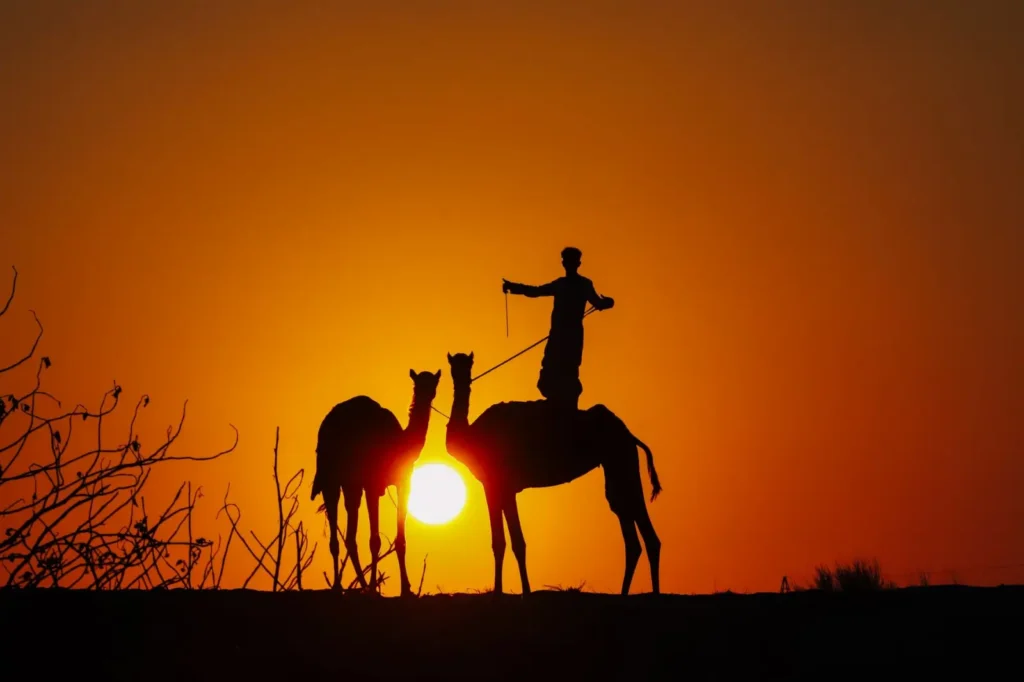
Sunset is the defining moment of a Dubai desert experience, and evening safari timing is designed around it. In winter months (October–March), sunset falls between 5:30pm and 6:30pm — evening safaris typically depart the city around 3pm to allow time for dune bashing before the light changes. In summer, sunset is around 7pm, pushing departure times to 4–4:30pm.
If you’re doing a morning safari, aim for the earliest possible departure. The desert at 8am has a coolness and a stillness that is gone by 10am. By noon in any season, the sand radiates heat upward and the landscape flattens visually as the sun goes overhead.
Time of year
Dubai’s desert is a year-round activity, but the experience varies dramatically with the season.
- October to April (recommended): Daytime desert temperatures range from 20°C to 32°C. Comfortable at any time of day. This is when the desert is at its most physically pleasant and the widest range of activities is available.
- May and June: Temperatures climb to 38–42°C. Feasible for morning safaris; evening safaris remain manageable. Visitor numbers drop, giving you more space on the dunes.
- July to September: Sand temperatures can reach 70°C at the surface in direct sun. Full midday exposure is unsafe. Evening safaris remain popular among visitors who time their activity correctly. The dunes themselves are dramatically empty — some of the best photography of Dubai’s desert happens in summer for this reason. Requires genuine planning around heat.
What Actually Happens on a Dubai Desert Safari
Evening safari format, broken down honestly:
Dune bashing (30–45 minutes)
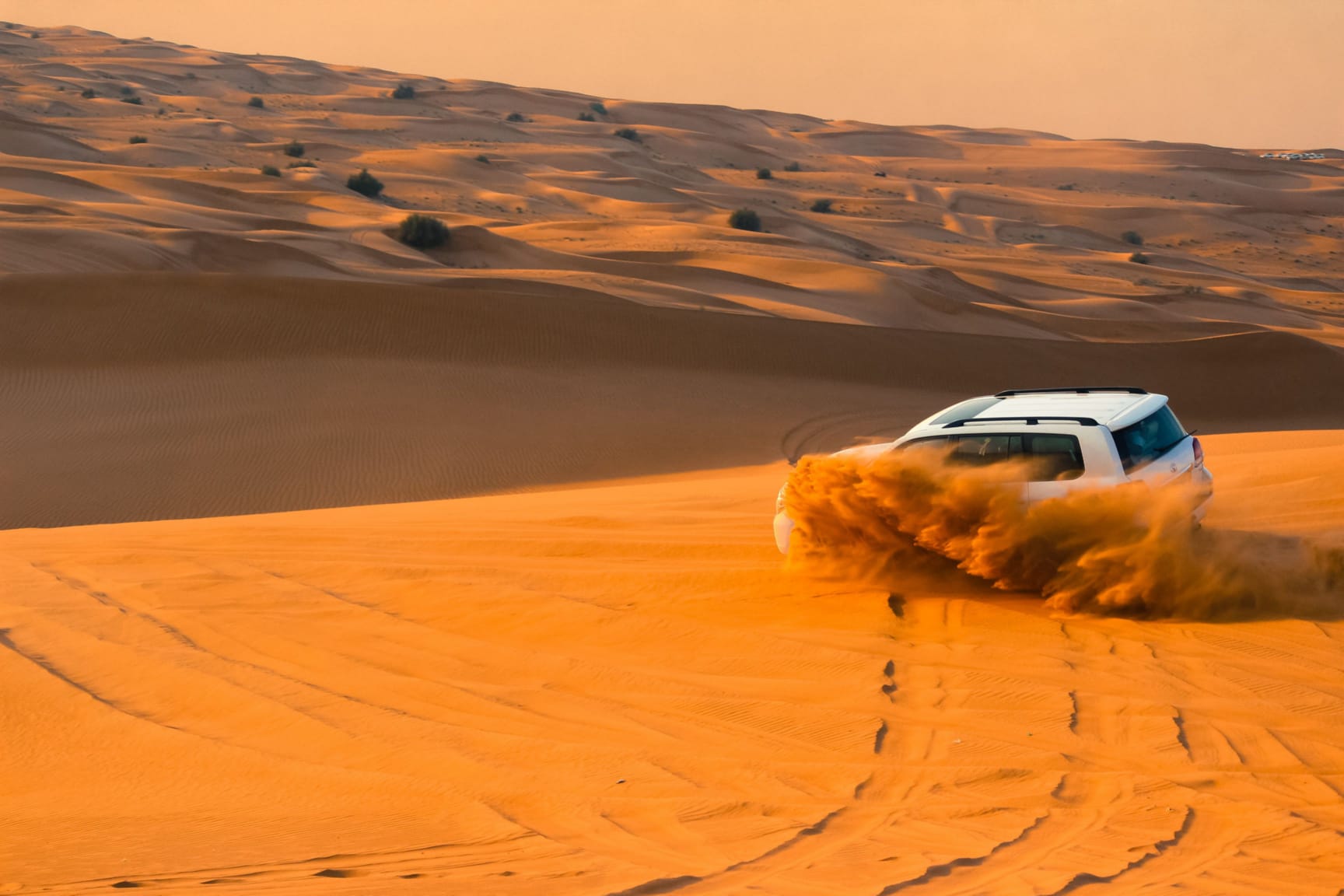
A 4×4 vehicle with significantly deflated tires drives up, over, and between large dunes at speed — the automotive equivalent of a rollercoaster on sand. Your driver controls the vehicle with expertise built over years; the experience is theatrical and deliberately dramatic. Some people find it exhilarating. Some find it nausea-inducing. If you have a history of motion sickness, mention it — a slow-paced private safari is a genuine alternative, and the dunes are just as beautiful at walking speed.
The Bedouin camp (2–3 hours)
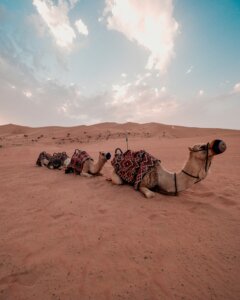
After dune bashing, you’ll arrive at a traditional-style Bedouin camp set up in a sheltered dune area. Here: camel rides (usually a short loop, not a long trek), henna painting, Arabic coffee and dates, dinner (typically a buffet combining grills, salads, mezze, and dessert), and usually some form of cultural performance — belly dancing, tanoura (spinning skirt dance), or fire performance.
The quality of the camp experience varies between operators. A good camp feels genuine and generous; a rushed one feels like a production line. The difference is almost always in the operator’s choice to limit group sizes and invest in food quality. Ask about group size before you book — if a camp is hosting 200+ people at once, it’s a different experience than one handling 30–40.
Stargazing and the drive back
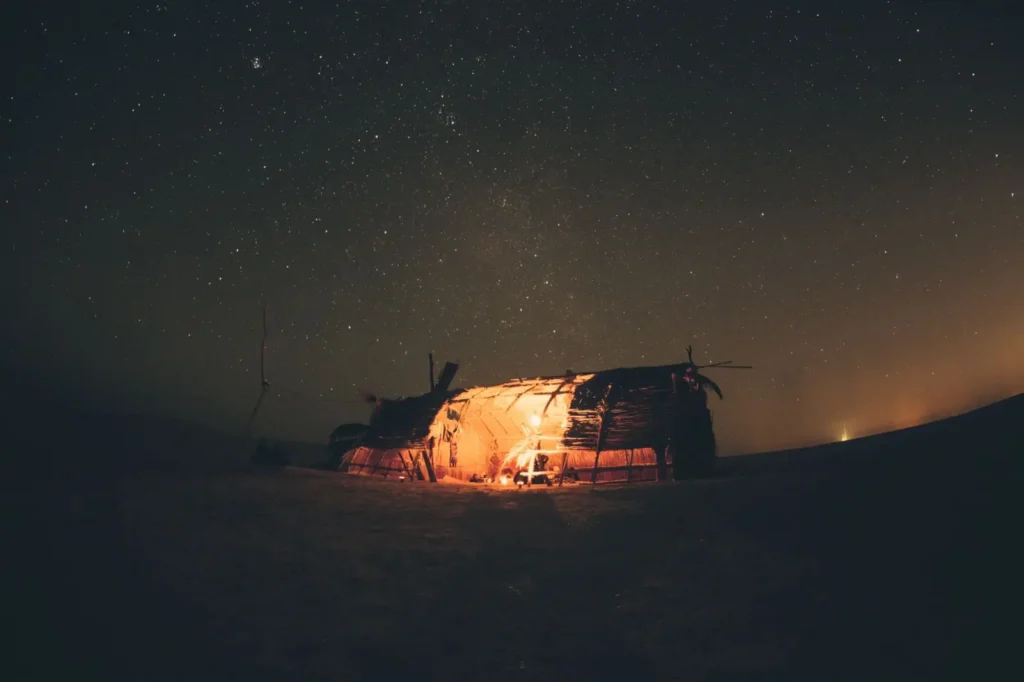
Many evening safaris include a short period of undirected time after dinner — this is the part most tour descriptions understate. Sitting on a dune away from the camp lights with a sky genuinely full of stars is the moment most visitors cite when you ask them what surprised them most. Don’t rush to the return vehicle.
How to Make the Most of Your Dubai Desert Safari
Choose an operator who limits group size
The single biggest factor in a Dubai desert safari experience is how many people are in your group. A group of 8–12 in two vehicles produces a very different experience than 60 people split across eight vehicles arriving at the same camp. Ask directly: what is the maximum group size? What is the vehicle-to-guide ratio? A quality operator will answer clearly.
Arrive at the camp before the crowd
If you’re on an evening safari, the most atmospheric time at the dunes is the 30 minutes immediately before sunset. Dune bashing typically happens before this window. If your operator gives you the option to skip the dune bashing and spend more time stationary on the dunes watching the light change — take it. You can always do dune bashing, but the light at that exact moment only exists once per day.
Dress for the temperature swing
Desert evenings in Dubai cool rapidly after sunset, particularly in winter months. What feels warm at 5pm can be genuinely cold by 9pm. Light layers — a long sleeve shirt, a light jacket — are more useful than shorts and a t-shirt, regardless of what the city temperature was when you left. Closed shoes rather than sandals are strongly recommended for dune walking; fine sand is surprisingly uncomfortable in open footwear.
Eat lightly before the safari
Dune bashing on a full stomach is miserable. Have a light lunch, skip afternoon snacks, and let the camp dinner be the meal. The desert air and the camp food both taste better when you’re actually hungry.
Put the phone away for 20 minutes
The photographs of Dubai’s desert are everywhere. The experience of sitting in silence watching a desert sunset with no screen between you and it is harder to replicate. Give yourself one uninterrupted window — before or after dinner — without photographing anything. That window usually produces the clearest memory of the trip.
Frequently Asked Questions
How long does a Dubai desert safari take?
Evening safaris run 5–6 hours (typically 3pm–9pm). Morning safaris run 4 hours (8am–noon). Overnight safaris begin mid-afternoon and return the following morning after breakfast. Private safaris can be any duration you arrange with your operator.
Is Dubai desert safari worth it?
For most visitors, yes — the desert is a genuinely different experience from anything else in Dubai. The quality varies significantly between operators. Choosing one who limits group sizes, invests in the camp experience, and includes a knowledgeable guide makes a substantial difference to the experience.
What should I wear on a Dubai desert safari?
Lightweight, breathable clothing that covers your arms and legs (useful for dune bashing and respectful at the Bedouin camp). Closed shoes for walking on sand. A light jacket for evening temperature drops. Leave jewellery and formal footwear at the hotel.
Can children do a Dubai desert safari?
Yes. Most evening safaris are family-friendly — dune bashing intensity can be reduced on request, and children generally love the camel rides and camp atmosphere. Children under 3 are typically not recommended for dune bashing. Confirm age policies with your specific operator.
What is the best time of year for a Dubai desert safari?
October to April offers the most comfortable desert temperatures — ideal for evening and morning safaris alike. Summer safaris (June–September) are feasible in the evening but require careful planning around heat. October and March are the ideal shoulder months: good conditions, fewer visitors than peak December–January.