
Some links in this article may earn ToursZoom a commission at no extra cost to you — see our affiliate disclosure.
Last updated: April 2026
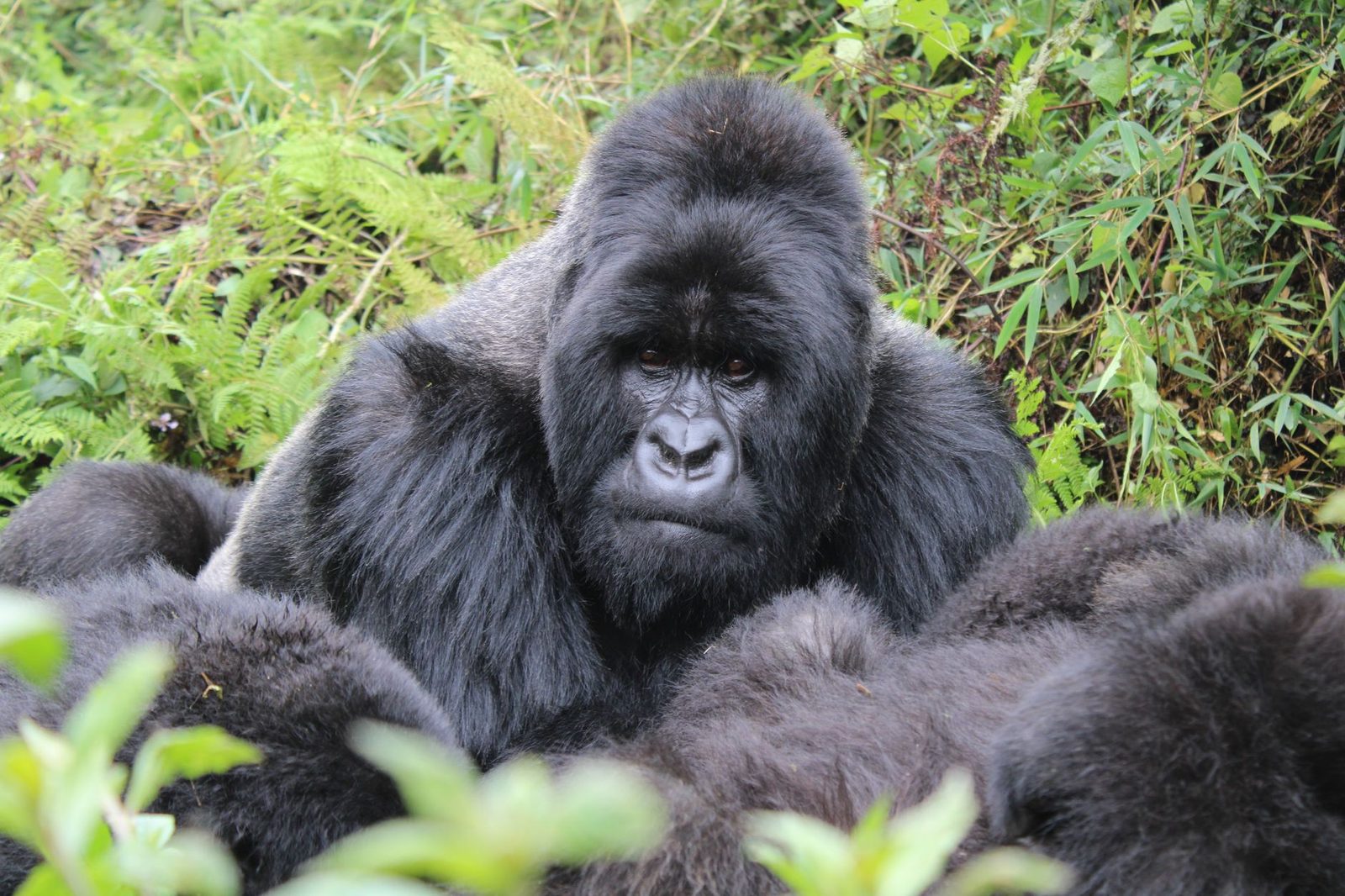
Gorilla trekking in Rwanda means spending one hour face-to-face with wild mountain gorillas in Volcanoes National Park — one of the rarest wildlife encounters on earth. With fewer than 1,100 mountain gorillas left in existence, each permitted visit directly funds their protection. The trek can take 30 minutes or six hours. The hour you spend with them never feels long enough.
In This Guide
- Why Rwanda for Gorilla Trekking
- What the Experience Actually Feels Like
- Permits, Costs, and Booking
- Best Time to Go
- How to Prepare for the Trek
- How to Make the Most of Your Hour
- Frequently Asked Questions
Why Rwanda Is the Best Place to Trek Mountain Gorillas
There are only three countries in the world where you can trek wild mountain gorillas: Rwanda, Uganda, and the Democratic Republic of Congo. Rwanda — specifically Volcanoes National Park in the Virunga mountains — has become the benchmark for the experience, and for good reason.
The infrastructure here is exceptional. The park is well-managed, the gorilla groups are thoroughly habituated to human presence, and the journey from Kigali to the park entrance takes under three hours on sealed roads. Rwanda’s government made a deliberate choice to position gorilla trekking as a premium, conservation-funding experience — the permit price reflects that, and the revenue directly supports both gorilla protection and local community programs.
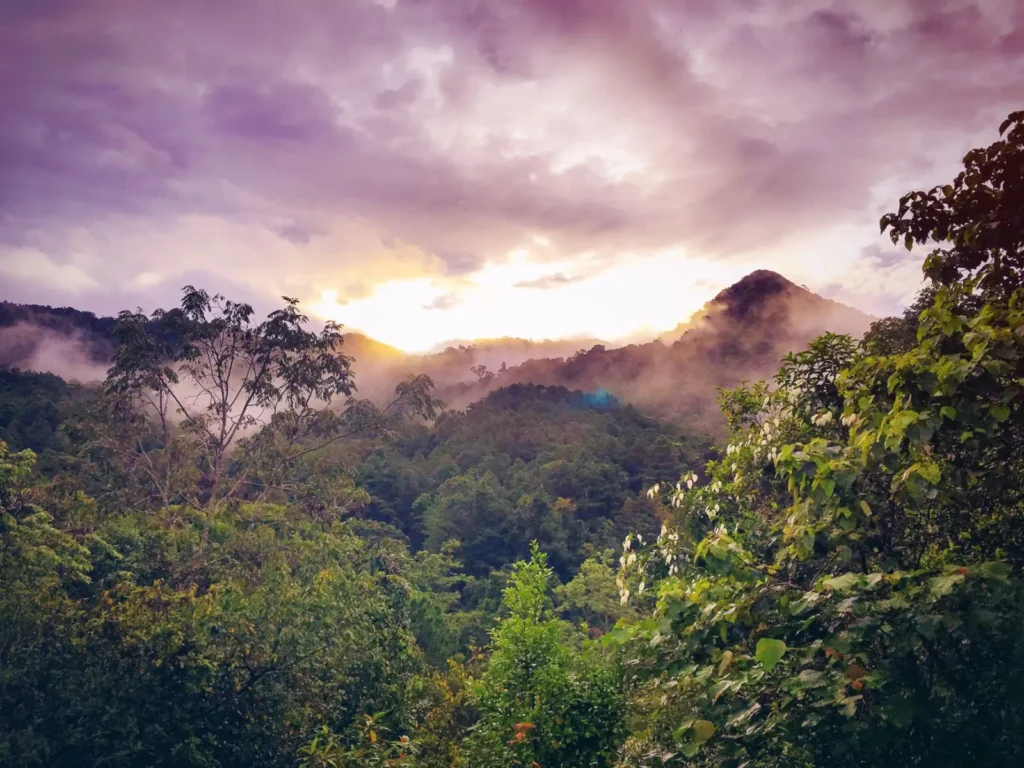
The Virunga range sits at 2,400 to 4,500 meters above sea level. The landscape is extraordinary — ancient rainforest giving way to bamboo groves, all of it shrouded in mist most mornings. This isn’t a zoo. It’s their world. You are the guest.
“The gorillas essentially ignore you after a few minutes — they’re busy. A silverback might pass within two meters and never break stride. That’s when it hits you: you are completely irrelevant to them, and it’s the most humbling thing you’ll ever feel.” — a common refrain from first-time trekkers, and one worth holding onto as you prepare.
What the Experience Actually Feels Like
No description quite captures it. But here is an honest account of what to expect from the moment you leave the briefing area to the moment you walk back out of the forest.
You’ll start at the park headquarters at around 7am, after a briefing with your ranger. Groups are limited to eight visitors per gorilla family — this is non-negotiable and strictly enforced. Your guide will tell you which group you’ve been assigned to and give you a rough estimate of hiking time based on that morning’s tracking report. Trackers head into the forest before dawn to find where the group slept and radio their position back.
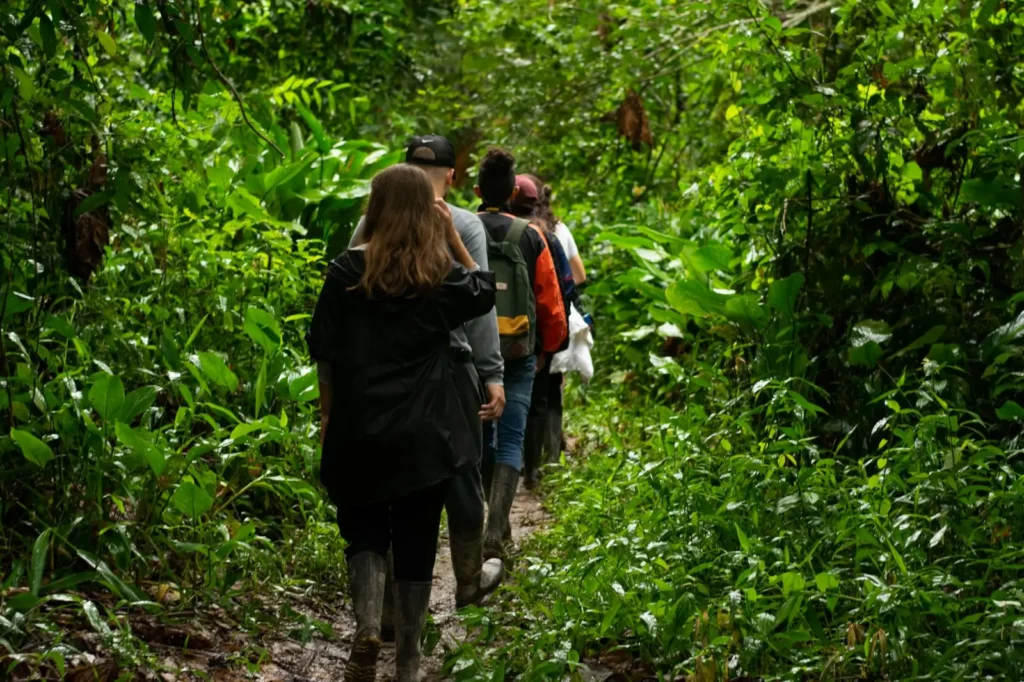
The hike through the forest is part of the experience. Some treks are 30 minutes on gentle trails. Others are three to five hours of steep, muddy, bush-pushing terrain. The uncertainty is real — there’s no reliable way to know in advance how long yours will take. Accept this, pack for it, and let go of the schedule.
When your guide stops and whispers that you’re close, every conversation ends. You move slowly, following hand signals. Then you hear them — branches breaking, low vocalisations, the heavy movement of something large in the undergrowth. And then you see them.
You have exactly one hour. Sixty minutes from the moment your guide starts the timer. Spend it watching, not photographing. The images you take will never match what your eyes record.
Permits, Costs, and How to Book
Rwanda gorilla permits are a fixed government fee set by the Rwanda Development Board, non-negotiable regardless of where you book. The permit covers your one-hour visit with a single habituated gorilla group in Volcanoes National Park.
A total of 96 permits are issued daily across the park’s eight habituated gorilla families (eight visitors per group). Demand consistently outstrips supply, particularly during peak season (June to September). For 2026 travel, permits booked in January and February may already be running short for July and August dates.
The Best Time to Go Gorilla Trekking in Rwanda
Rwanda’s climate is highland tropical — mild year-round, with two dry seasons and two wet seasons. All four seasons allow for gorilla trekking, but your experience will differ significantly depending on when you go.
Dry seasons (recommended)
- June to September — Long dry season. This is peak gorilla trekking season. Trails are drier, vegetation is slightly lower (easier visibility), and the weather is cool and clear in the mornings. Permits sell out fastest during these months.
- December to February — Short dry season. Less crowded than the long dry season, equally good conditions. A strong alternative if you want the quality experience with fewer visitors competing for permits.
Wet seasons (still possible, often worthwhile)
- March to May — Long rains. Trails are slippery and harder work. The forest is lush and verdant. Permits are easier to get and often come with better availability of high-end lodges at lower rates.
- October to November — Short rains. Similar to March–May, with intermittent showers rather than sustained rainfall. Many experienced travelers prefer this season for its atmosphere and reduced crowds.
The gorillas themselves behave differently by season. In dry months, families tend to range more widely. In wet months, they spend more time in bamboo zones at lower elevations — meaning shorter treks, which can be a real advantage if fitness or time is a concern.
How to Prepare for the Trek
Gorilla trekking is classified as moderate to strenuous activity. The altitude (you’ll be hiking at 2,500–4,000 meters) and the terrain (thick vegetation, steep slopes, no defined paths once you leave the trail) mean physical preparation matters.
Fitness
You don’t need to be an athlete. Trekkers in their 60s and 70s complete this successfully every week. What helps: cardiovascular fitness (stair climbing, hiking, walking 5+ km daily in the weeks before), leg strength, and the ability to move slowly and steadily for extended periods. If you have significant mobility concerns, speak to your operator honestly — some groups have shorter typical trek times than others.
What to bring
- Waterproof hiking boots — ankle support is essential on muddy terrain
- Long trousers and long sleeves — protects against nettles, insects, and cold
- Lightweight waterproof jacket — rain can arrive suddenly at any elevation
- Gardening gloves — genuinely useful for pushing through vegetation and grabbing branches
- Small daypack — water (2 liters minimum), snacks, sun protection, camera
- Cash for porter fee and tips — porters typically; rangers and guides appreciate
Health considerations
Gorillas share approximately 98% of human DNA, making them susceptible to human respiratory illnesses. If you have a cold, flu, or any respiratory symptoms on the day of your trek, you will be asked not to participate. This is a genuine conservation rule, not a technicality. Travel insurance that covers permit forfeiture is worth having.
How to Make the Most of Your Hour with the Gorillas
Most first-time trekkers spend the first ten minutes in disbelief. That’s fine. But here are the things that separate people who walk away changed from people who walk away with good photos.
Put the camera down more than you pick it up
The instinct to photograph everything is understandable. Resist it for the first few minutes. Let your eyes do the work. Watch how the group interacts — mothers with infants, juveniles playing, the silverback’s attention moving around the clearing. The photographs you take later, once you’ve absorbed the scene, will be better for it.
Stay low and move slowly
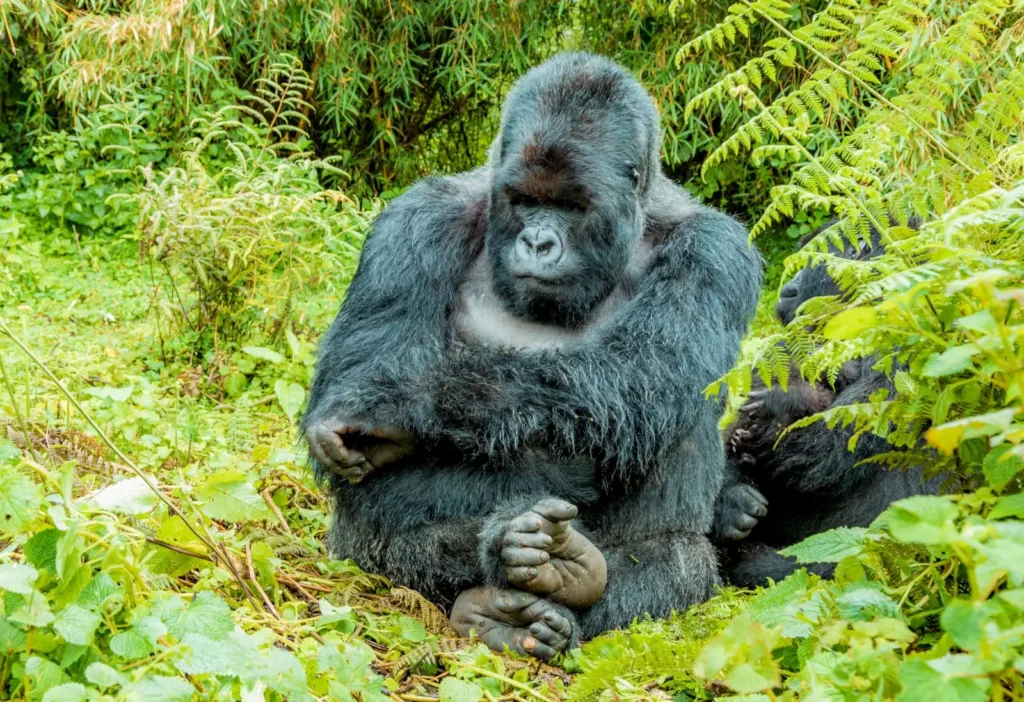
Your guide will tell you this. Take it seriously. Sudden movements, standing tall, or direct eye contact with a silverback can be read as challenge behavior. Crouch, move deliberately, and let the gorillas set the pace of every interaction.
Listen more than you look
The sounds of a gorilla family — the soft chest-beating of a young male, the grunt-vocalisations between a mother and infant, the enormous quiet of a silverback at rest — are as memorable as anything you’ll see. Close your eyes for a minute.
Don’t think about the time
The hour will end. Your guide will let you know when you’re at 45 minutes and again at 55. Don’t spend the experience counting down — spend it fully present. An hour is both very short and, if you’re fully there, quite enough.
Extend the Rwanda experience beyond the trek
The trek itself is a single morning. Rwanda is worth more than that. Kigali’s Genocide Memorial is one of the most important historical sites in Africa. Lake Kivu’s shores offer a completely different side of the country. The Nyungwe Forest in the south has chimpanzee tracking. Most visitors spend at least three to five days in Rwanda to do it justice.
Frequently Asked Questions
How physically demanding is gorilla trekking?
Moderate to strenuous, depending on where the gorillas are. Treks range from 30 minutes to 6+ hours of hiking at altitude (2,500–4,000m). Good cardiovascular fitness helps. Porters are available and genuinely useful — not just for bags, but for physical support on difficult terrain.
How long do you spend with the gorillas?
Exactly one hour, strictly enforced. This limit protects the gorillas from over-exposure to humans and is a core part of Rwanda’s conservation model. No exceptions are made regardless of conditions.
When should I book Rwanda gorilla permits?
Book 3–6 months in advance for peak season (June–September). December–February dates book out 2–3 months ahead. Off-season months (March–May, October–November) have better availability but should still be secured at least 6–8 weeks before travel.
Can I combine gorilla trekking with a Kenyan safari?
Yes — and many travelers do. Rwanda-Kenya combinations are among the most popular East Africa itineraries. Nairobi to Kigali is a 1-hour flight with multiple daily connections. A typical combined trip runs 10–14 days.