
Some links in this article may earn ToursZoom a commission at no extra cost to you — see our affiliate disclosure.
Japan runs a festival almost every week of the year. Shinto shrines, rice harvests, ancestral remembrances, seasonal changes. Virtually every moment in the Japanese calendar has a celebration attached to it. The challenge isn’t finding a Japan festival. It’s knowing which ones are worth planning a trip around.
Local operators run cultural tours across Japan throughout the year. This guide covers the festivals that consistently deliver the most memorable experiences for international travelers. What they actually are, when they happen, and how to plan around them without the crowds ruining everything.
Hanami: Cherry Blossom Season (Late March to April)
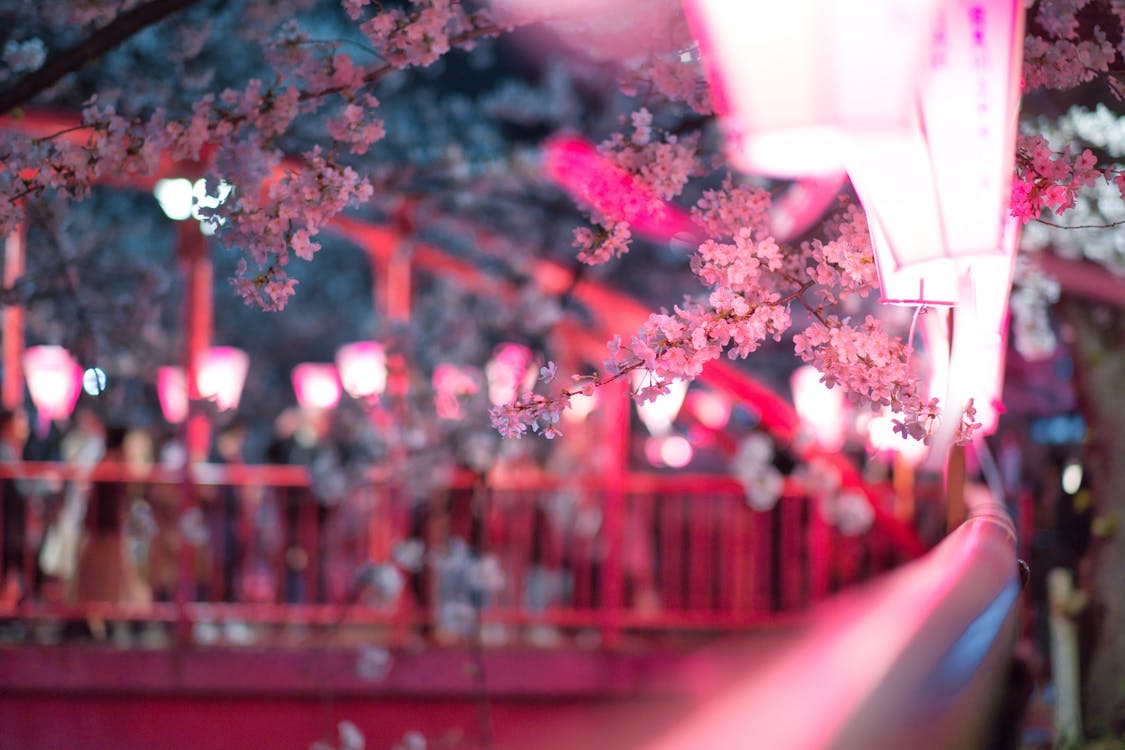
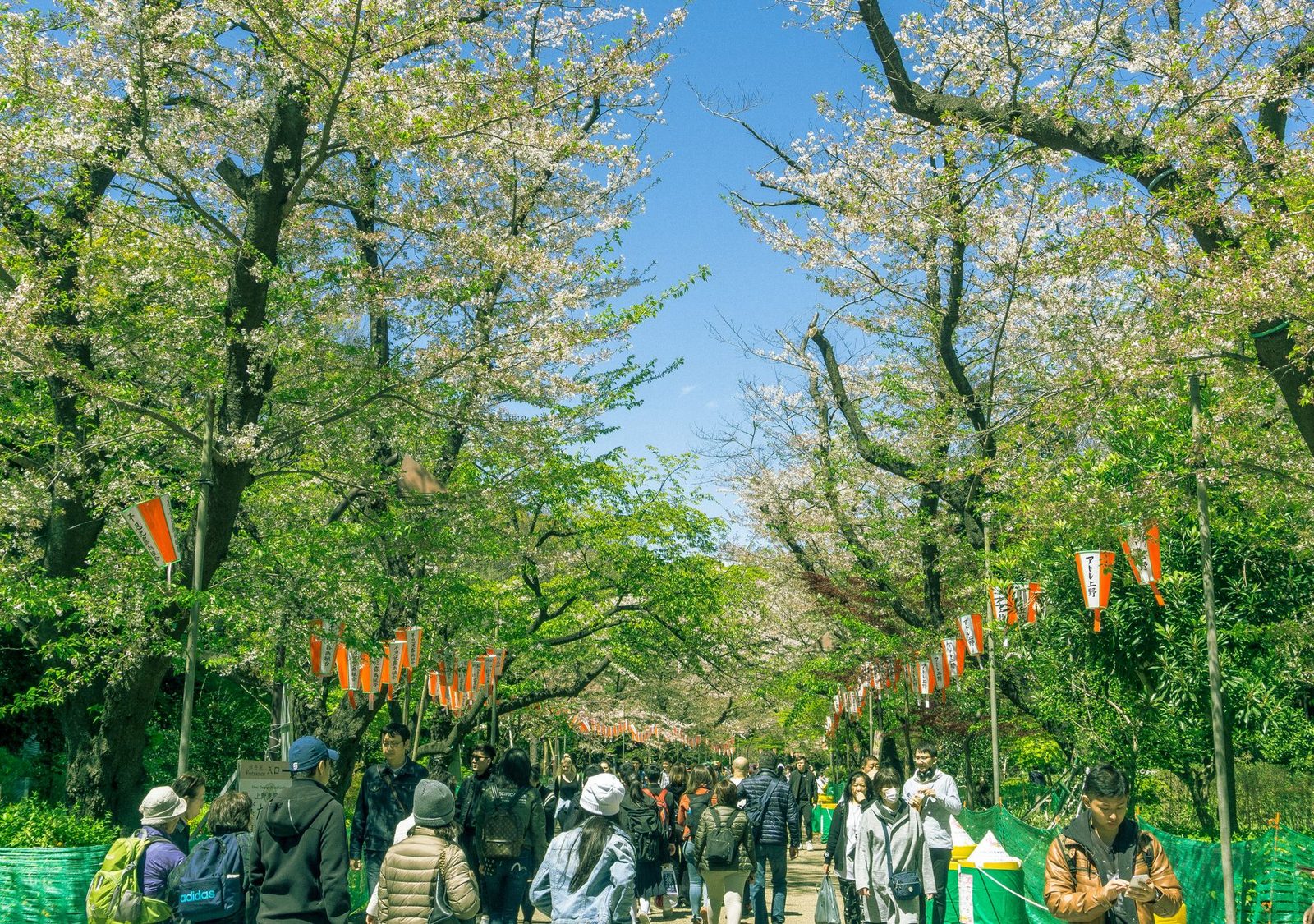
Hanami, literally “flower viewing”, is Japan’s most beloved seasonal tradition. When the sakura trees bloom, parks fill with people spreading picnic blankets under the branches, eating bento boxes, drinking sake, and watching petals drift down in the afternoon wind. It’s been happening for over a thousand years and somehow doesn’t feel tired.
The dates shift every year based on temperature. Tokyo typically peaks in late March to early April. Kyoto follows a few days behind. Sendai, further north, blooms in mid-April. The Japan National Tourism Organization cherry blossom forecast is published each January and serious hanami planners check it obsessively.
Where to go:
- Ueno Park, Tokyo: the most famous hanami spot, beautiful, genuinely crowded
- Philosopher’s Path, Kyoto: a 2km canal walk lined with hundreds of cherry trees; best at dawn
- Maruyama Park, Kyoto: home to a 75-year-old weeping cherry tree lit up at night
Travel tip: The best hanami moments happen on weekday mornings before 9am. By 11am on a weekend, Ueno Park is impenetrable. Stay near Kyoto if you can. The crowds in Tokyo are extraordinary even by Tokyo standards.
“Our hanami tour in late March is the most emotionally intense thing we run. People who have never been to Japan before often cry. Not just because it’s beautiful, because it’s fleeting. You get maybe five or six days of peak bloom. That’s it.”
Yuki, Kyoto-based cultural tour leader
Gion Matsuri: Kyoto’s Greatest Festival (July)
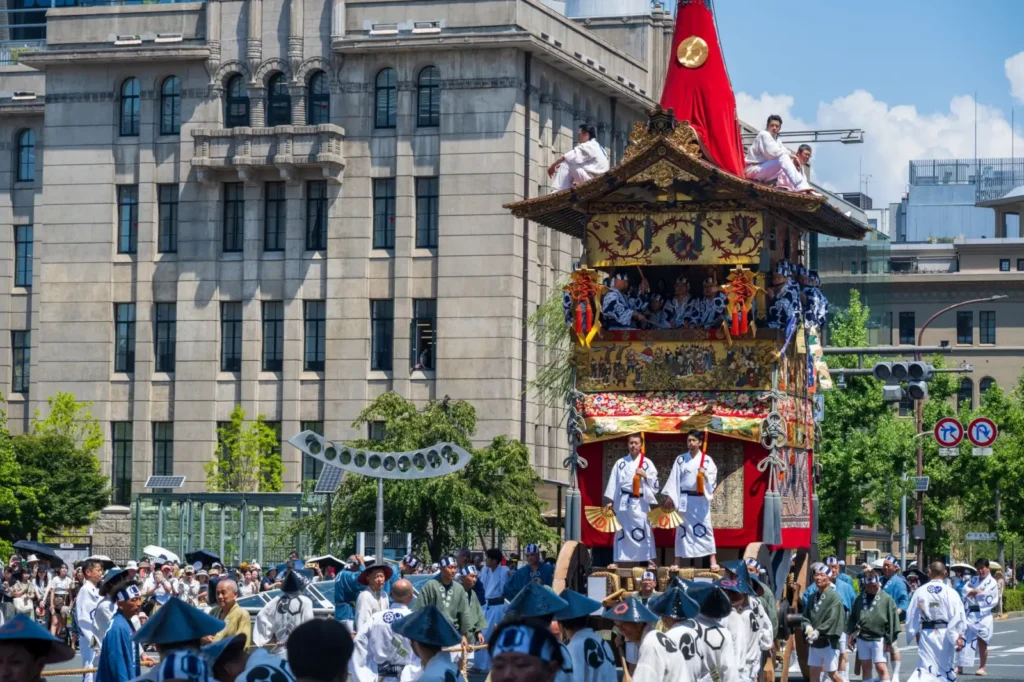
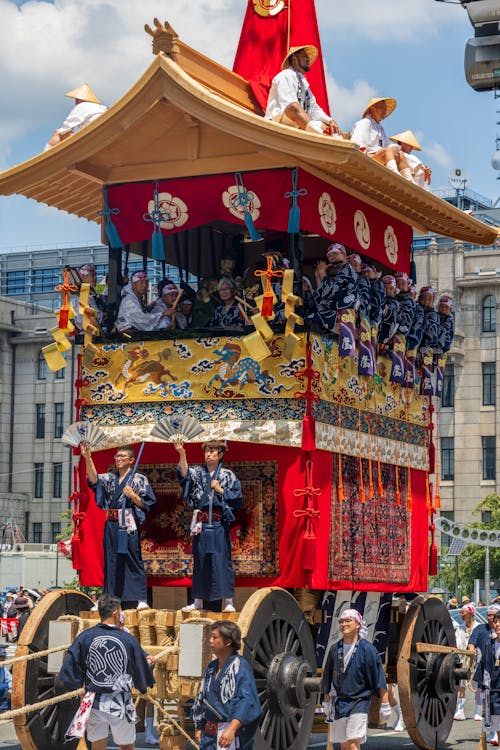
Gion Matsuri takes place across the entire month of July in Kyoto, with the main processions (Yamaboko Junko) happening on July 17th and 24th. These parades feature enormous floats, some over 25 meters tall, weighing several tonnes, pulled through Kyoto’s central streets by teams of men in traditional dress. The floats took months to assemble. They’re hung with ancient tapestries, some from 16th-century Europe, which arrived via the Silk Road.
The festival dates to 869 CE, when it was established as a purification ritual during a plague epidemic. It’s been interrupted by war, fire, and 20th-century world events, but has run continuously since 1952.
Key dates:
- July 1 to 16: Portable shrines and floats displayed for public viewing in their assembly areas, good for close-up photos without the parade crush
- July 17: First main parade (Sakimatsuri) through downtown Kyoto
- July 24: Second parade (Atomatsuri) with different floats
- July 31: Final purification ceremony at Yasaka Shrine
Travel tip: Book accommodation in Kyoto at least 6 months ahead for July. The city is at capacity on parade weekends. The evening before each parade, when the illuminated floats glow in the streets while musicians perform, is arguably more atmospheric than the daytime parade itself.
Obon: Ancestral Remembrance (Mid-August)
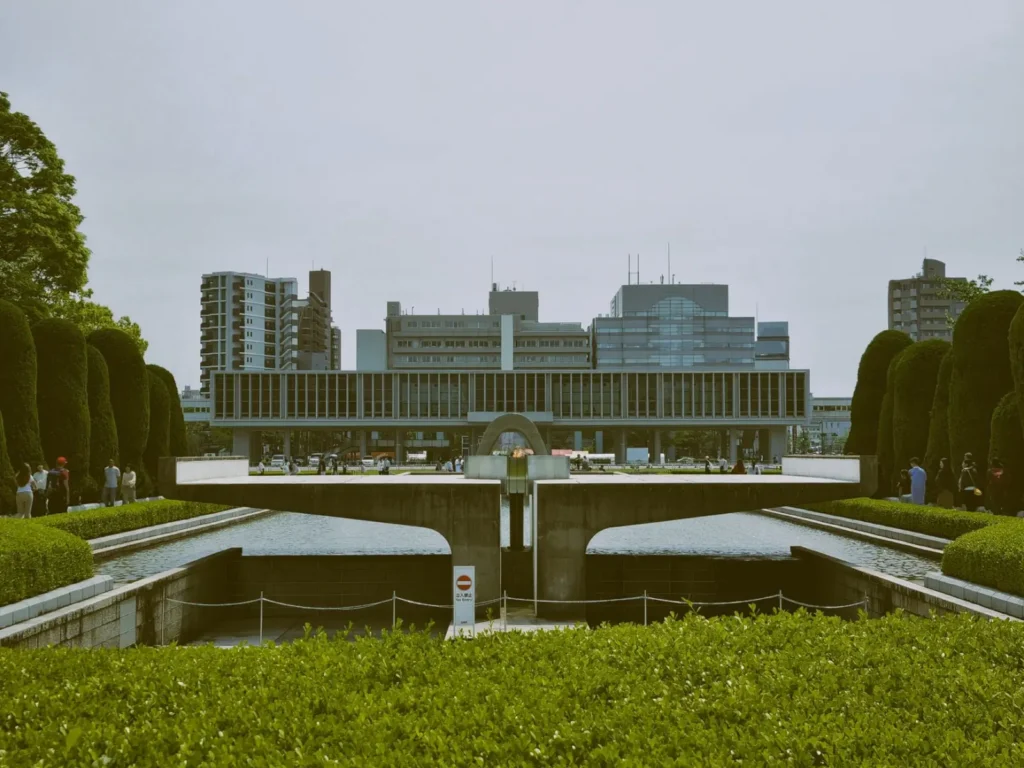
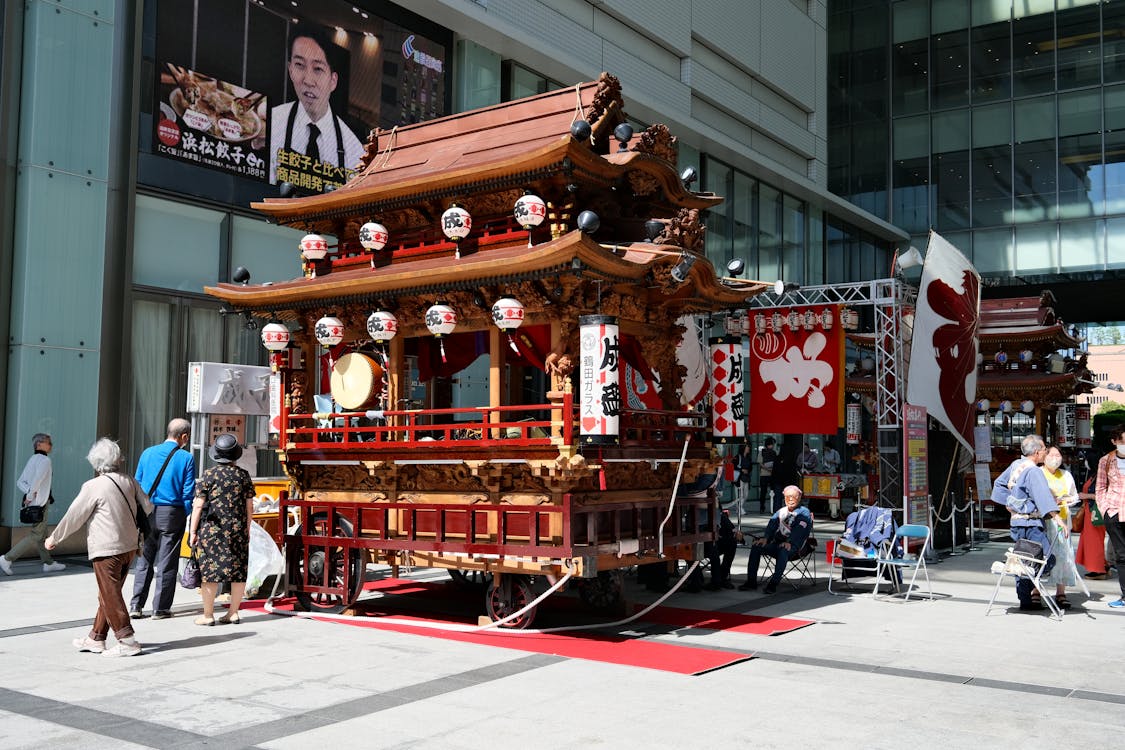
Japan’s Obon festival spans three days in mid-August (dates vary by region, some areas observe it in July). It’s the period when ancestral spirits are believed to return to visit their families. Households light lanterns to guide spirits home, bon odori dances are performed in town squares and temple grounds, and in some regions, paper lanterns are floated down rivers in a ceremony called toro nagashi.
Obon isn’t primarily a tourist event. It’s a family occasion, and that’s exactly what makes it special to observe respectfully. The bon odori dances are open to everyone and welcoming to visitors who want to join in. The lantern floating ceremonies, particularly in Kyoto along the Oi River and in Hiroshima’s Peace Memorial Park, are extraordinarily moving.
Where to experience it:
- Hiroshima Peace Memorial Park: the August 6th lantern floating ceremony (concurrent with the atomic bomb anniversary) is one of the most profound experiences in Japan
- Kyoto: Daimonji Gozan Okuribi on August 16th. Five Chinese characters and symbols are lit on the hillsides surrounding the city as a farewell to ancestral spirits
- Rural Tohoku and Kyushu: village Obon celebrations away from tourist circuits, accessible through local operators
Sapporo Snow Festival (Early February)
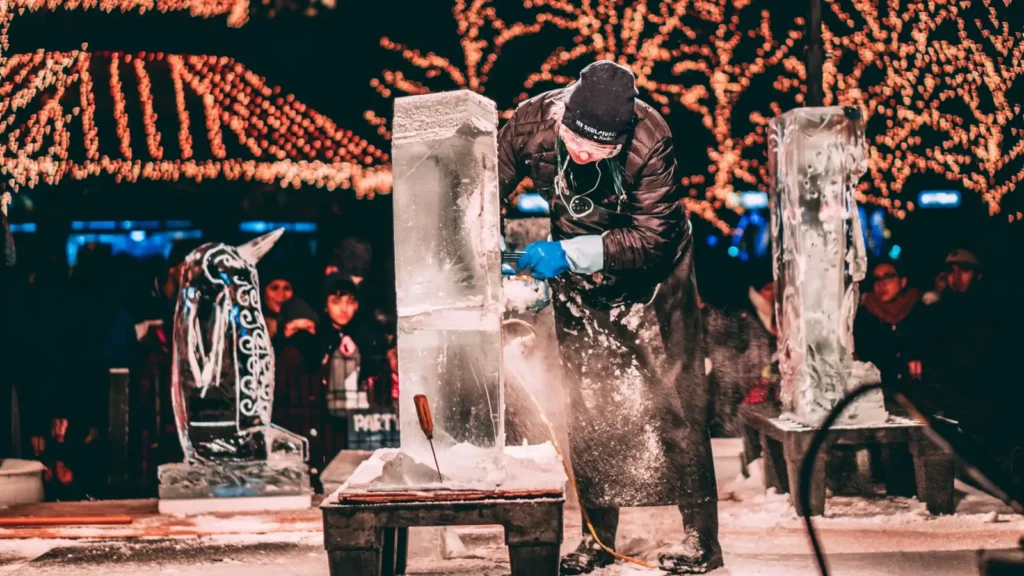
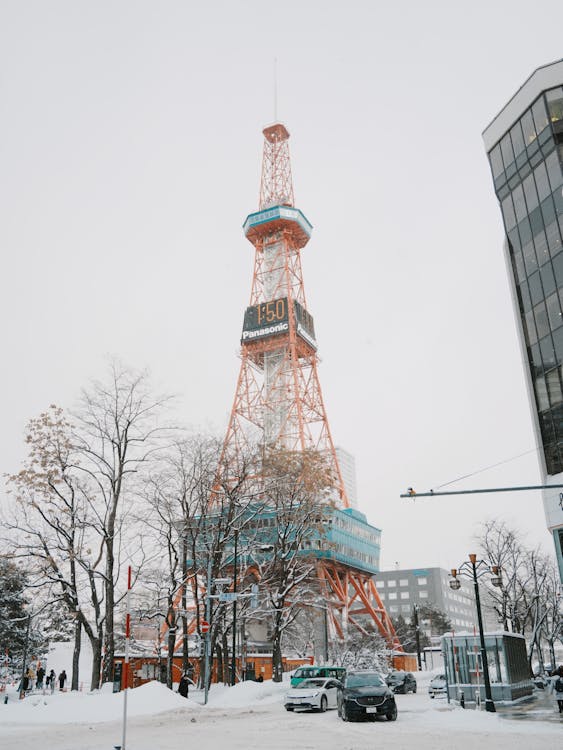
The Sapporo Snow Festival runs for about a week in early February and fills the city’s Odori Park and Susukino district with ice and snow sculptures. Some the size of buildings, some intricate enough to replicate world landmarks at near-perfect scale. Professional sculptors and competition teams from around the world compete alongside neighborhood entrants. The contrast between the enormous lit structures and Hokkaido’s dark winter sky is visually unlike anything else in Japan.
Sapporo in February is cold. Temperatures regularly drop to -10°C or below. That’s not a deterrent. It’s part of the experience. The festival has been running since 1950, when local high school students built six snow statues in the park. Now it draws over 2 million visitors annually.
What to plan around:
- The Ice Sculpture International Competition at Susukino, entries judged on a single evening in spectacular light
- Tsudome Family Snow Park, a satellite venue with snow slides, tunnels, and an ice skate area
- Ramen street in Susukino, warming bowls of Sapporo’s famous miso ramen after several hours outside
Travel tip: Book flights and hotels in Sapporo 4 to 5 months ahead. Prices spike significantly in the 6 weeks before the festival. The first two days tend to be quieter than the final weekend.
Tanabata: Festival of Stars (July 7th)
Tanabata celebrates the legend of two star-crossed lovers, Orihime (the Weaver Star, Vega) and Hikoboshi (the Cowherd Star, Altair), who are separated by the Milky Way and allowed to meet only once a year on the seventh night of the seventh month. Festivals involve writing wishes on small slips of colored paper (tanzaku) and hanging them on bamboo branches.
The most spectacular Tanabata celebration happens in Sendai, where the festival runs August 6 to 8 (a deliberate shift from the original July date). The city’s shopping arcades are transformed by enormous fukinagashi, ornamental streamers of paper and bamboo, some hanging 5 to 8 meters, in patterns that take months to prepare.
Sendai Tanabata draws over 2 million visitors across three days. The city’s proximity to Matsushima Bay (one of Japan’s three canonical scenic views) makes it a worthwhile multi-day stop.
Takayama Matsuri: Spring and Autumn Parades (April and October)
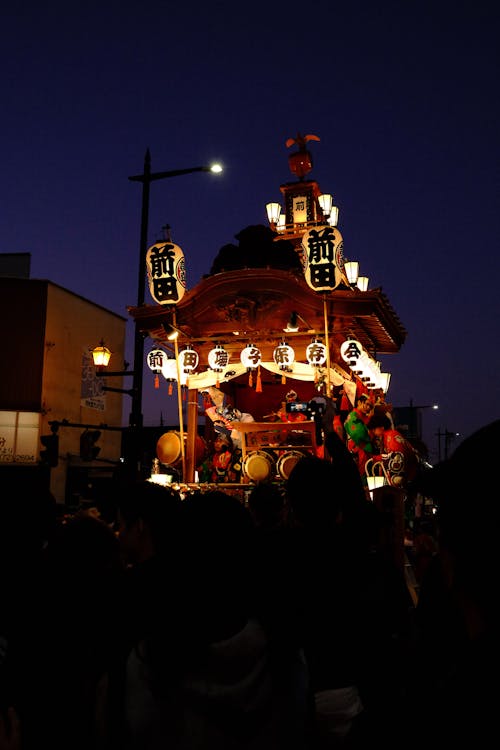
Fewer international travelers know about Takayama Matsuri, which is a shame, because it rivals Gion Matsuri in the craftsmanship of its floats and far exceeds it in intimacy. The city of Takayama in Gifu Prefecture, a well-preserved merchant town from the Edo period, hosts two separate festivals each year. The Sanno Matsuri in mid-April and the Hachiman Matsuri in mid-October.
Both feature the city’s famous yatai floats, which are housed in special storehouses the rest of the year and belong to specific neighborhoods. The autumn festival pairs with Takayama’s harvest markets, making it a rich two-day visit.
Why it works for travelers: Takayama is a 2.5-hour bus ride from Nagoya or accessible on the Hida limited express from Matsumoto. It’s small enough to walk entirely. The festival crowds are a fraction of Kyoto’s, and the setting, wooden merchant houses, clear mountain streams, sake breweries, is exceptional.
Awa Odori: Japan’s Biggest Dance Festival (August 12 to 15)
Tokushima, on the island of Shikoku, hosts Awa Odori every year across four days in mid-August. It’s Japan’s largest dance festival by participation, with tens of thousands of dancers performing in street processions, organized ren (dance troupes) and spontaneous neighborhood groups together.
The dance form, an upbeat, loose-limbed style to the beat of shamisen, taiko, and flute, dates to the 16th century. It’s inclusive by design: visitors are encouraged to join the niwaka (amateur) groups that march through the streets. There’s a local saying: “You’re a fool whether you dance or watch, so you might as well dance.”
Practical note: Tokushima requires pre-planning. It’s not on the Shinkansen network. Access is by local train from Osaka (about 2 hours) or by ferry. Accommodation in the city books out entirely for festival days, often 6+ months in advance.
Planning Tips for Festival Travel in Japan
Book accommodation early. For cherry blossom season, Gion Matsuri, and the Sapporo Snow Festival, 4 to 6 months ahead is the minimum. For Gion Matsuri weekends specifically, 6 months is safer.
Use the Japan Rail Pass strategically. A 14-day or 21-day pass covers shinkansen between Tokyo, Kyoto, Hiroshima, and most major festival cities. It doesn’t cover the fastest Nozomi trains, but the Hikari and Kodama are fast enough.
Avoid peak parade days if crowds concern you. Every major festival has build-up days and aftermath days that are quieter and often more authentic. The preparatory displays before Gion Matsuri, the town atmosphere in Takayama the day before the parade, the final morning of hanami when petals are falling. These moments are often better than the headline event.
Learn a few Japanese phrases. Even basic greetings (Konnichiwa, Arigatou gozaimasu) are well-received. Festival settings are social by nature. A little effort goes a long way.
Frequently Asked Questions
What is the best festival to visit in Japan?
Hanami (cherry blossoms, March to April) and Gion Matsuri (Kyoto, July) are the most celebrated. For smaller crowds and equal cultural richness, Takayama Matsuri (April and October) is excellent. The Sapporo Snow Festival (February) is uniquely spectacular.
When is the best time to visit Japan for festivals?
Spring (late March to April) for hanami, July for Gion Matsuri, August for Obon and Awa Odori, and February for Sapporo Snow Festival. Each season offers distinct experiences. Japan rewards repeat visits timed to different festivals.
How far in advance should I book for cherry blossom season?
Book flights and accommodation 4 to 6 months ahead. Cherry blossom dates shift year to year; Japan’s meteorological agencies publish forecasts each January. Tours timed to peak bloom fill quickly through specialist Japan operators.
Can tourists participate in Japanese festivals?
Yes. Many festivals actively welcome visitor participation. Bon odori dances, tanzaku wish-writing at Tanabata, joining niwaka groups at Awa Odori. Observing rituals respectfully (staying quiet, not interrupting processions) is appreciated at all festivals.
Are guided tours worth it for Japan festivals?
For first-time visitors, yes. Especially for context-heavy events like Gion Matsuri and Obon. A guide who explains the history, navigates crowds, and knows which vantage points offer the best views makes the experience significantly richer.
Final Thoughts
A Japan festival is the fastest way to understand a place that can otherwise feel reserved on first contact. You get the food, the music, the neighborhood coming out onto the street, all at once. Plan around one headline festival if your dates allow it. Catch a smaller local one if you’re already there. The country opens up around these calendar moments in ways it doesn’t on a normal Tuesday.