
Some links in this article may earn ToursZoom a commission at no extra cost to you — see our affiliate disclosure.
Last updated: April 2026
The best time of the year for Rhine river cruises is late April through early June, or September through mid-October. Both windows offer mild weather, manageable crowds, good water levels, and scenery that rewards being outside on deck. The right choice between the two comes down to what you most want: spring wildflowers and wine blossom, or autumn harvest festivals and lower prices.
- Quick Season Comparison
- Spring: Late April to Early June
- Summer: June to August
- Autumn: September to Mid-October
- Winter and Christmas Markets: November to December
- Water Levels: The Hidden Variable
- Best Time by Travel Interest
- Frequently Asked Questions
Quick Season Comparison
Each season on the Rhine has a genuinely distinct character. Here is the honest summary before going deeper:
- Spring (late April to early June): Best weather balance. Wildflowers, cherry blossoms, green hillsides. Busy but not peak-crowded. Higher prices than autumn.
- Summer (July to August): Peak season. Hot days, large crowds at ports, highest prices. Occasional low-water disruptions. Not the worst time, but not the best.
- Autumn (September to mid-October): Wine harvest season — the most thematic time to visit wine towns. Cooler temperatures, fewer tourists, lower prices than spring. Foliage begins turning in October.
- Winter / Christmas (late November to December): A niche but legitimate option. Christmas markets are genuinely special. Cold and sometimes gray, but many travelers consider this the most atmospheric Rhine experience.
Spring: Late April to Early June
May is widely considered the most reliably good month for a Rhine cruise. Temperatures along the river typically sit between 15°C and 20°C (59°F to 68°F) during the day, cool enough to walk comfortably through old towns and warm enough to spend time on deck. Rainfall is moderate — you will see some gray days, but sustained rain is unlikely to dominate a week.
The visual appeal in spring is real. The Rhine valley vineyards are bright green, the hillsides above the gorge are covered in wildflowers, and the orchards along the Alsatian section bloom in late April. The river itself is typically well-levelled in spring from snowmelt and winter rains, which means itinerary disruptions from low water are unlikely.
The main downside is price. Spring sailings, particularly in May, are among the most expensive of the year. Ports are also busy — not overwhelmingly so, but Rüdesheim’s Drosselgasse and Strasbourg’s Petite France fill up by mid-morning on a warm May day. If crowds matter to you, late April is a better choice than late May: the weather is only marginally cooler, but the school groups and peak-season tourists have not yet fully arrived.
Late June sits at the hinge point between spring shoulder season and peak summer. It offers good weather and slightly lower prices than May, though the transition to full summer crowds begins around mid-June.
Summer: June to August
Summer on the Rhine means high temperatures (sometimes 30°C plus in July and August), the highest prices of the year, and the busiest ports. Rüdesheim in July feels noticeably more packed than in May. The gorge scenery is the same regardless, and long days mean plenty of daylight for viewing it, but the experience in port is more congested.
There is also a practical risk in summer that does not exist in other seasons: low water levels. The Rhine, particularly the Upper Rhine and through the gorge, can drop to navigable minimums in hot, dry summers. When water levels fall below threshold, operators are required to reduce speed, skip ports, or substitute buses for certain sections. This is not guaranteed to happen, but it has disrupted itineraries in several recent summers. Spring and autumn do not carry this risk to anything like the same degree.
That said, summer is not without appeal. School holiday timing means this is often the only practical window for families. The Rhine in Flames festivals — spectacular fireworks displays fired from the riverbanks and castle ruins at night — take place in summer, specifically at Rüdesheim in June, Koblenz and Bingen in August, and Oberwesel in September. If fireworks over castle ruins is on your list, summer (or early autumn) is when to go.
Autumn: September to Mid-October
September through mid-October is the second-best window for a Rhine cruise, and for wine lovers it is arguably the best. The grape harvest — Weinlese — runs from early September into October across the Rheingau, and many Rhine towns hold wine festivals during this period. In Rüdesheim, the harvest festival in September is one of the most atmospheric things you can time a visit around: presses running, new wine on tap, locals and visitors alike crowded into taverns.
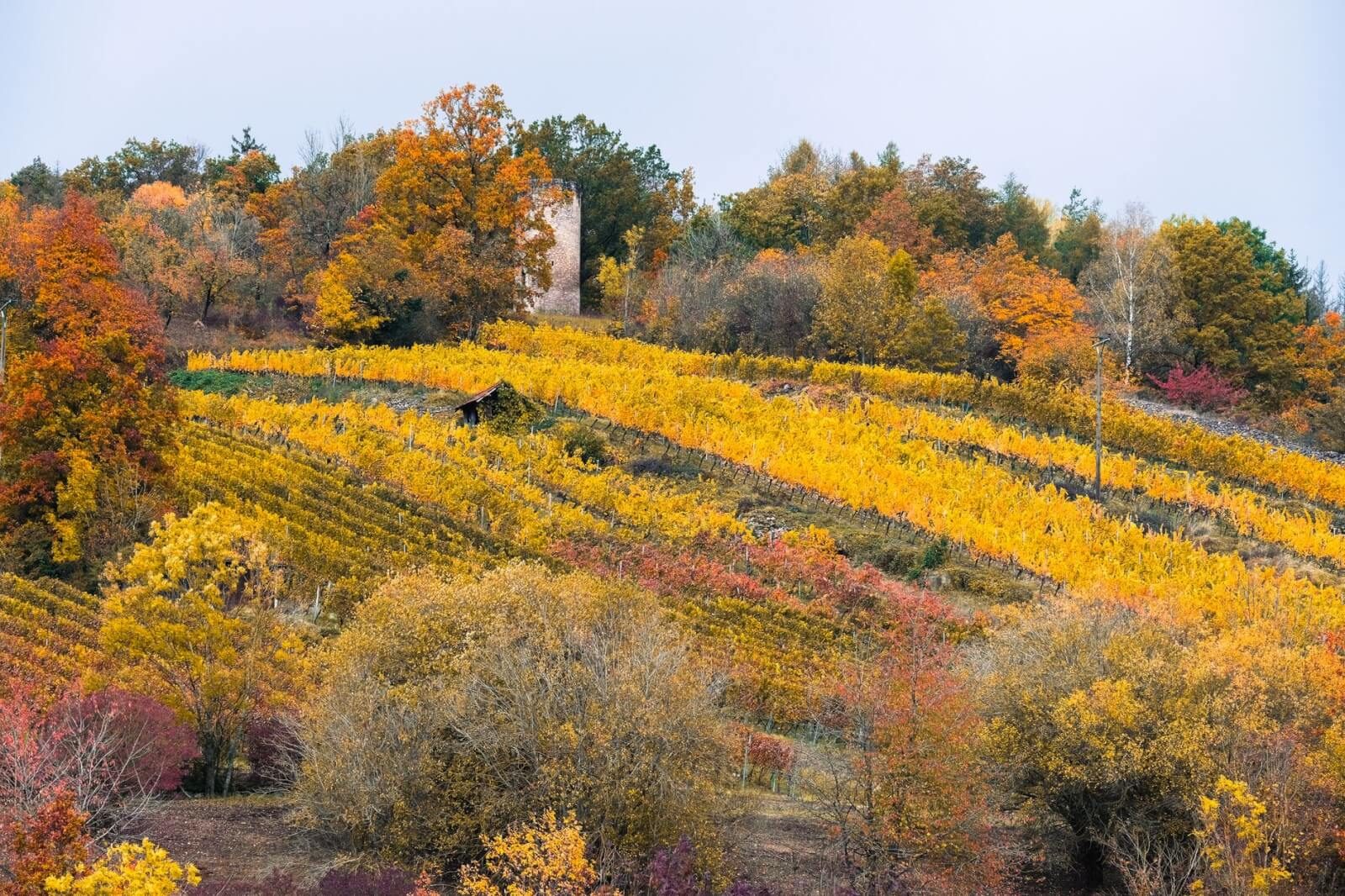
Temperatures in September are still warm — typically 17°C to 22°C (63°F to 72°F) — and the days are long enough for comfortable afternoon excursions. By mid-October, temperatures drop noticeably, evenings become cold, and foliage on the gorge hillsides begins turning amber and gold, which adds its own beauty to the landscape. October is the best month for foliage viewing on the Rhine; the vine leaves in particular turn vivid red and orange before the harvest is complete.
Prices in September and early October are meaningfully lower than peak spring sailings while the experience is comparable in quality. Ports are less crowded, particularly after the main summer tourist wave recedes in late August. For travelers with flexible schedules, this is the most cost-effective time to go without sacrificing experience.
Winter and Christmas Markets: November to December
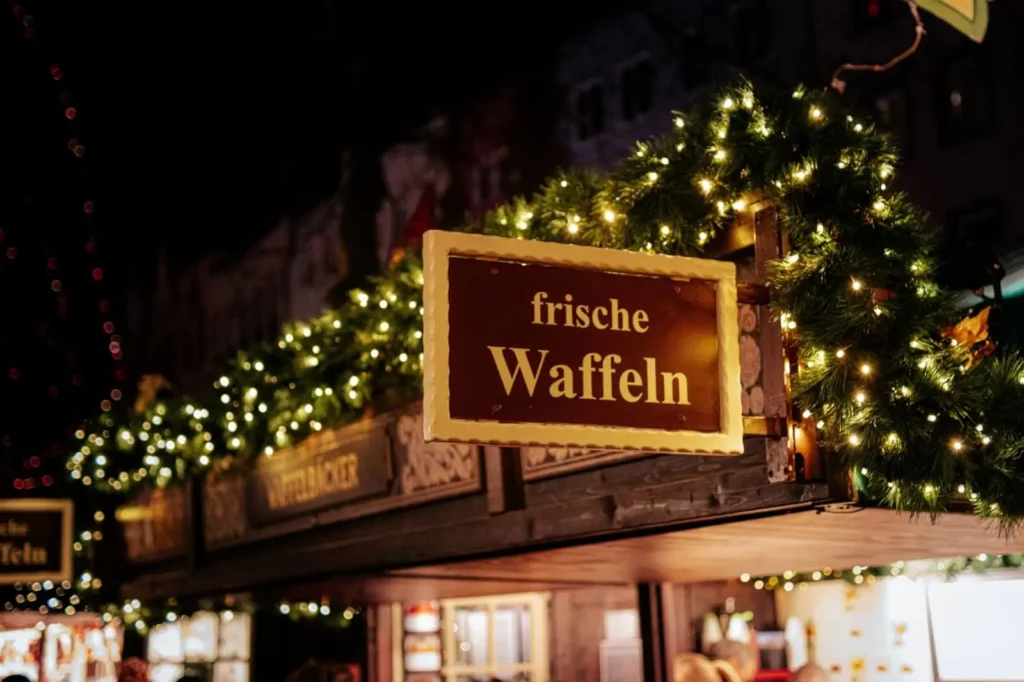
Christmas market cruises on the Rhine are a legitimate niche — not just a marketing category. The markets in Cologne, Strasbourg, Koblenz, Rüdesheim, and Basel are among the best in Europe, and experiencing them from a river ship that docks directly in the old towns is a different thing from a land-based visit. You are warm and comfortable onboard, then step directly into a market lit with thousands of candles and fairy lights, smell mulled wine and roasting chestnuts, and walk back to the ship for dinner.
Strasbourg’s Christmas market is the oldest in France, dating to 1570, and draws enormous crowds — over two million visitors annually across the market season. Cologne’s market, spread across multiple city squares around the cathedral, is one of Germany’s largest. Rüdesheim’s market, strung along the Drosselgasse with its unique covered setting, is perhaps the most intimate of the major Rhine markets.
The tradeoffs are real. November and December on the Rhine are cold — temperatures range from near-freezing to about 8°C (46°F). Daylight is short: by mid-December the sun sets before 4:30pm, which limits outdoor sightseeing time significantly. The gorge scenery, stripped of leaves and often gray, is less dramatic than in other seasons, though there is a spare beauty to the bare vine rows and mist-wrapped castle ruins. Pack warm clothes, waterproof layers, and comfortable cold-weather shoes.
Water Levels: The Hidden Variable
River level is the factor most travelers do not think about until it disrupts their cruise. The Rhine’s depth fluctuates with rainfall, snowmelt, and summer heat. Too low, and ships must slow down or reduce passenger capacity to raise the hull — or, in severe cases, substitute coach travel for sections of the route. Too high (usually in early spring during snowmelt), and bridges with low clearance may be impassable, forcing itinerary adjustments in the Dutch section.
The risk periods are as follows:
- Low water: Most likely in July and August during hot, dry summers. Also occasionally an issue in late winter dry spells.
- High water: Most likely in February through early April, particularly if Alpine snowmelt is heavy. Rarely a problem from May onward.
- Stable conditions: Late April through June, and September through October offer the most consistent water levels historically.
Reputable operators have contingency plans for water disruptions — coaches, adjusted routes, partial refunds in severe cases — but no disruption plan is as good as the original itinerary. Booking in the stable-condition windows genuinely reduces this risk.
Best Time by Travel Interest
For wine: September through mid-October. Harvest season, festivals, new wine, and vineyard color.
For spring scenery: Late April through May. Blossoms, green vine rows, wildflowers in the gorge.
For value: September to early October. Quality comparable to spring, prices notably lower.
For families: Late June to July, before schools return. Not the quietest time, but the only practical window for many families.
For Christmas atmosphere: Late November to mid-December. Markets are genuinely special; accept the cold and short days.
For avoiding crowds: Late April or early October. Both sit just outside the peak pressure periods.
For fireworks and festivals: Late June through August for Rhine in Flames events.
Frequently Asked Questions
What month is the best for a Rhine cruise overall?
May and September are the two most consistently recommended months. May offers the best weather and scenery for first-timers willing to pay spring prices. September offers nearly equivalent quality at lower prices with the added appeal of wine harvest season. If forced to choose just one, September edges ahead for experienced travelers; May is slightly more forgiving for those on their first river cruise.
Are Rhine cruises affected by low water levels?
Yes, and it is worth understanding the risk. Low water disruptions are most common in July and August during hot summers. They have caused itinerary changes on some sailings in recent years, including coach substitutions for sections where ships could not safely navigate. Spring and autumn sailings carry significantly lower low-water risk. Always check your booking’s cancellation and disruption policy before traveling.
Is a Rhine Christmas market cruise worth the cold?
For many travelers, yes. The markets at Cologne, Strasbourg, Koblenz, and Rüdesheim are genuinely beautiful, and the river ship experience adds warmth and comfort that a self-guided land trip cannot match. The cold is manageable with proper layers. The short daylight hours are a real limitation if outdoor sightseeing is your priority, but if your focus is atmosphere, food, wine, and markets, the cold becomes part of the experience rather than a problem.
What is the weather like on a Rhine cruise in October?
Early October is typically mild — around 15°C to 18°C (59°F to 64°F) during the day — with the first reliably cool evenings of autumn. Foliage on the gorge slopes and vine rows begins turning by mid-October, which adds significant visual appeal. Late October can be cold and gray, with temperatures dropping into single digits at night. The second half of October is still perfectly cruiseable but requires warmer packing than September or early October.
How far in advance should I book for the best Rhine cruise season?
For May and September sailings, which are the most popular, booking six to twelve months in advance is typical for good cabin selection at reasonable fares. Early booking discounts are common among operators and can represent meaningful savings on the base fare. Last-minute deals do occasionally appear in any season, but availability for specific dates and cabin types becomes limited by three months out for peak spring and autumn sailings.