
Some links in this article may earn ToursZoom a commission at no extra cost to you — see our affiliate disclosure.
Last updated: April 2026
A Rhone River cruise travels through two of France’s most celebrated regions — Burgundy in the north and Provence in the south — calling at Lyon, Vienne, Tain-l’Hermitage, Viviers, Avignon, and Arles over 8 to 11 days. The combined Saone and Rhone route links world-class wine country with Roman ruins, lavender fields, and some of the finest food in Europe.
- The Route: Burgundy to Provence
- Key Ports and What to Do There
- Burgundy: Saone River Section
- The Rhone Valley: Vienne to Viviers
- Provence: Avignon to Arles
- Wine Regions Along the Route
- Practical Information
- Frequently Asked Questions
The Route: Burgundy to Provence
Most Rhone River cruises combine two rivers. Ships depart from Chalon-sur-Saone or Macon in Burgundy, sail south along the Saone to Lyon, then turn onto the Rhone and continue to Arles near the Camargue coast. The full route covers roughly 300 miles of navigable waterway through some of the most recognisable landscapes in France.
The standard cruise duration runs 8 days, though many operators offer 11-day itineraries that allow more time in Burgundy or additional stops in Provence. Ships carry between 100 and 160 passengers — a fraction of the size of an ocean liner — which means you dock in the heart of each town and walk straight off into the streets.
Direction matters less than timing. Northbound itineraries (Arles to Lyon or Chalon-sur-Saone) cover the same ground as southbound routes. Most travelers find it practical to fly into Lyon and out of Marseille, or vice versa, rather than returning to the same city.
Key Ports and What to Do There
Chalon-sur-Saone
The northern gateway to the cruise, Chalon-sur-Saone is an underrated Burgundy town known as the birthplace of photography — Nicephore Niepce produced the world’s first photograph here in 1826. The old quarter around Place Saint-Vincent is compact and walkable, and the market on Friday mornings is one of the best in the region. Wine estates in the surrounding Cote Chalonnaise are easily reached by bicycle.
Beaune
Though not always a river stop (some itineraries make it a coach excursion from Chalon or Lyon), Beaune is worth every effort. It is the undisputed capital of the Burgundy wine trade, home to the Hospices de Beaune — a 15th-century hospital whose Gothic tiled roof is one of the most photographed facades in France — and surrounded by the vineyards of the Cote d’Or. Pinot Noir and Chardonnay dominate here, and tastings at the cave cooperatives are open to independent visitors.
Lyon
Lyon is where the Saone meets the Rhone, and it earns its reputation as the gastronomic capital of France. The old town — Vieux-Lyon, a UNESCO World Heritage Site — sits beneath the basilica of Fourviere on a hill above the river and contains some of the finest Renaissance architecture in the country. Lyon is also the home of the bouchon: small, convivial bistros serving tripe, quenelles, and local charcuterie at long communal tables. Even a half-day here rewards serious attention. Les Halles de Lyon Paul Bocuse, the indoor market, is the best single stop for understanding what this city eats.
Vienne
Just 30 kilometers south of Lyon, Vienne was a major Roman city and the evidence is everywhere. The Temple of Augustus and Livia stands in the center of town, almost perfectly intact. The amphitheater on the hillside hosts the Jazz à Vienne festival every July. The surrounding vineyards — Cote-Rotie and Condrieu — are among the most prestigious and smallest appellations in France, producing Syrah and Viognier on near-vertical terraced slopes above the river.
Tain-l’Hermitage and Tournon
These twin towns face each other across the Rhone, connected by a suspension bridge. Tain is wine country — the Hermitage hill rising directly behind the town produces some of the most concentrated Syrah in the world, and Crozes-Hermitage surrounds it with more accessible wines from similar granite soils. Tournon, on the opposite bank, has a 16th-century chateau overlooking the river and a slower, more village-like character. Most cruise ships stop here and offer guided vineyard walks up the Hermitage hill with tastings at the summit.
Viviers
One of the smallest stops on the cruise, Viviers is also one of the most atmospheric. The medieval village perched above the river has been continuously inhabited since the 5th century and its cathedral dates to the 12th. Most passengers have this place almost to themselves — few tourists reach Viviers independently — which makes the narrow stone lanes and the view from the episcopal palace feel genuinely unhurried.
Avignon
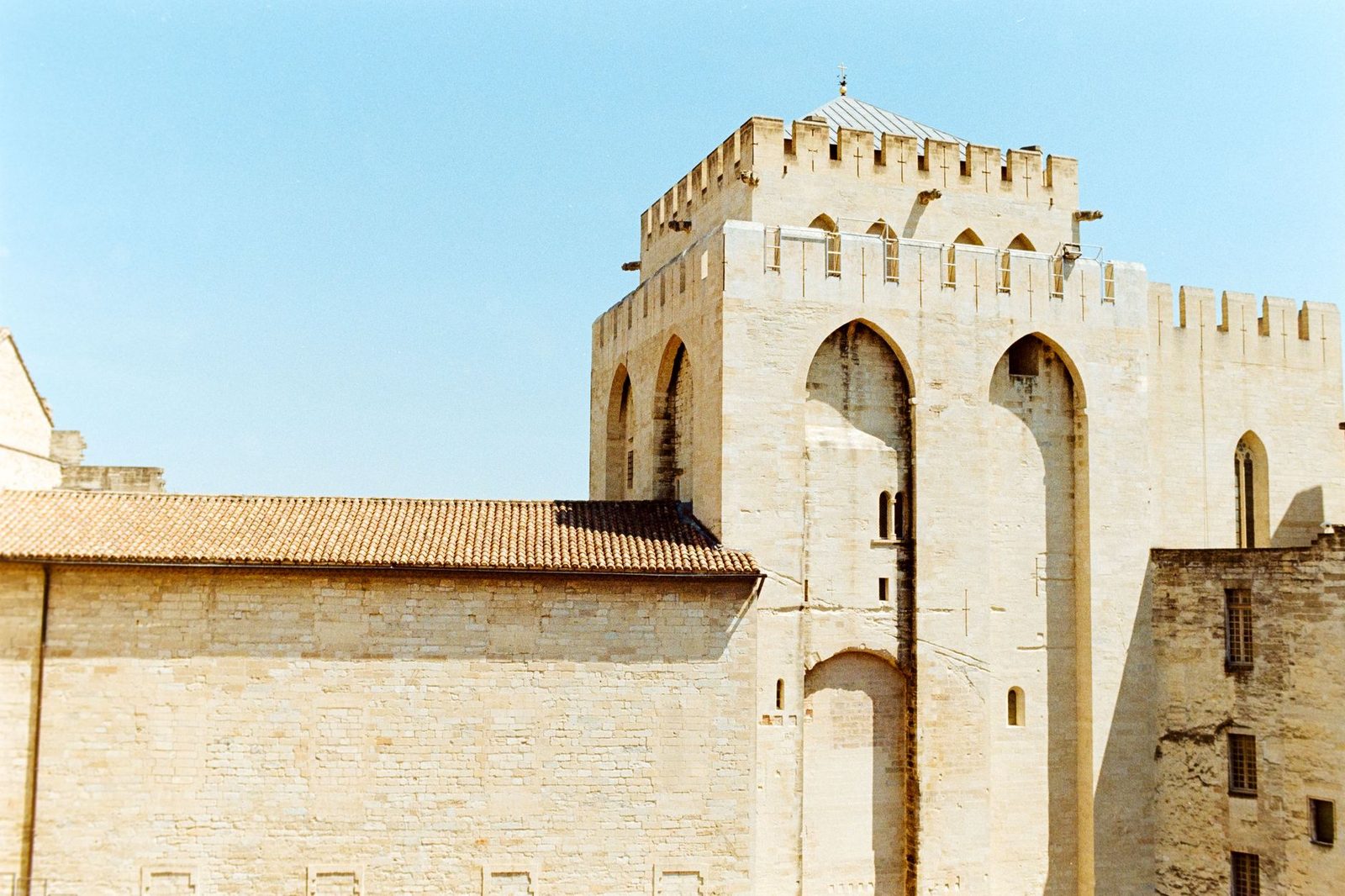
Avignon was the seat of the Catholic papacy from 1309 to 1377, and the Palace of the Popes that dominates the city is one of the largest Gothic buildings in Europe. The Pont d’Avignon — the famous bridge of the nursery rhyme — extends halfway across the Rhone and stops abruptly; four arches survive from an original 22. The walled old city is a pleasure to walk, and the outdoor market on the central square runs through most of the year. Avignon is also the base for day trips to Les Baux-de-Provence, the perched village above the limestone Alpilles, and to the Pont du Gard, the Roman aqueduct 20 kilometers to the west.
Arles
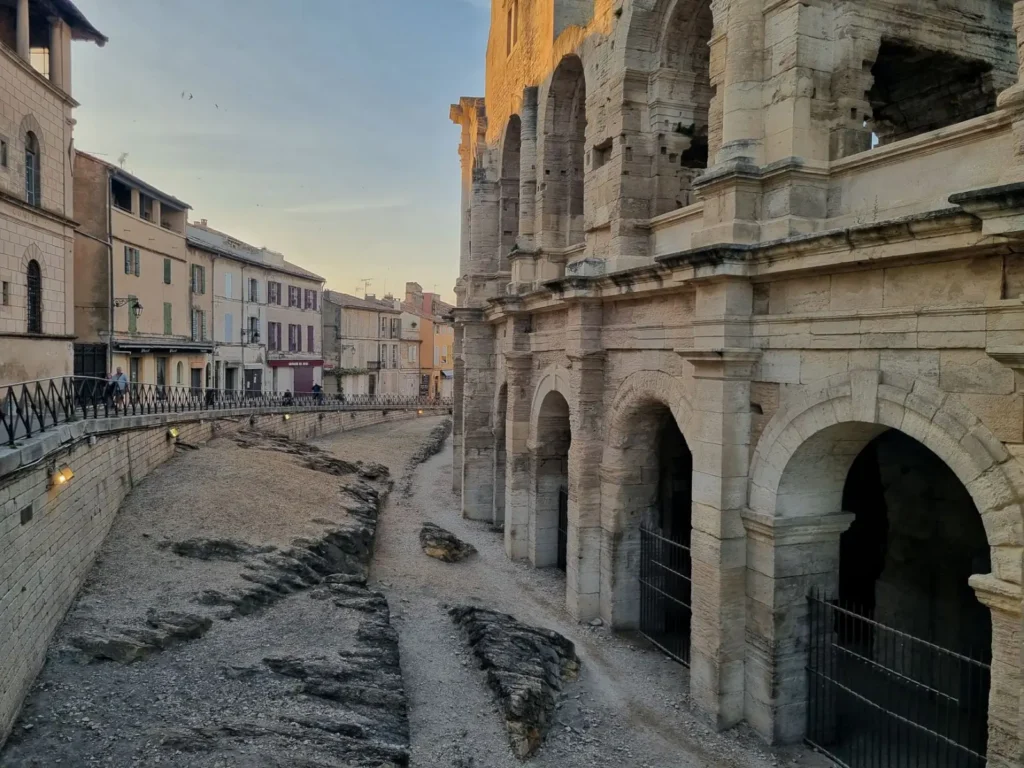
The cruise’s southern terminus is the most visually striking city on the route. Van Gogh lived and painted in Arles in 1888 and 1889, and the Foundation Van Gogh museum traces his time here. The Roman amphitheater — Les Arenes — still hosts bullfights and is in daily use. The city sits at the edge of the Camargue: the flat, marshy river delta where wild white horses roam, flamingos feed in shallow lagoons, and gardians (Camargue cowboys) herd the local black bulls across salt flats. An excursion into the Camargue by jeep or on horseback is one of the most unusual experiences available anywhere on the cruise route.
Burgundy: Saone River Section
The Saone flows gently through a wide, flat valley lined with poplar trees and working vineyards. This is the quieter, slower section of the cruise — the river itself is calm and unhurried, and the towns along its banks have a provincial ease that contrasts with the more dramatic Rhone gorges further south.
Burgundy’s wine story runs north to south along the Cote d’Or escarpment, roughly parallel to the Saone. The great red Burgundy villages — Gevrey-Chambertin, Chambolle-Musigny, Vosne-Romanee, Nuits-Saint-Georges — are a short drive or coach excursion from the river. The white Burgundy villages of Meursault, Puligny-Montrachet, and Chassagne-Montrachet lie to the south of Beaune. Most cruise itineraries build at least one full-day Burgundy excursion into the program.
Macon is another Saone town worth noting: a market town surrounded by the Maconnais vineyards, including Pouilly-Fuisse. It is more relaxed than Beaune and easier to explore without a guide.
The Rhone Valley: Vienne to Viviers
South of Lyon, the Rhone becomes more dramatic. The valley narrows between steep granite hillsides, the water moves faster, and the vineyards climb at vertiginous angles above the river. This section — the Northern Rhone — produces some of the world’s most distinctive wines from tiny quantities of grapes on terraced slopes that have been worked for over 2,000 years.
The landscape shifts gradually as you move south. The granite and schist of the Northern Rhone give way to the garrigue — low scrub of thyme, rosemary, and lavender — that characterises the southern approach to Provence. Temperatures rise, the light changes, and the architecture begins to look unmistakably Mediterranean.
The Mistral wind, which funnels down the Rhone valley from the Alps toward the sea, can be a feature of travel in this region at any time of year. It arrives without much warning, can blow at 60 km/h or more, and feels cold even in summer. A windproof layer is worth keeping accessible throughout the cruise.
Provence: Avignon to Arles
The Provence section of the cruise covers the southern Rhone and the landscapes that Cezanne, Van Gogh, and Matisse made famous. The light is genuinely different here — sharper, more saturated — and the colors of the villages, the markets, and the countryside reward anyone who pays attention.
Avignon gives access to the southern Rhone wine regions: Chateauneuf-du-Pape is 15 kilometers north of the city and is the most famous appellation in the south. The vineyards are covered in large, smooth stones called galets roules that absorb heat by day and release it at night, contributing to the wine’s characteristic warmth and richness. Most cruise itineraries include a Chateauneuf-du-Pape visit as an optional excursion from Avignon.
Les Baux-de-Provence, perched on a limestone spur above the Alpilles plain, is one of the most visually dramatic villages in France. The ruined castle at the summit was one of the most powerful in medieval Provence, and the views across the olive groves and lavender fields are exceptional.
Wine Regions Along the Route
A Rhone cruise is, among other things, a wine education in motion. The route passes through or near the following major wine appellations:
- Cote de Nuits and Cote de Beaune — the heart of red and white Burgundy, producing Pinot Noir and Chardonnay from limestone soils
- Cote Chalonnaise — more affordable Burgundy wines from the area around Mercurey and Givry
- Maconnais — white Burgundy dominated by Pouilly-Fuisse and Saint-Veran
- Beaujolais — Gamay country, often visited on the Saone section between Macon and Lyon
- Cote-Rotie and Condrieu — tiny, prestigious Northern Rhone appellations near Vienne
- Crozes-Hermitage and Hermitage — Syrah and white Marsanne and Roussanne from Tain-l’Hermitage
- Cotes du Rhone — the broad southern Rhone appellation covering much of the area around Avignon
- Chateauneuf-du-Pape — the southern Rhone’s most celebrated red wine appellation, near Avignon
Most cruises include at least two or three formal wine tastings as part of the program, with optional winery visits available as paid excursions at many ports.
Practical Information
Getting there: Most travelers fly into Lyon Saint-Exupery airport for northbound itineraries or into Marseille for southbound ones. Lyon is well connected from London, Paris, Amsterdam, and other European hubs. The TGV high-speed train from Paris Gare de Lyon reaches Lyon in under two hours.
Ship size: Rhone river ships typically carry 100 to 160 passengers. Cabins range from comfortable standard rooms with river-view windows to larger suites on upper decks. Unlike ocean cruises, river ships have no casino, no formal entertainment theater, and no formal dress codes. The experience is quieter and more focused on the destinations.
Excursions: Cruise programs typically include one or two guided excursions at each port. Additional optional excursions — winery visits, cycling tours, cooking classes, Camargue jeep safaris — are usually available at extra cost. Independent exploration is equally straightforward; most port towns are walkable from the dock.
Currency and language: France uses the euro. English is widely spoken at cruise-related venues, though a few words of French are appreciated in smaller villages.
Packing: Comfortable walking shoes are the most important item. Many sites involve cobblestones, stairs, and uneven ground. Layers are advisable at any time of year — morning temperatures on the river can be cool even in July — and a windproof outer layer handles the Mistral. Cabin storage is limited on river ships; a medium-sized rollaboard suitcase is the practical maximum.
Frequently Asked Questions
How long is a typical Rhone River cruise?
Most itineraries run 8 days, which allows one or two port stops per day between Chalon-sur-Saone or Lyon in the north and Arles or Avignon in the south. Extended 11-day cruises add more time in Burgundy or additional excursions in Provence. A few specialist operators offer shorter 5- or 6-day segments for travelers with limited time.
Do I need to speak French?
No. Staff on cruise ships speak English, and most museums, restaurants, and tourist sites in the main ports are accustomed to English-speaking visitors. In smaller villages like Viviers, a willingness to try a few words of French goes a long way and is generally appreciated, but it is not required.
Can I explore ports independently without joining guided tours?
Yes. River ships typically dock in or very near the center of each town, and walking off independently is straightforward. Most port towns are compact enough to explore on foot in 2 to 4 hours. Markets, wine caves, and cafes are accessible without a guide. The optional excursions to sites further afield — Beaune from Chalon, Chateauneuf-du-Pape from Avignon, the Camargue from Arles — are harder to replicate independently without a car, so these are usually worth joining.
Is the Rhone River cruise suitable for people with mobility limitations?
The ships themselves are generally accessible, with lifts connecting decks. Going ashore is trickier: gangways involve steps, and the historic centers of most ports are on uneven cobblestone streets with stairs at key sites. The Roman amphitheater in Arles, the hilltop in Viviers, and the Hermitage vineyard walk all involve significant climbing. Most operators are transparent about the physical demands of each excursion, and there are usually lower-intensity options available at each port.
What is the difference between the Rhone and the Saone sections of the cruise?
The Saone, which runs through Burgundy between Chalon-sur-Saone and Lyon, is a wide, gentle river with flat banks and a calm, pastoral character. The Rhone, south of Lyon, is faster and more dramatic, passing through narrow gorges in the Northern Rhone before widening into the flatter Provence plain near Avignon. The Saone section focuses on Burgundy wine country and the city of Lyon; the Rhone section delivers the more varied scenery, the Roman sites, and the distinctive light of the south.