
Some links in this article may earn ToursZoom a commission at no extra cost to you — see our affiliate disclosure.
Last updated: April 2026
A Seine River cruise from Paris to Normandy covers roughly 370 kilometers of one of Europe’s most storied waterways — past Impressionist gardens, Gothic cathedrals, chalk cliff coastlines, and the beaches where history turned in June 1944. Most itineraries run seven to eight days and sail round-trip from Paris, docking at five to seven ports along the way.
- Why the Seine
- Route Overview: Paris to the Normandy Coast
- Key Ports and What You’ll Find There
- Life on Board
- Shore Excursions Worth Booking
- Practical Planning
- Frequently Asked Questions
Why the Seine
The Seine does not behave like most European river cruise routes. The Rhine and Danube slice through a chain of different countries; the Seine stays entirely in France, and that geographic focus shapes the whole experience. You are not ticking off border crossings — you are going deep into one culture, one language, one kitchen.
The river itself is also unusually varied. In Paris, it is urban and monumental — Haussmann facades, medieval islands, bridges dressed with lampposts. Fifty kilometers west, outside the city, it starts to loop and meander through farmland and chalk escarpments. By the time you reach the Norman coast, the light has changed completely: flatter, grayer, oceanic. Painters figured this out before anyone else. Monet, Pissarro, Boudin, and Sisley all worked along this corridor, and the landscapes they captured are still recognizable from the water.
There is also the history. Rouen was a Roman city, a Viking stronghold, a medieval capital. Richard the Lionheart built a castle on the cliffs at Les Andelys. Joan of Arc was burned in Rouen’s market square. The Normandy beaches are an hour’s drive from where the ship docks — and the weight of that proximity is something most travelers feel strongly, whether or not they expected to.
Route Overview: Paris to the Normandy Coast
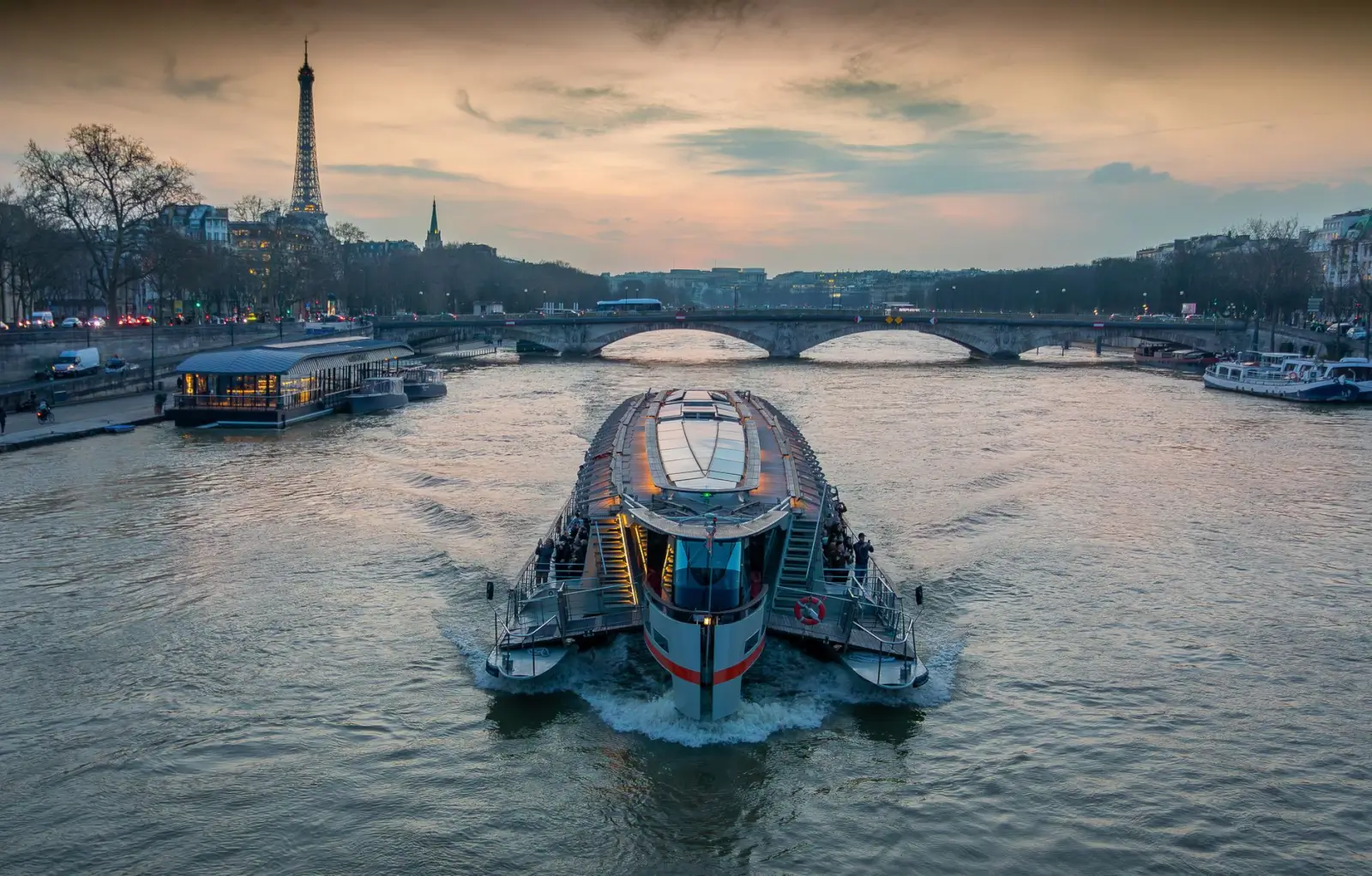
The standard Seine River cruise departs from Paris — typically from a dock near the Eiffel Tower or near Pont de l’Alma — and sails downstream (northwest) toward the English Channel before returning to Paris. The round-trip distance is approximately 370 kilometers each way, though ships do not sail the full distance in one go; they moor each night in a port, giving passengers time ashore in the evenings and mornings.
A seven-night itinerary typically unfolds like this:
- Day 1: Embark in Paris. Sail along the city waterfront in the evening.
- Day 2: Vernon — gateway to Monet’s gardens at Giverny.
- Day 3: Les Andelys — Château Gaillard on the chalk cliffs.
- Day 4: Rouen — Gothic cathedral, Joan of Arc memorial, half-timbered old town.
- Day 5: Caudebec-en-Caux — a quieter Norman market town; possible excursions to the Abbey of Jumièges or Étretat cliffs.
- Day 6: Le Havre / Honfleur — D-Day beaches, the American Cemetery, Honfleur’s painted harbor.
- Day 7: Sailing back upstream; possible stop at La Roche-Guyon.
- Day 8: Return to Paris. Disembark.
Some itineraries are reversed (Le Havre to Paris) or extended to ten or eleven days with additional time in Paris at the start or end. The ports listed above appear on almost every Seine cruise program.
Key Ports and What You’ll Find There
Paris
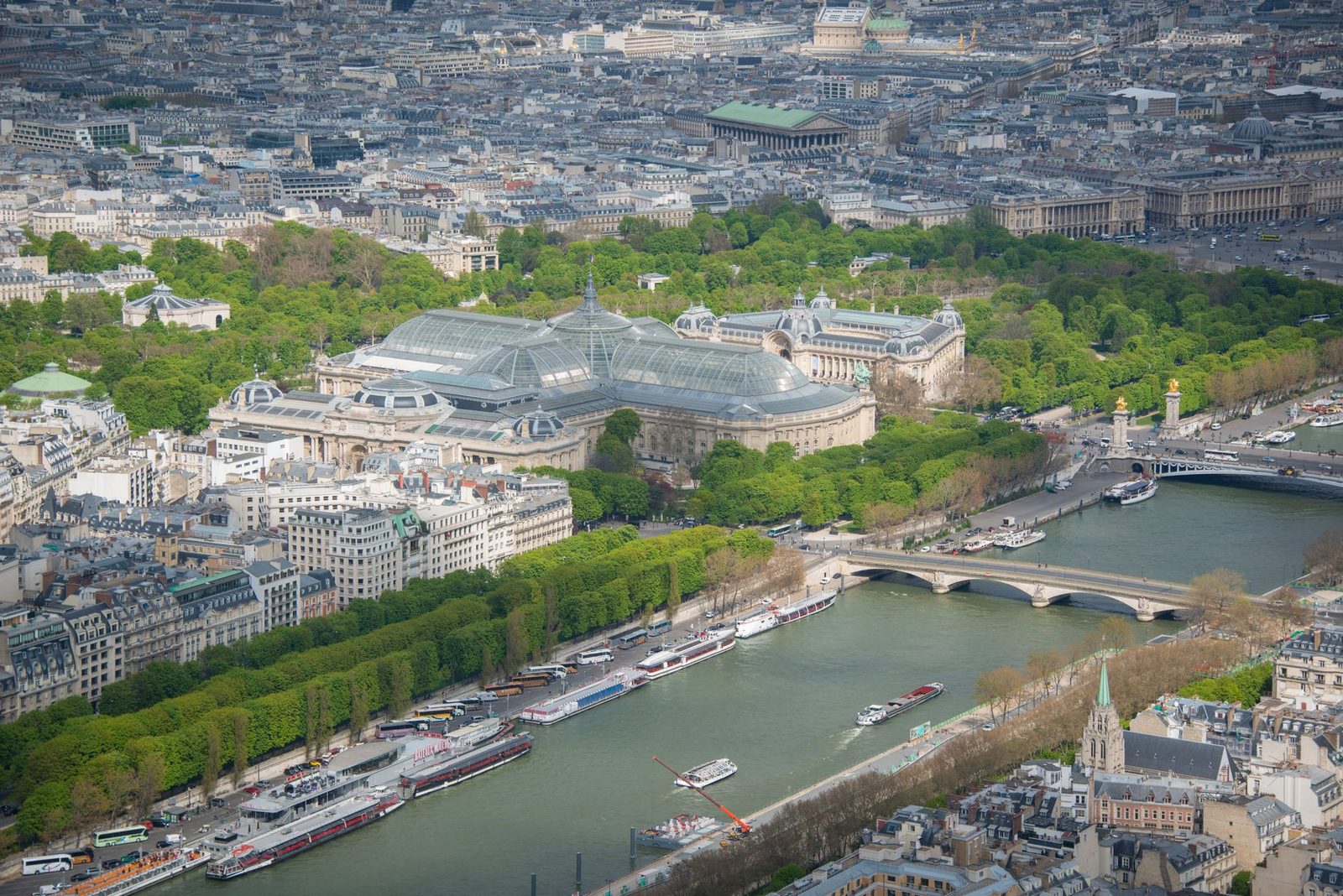
Most cruises allow one to two days in Paris before or after sailing, either as pre/post cruise packages or simply because the ship stays docked in the city on embarkation day. The standard sightseeing circuit — Eiffel Tower, Louvre, Notre-Dame, Musée d’Orsay — is well-trodden but still worth the time if it is your first visit. More interesting for returning travelers is the opportunity to see the city from the water: the ship’s upper deck gives a different perspective on landmarks you may have only seen from street level.
Vernon and Giverny
Vernon is a small market town about 75 kilometers northwest of Paris. It is primarily a transit point for Giverny, which sits three kilometers away across the Seine valley. Claude Monet lived and gardened at Giverny from 1883 until his death in 1926, and the property — house, studio, and the famous water-lily pond — is now open to visitors. The gardens are in best shape from late April through June, when the wisteria, irises, and roses are in bloom. Most cruise itineraries offer a guided bus transfer; the journey is short, and the site itself needs two to three hours.
Les Andelys
Les Andelys is where the Seine makes a dramatic bend at the foot of white chalk cliffs, and Château Gaillard — built by Richard I of England in 1196 to defend Normandy from French incursion — crowns the ridge above. The ruins are accessible on foot (a steep climb) or by shuttle. The view from the ramparts, looking down at the river’s loops, is one of the more striking sights on the entire cruise. The town below has a quiet, unhurried feel that many travelers appreciate after the pace of Paris.
Rouen
Rouen is the capital of Normandy and the most historically substantial stop on most Seine itineraries. The Gothic cathedral — the one Monet painted more than thirty times at different hours and seasons — dominates the old center. Nearby is the Gros-Horloge, a Renaissance astronomical clock mounted on an arch over a pedestrian street, and the Place du Vieux-Marché, where Joan of Arc was executed in 1431. The half-timbered streets between these landmarks are exceptionally well-preserved; it is the kind of medieval streetscape that takes genuine effort to imagine was heavily bombed as recently as 1944. Ships typically spend a full day and evening in Rouen, which is enough to walk the old town thoroughly.
Caudebec-en-Caux
A smaller port roughly midway between Rouen and Le Havre, Caudebec is often an afternoon or overnight stop. Its Gothic church of Notre-Dame de Caudebec is considered one of the finest in Normandy. From here, many cruises offer excursions to the ruins of Jumièges Abbey — a seventh-century Benedictine monastery, one of the most evocative ruins in France — or to the Étretat cliffs on the coast.
Le Havre and Honfleur
Le Havre is the Seine’s mouth — an industrial port city rebuilt entirely after wartime destruction in a modernist style by Auguste Perret, now a UNESCO World Heritage Site for exactly that postwar architecture. It is not conventionally picturesque, but it is interesting. Most travelers, however, use Le Havre as a base for the day: either heading west to the D-Day beaches and the American Cemetery at Colleville-sur-Mer (about 45 minutes by road), or crossing the Normandy Bridge to Honfleur.
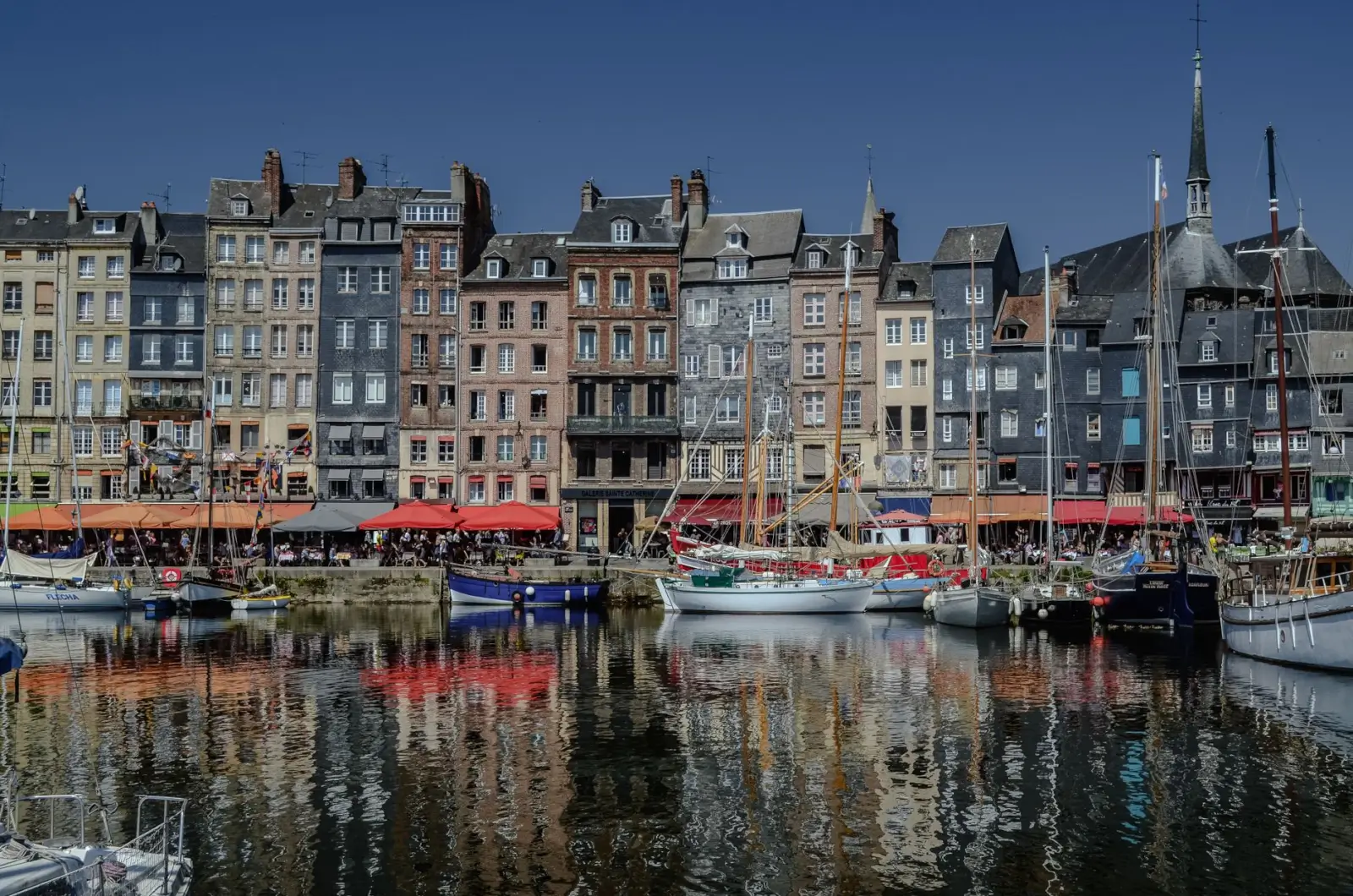
Honfleur is the place most often photographed on this route — a working fishing harbor encircled by tall, narrow houses from the seventeenth century, many of which are now restaurants serving the local catch. Eugene Boudin was born here, and the Boudin Museum holds a strong collection of his coastal paintings. The quayside is walkable in an hour; the fish restaurants and apple-brandy bars reward a longer stay.
Life on Board
Seine River cruise ships are purpose-built for the route. French low bridges impose a strict height limit, so ships have retractable upper decks and low profiles — nothing like ocean cruise liners. Most carry between 100 and 190 passengers, which keeps the atmosphere quiet and personal. You will recognize fellow travelers by the end of the first day.
Meals are a genuine feature rather than an afterthought. Most lines include breakfast and dinner; some include lunch. Norman cuisine shows up throughout — duck confit, camembert, moules marinières, tarte Tatin, Calvados. Wine pairings are typically included with dinner on higher-end ships.
Evenings at port are usually free. The ship moors central in town, and walking off for dinner or a drink is encouraged. On nights when the ship sails between ports, the movement is gentle — the river is calm — and it is common to fall asleep watching riverbanks go past in the dark.
Shore Excursions Worth Booking
Most cruise operators offer optional shore excursions at each port. Some are included in the cruise fare; others carry an additional charge. The excursions worth prioritizing:
- Giverny (from Vernon): Non-negotiable if it is your first time. Book through the cruise line for guaranteed timing; independent travelers are welcome at the garden but must manage their own transport.
- D-Day Beaches (from Le Havre or Honfleur): A full day. Omaha Beach, Pointe du Hoc, and the American Cemetery at Colleville-sur-Mer are within a 60-kilometer drive of the port. Guided tours manage the logistics; self-driving is also feasible with advance research.
- Jumièges Abbey (from Caudebec): Less visited than the major landmarks, and all the more atmospheric for it. The hollow nave walls and overgrown graveyard are genuinely striking.
- Étretat cliffs: Best on a clear morning. The arch formations at Falaise d’Aval are a 20-minute walk from the town center. Avoid midday in summer when the clifftop path becomes crowded.
Practical Planning
When to go: Late April through June is ideal — gardens are in bloom, crowds are manageable, and daylight hours are long. September and October are a close second: cooler temperatures, autumn light on the river, fewer tourists. July and August work but come with higher prices and more crowded excursion sites.
What to pack: The French weather in Normandy is northern and changeable. Even in June, an evening on deck can be cool. Bring layers, a light waterproof jacket, and comfortable walking shoes — several excursion sites involve uneven cobblestones or grass paths on clifftops.
Fitness level: Seine River cruises are accessible to most fitness levels. The ship is stable, the ports are walkable, and most excursions involve light walking. Château Gaillard requires a steep ascent; passengers with mobility limitations should confirm alternatives with the cruise operator.
Currency and connectivity: France uses the euro. Connectivity on board varies by operator; most ships offer Wi-Fi, though speeds can drop when the ship is between ports. Download offline maps before you sail.
Language: French is the local language. In tourist-facing businesses throughout Rouen, Honfleur, and Giverny, English is widely spoken. Learning a handful of French greetings is both practical and appreciated.
Frequently Asked Questions
How long is a typical Seine River cruise from Paris to Normandy?
Most Seine River cruises run seven to eight nights, sailing round-trip from Paris and visiting five to seven ports. Some itineraries are extended to ten or eleven days with additional time in Paris at the beginning or end. Shorter four- or five-night options also exist, though they cover fewer ports.
Do I need a visa to cruise the Seine?
The Seine cruise stays entirely within France, so visa requirements follow standard French and EU entry rules. Citizens of the US, Canada, Australia, and the UK do not require a visa for stays under 90 days. Always verify entry requirements against your own passport before booking.
Can I visit Giverny on my own without the cruise excursion?
Yes. Giverny is accessible by public transport from Vernon (shuttles run in season) or by taxi. The Fondation Claude Monet is open Tuesday through Sunday from April to October. Booking entry tickets in advance online is strongly recommended — walk-up queues can be long, especially in May and June.
Are the D-Day beaches accessible from the cruise?
Yes. When the ship docks at Le Havre or Honfleur, the D-Day beaches — including Omaha Beach and the American Cemetery at Colleville-sur-Mer — are approximately 45 to 60 minutes by road. Most cruise operators offer full-day excursions; independent tours and car hire are also available from both ports.
Is the Seine River cruise suitable for children?
It depends on the line. Some operators focus on adult travelers and have no specific children’s programming; others welcome families and can accommodate younger passengers. The itinerary itself — medieval ruins, Impressionist gardens, D-Day history — tends to engage older children and teenagers more than young ones. Check with individual operators about their age policies and onboard amenities before booking.