

Some links in this article may earn ToursZoom a commission at no extra cost to you — see our affiliate disclosure.
Last updated: April 2026
The best time of the year for Seine river cruises is late April through June for gardens and mild weather, or September through October for autumn light and smaller crowds. Summer (July–August) is popular but busier and pricier. Winter cruises run but come with shorter daylight and some schedule limitations.

- Season by Season Overview
- Spring (April–June): The Peak of the Route
- Summer (July–August): High Season Trade-offs
- Autumn (September–October): The Quieter Choice
- Winter (November–March): Limited but Possible
- Practical Timing Decisions
- Frequently Asked Questions
Season by Season Overview
The Seine flows through northern France — not the sun-baked south. The climate along this corridor is oceanic and maritime: mild, damp, and variable. Paris gets warm summers but is rarely scorching; Normandy, closer to the English Channel, stays cooler and grayer year-round. This matters for cruise planning because the experiences on offer — garden visits, clifftop walks, time on an open deck — are shaped by the weather in ways that a beach vacation is not.
The cruise season runs roughly April through November, with a limited winter schedule maintained by some operators. Each season has a genuine argument in its favor, and the best choice depends on your priorities: gardens, crowds, price, or atmosphere.
Spring (April–June): The Peak of the Route
Spring is when the Seine corridor is most alive. The gardens at Giverny — the defining excursion on most itineraries — are in best condition from late April through early June, when irises, wisteria, tulips, and roses all overlap. By late June, the wisteria is finished and the water lilies are not yet fully out; by late July, the garden has a slightly overblown quality. If Giverny is a priority, May is the target month.
Beyond Giverny, spring in Normandy means cherry blossoms on roadsides, fresh asparagus and lamb on menus, and the riverside farmland in its most vivid green. Daylight hours are increasing — by late May you have light until nearly 10:00 pm, giving long evenings for walking ports after dinner.
Weather in April is changeable. Cold fronts push in from the Atlantic without much warning, and a day that starts sunny can be drizzly by afternoon. Pack layers and a compact waterproof for April sailing. May is more settled; June is the most reliable spring month. Temperatures range from around 14°C (April) to 21°C (June).
Crowds: spring is popular but not overwhelming at most stops. Giverny gets busy on weekends and French public holidays — Ascension (May), Pentecost (late May/June) — so mid-week departures during these periods are worth seeking out.
Best for: Garden lovers, travelers who want reliable good weather, first-time visitors wanting the full experience.
Summer (July–August): High Season Trade-offs
July and August are when the most people sail the Seine. The weather is reliably warm — Paris hits 25–28°C on a typical July afternoon — the school holidays are on, and everything is open and running. The sundeck gets genuine use. Evening light stretches into the night. Honfleur harbor fills with day-trippers and the outdoor restaurants are full.
The trade-offs are real. Prices for cabins, particularly in July, are at their highest. Popular excursion sites — Giverny, the D-Day beaches — are more crowded. The Normandy American Cemetery is always treated with quiet respect regardless of visitor numbers, but Giverny in peak July is a different experience from Giverny in early May; the garden feels more like a tourist attraction and less like someone’s private obsession made public.
Paris itself in August is complicated: a significant portion of Parisians leave the city for their own holidays, which means some smaller restaurants and shops close for the month. The tourist sites remain open and busy, but the city has a different character — more international visitors, fewer locals.
Late June is the sweet spot within this period: schools have not yet broken up in most European countries, the weather is good, and the gardens are still reasonable. If your schedule is flexible, the last week of June beats the first week of July on most practical measures.
Best for: Families (school holiday timing), travelers who prefer warm deck weather, those without much schedule flexibility.
Autumn (September–October): The Quieter Choice
September is, for many experienced river cruisers, the best month on the Seine. Crowds thin noticeably after the European school terms restart in early September; prices ease back from summer peaks; and the light changes in a way that is genuinely different from any other season.
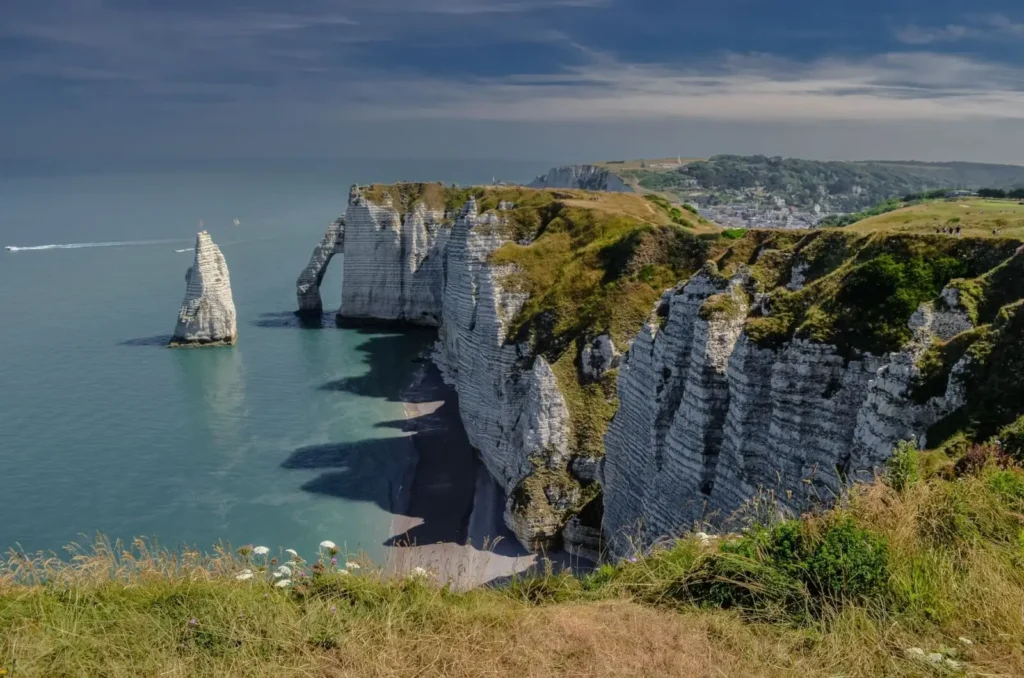
The light in Normandy in autumn is the same quality that drove the Impressionists — flatter, softer, with an evening gold that turns the chalk cliffs and the half-timbered houses into something painterly. The Seine valley at this time of year has a muted quality that summer cannot replicate. Temperatures are comfortable: September averages 18–20°C in Paris and somewhat cooler near the coast.
October is cooler — around 14–15°C — with a higher chance of overcast days. The foliage turns along the riverbanks in late October: copper and yellow in the forest sections between Les Andelys and Rouen. Some travelers find October the most beautiful month visually; others find the shorter days (dark by 6:00 pm by late October) reduce evening port time meaningfully.
Giverny’s garden closes for the season at the end of October. If visiting in September, the garden is still open and the water lilies are typically at their best — the painting Monet was actually working on for much of his later life. If visiting in October, confirm garden access before booking.
Best for: Repeat visitors who have done Paris in summer, travelers wanting lower prices and smaller crowds, photographers.
Winter (November–March): Limited but Possible
Most major Seine cruise operators suspend itineraries between November and March, or run a heavily reduced schedule. Those that continue tend to focus on the pre-Christmas period — late November and December — when Normandy and Paris both have Christmas market programs and a different kind of atmosphere.
Winter cruising on the Seine has genuine appeal for the right traveler: near-empty ports, dramatically low tourist numbers, Norman cuisine at its richest (game, root vegetables, aged Calvados), and the kind of quiet that is simply not available from April through October. But the practical constraints are significant.
Water levels are the main risk. The Seine runs higher in winter and early spring, and in years with heavy rainfall, rising water can prevent ships from passing under certain bridges — reducing the itinerary or requiring some port stops to be reached by coach instead of water. This rarely causes full cancellations, but itinerary modifications are more common November through April than during the main season. Check operators’ policies on itinerary changes before booking a winter cruise.
Daylight is another constraint: the sun sets before 5:00 pm in December, which compresses shore time. Giverny closes entirely from November to March. The D-Day sites remain open year-round. Rouen and Honfleur are actually well-suited to winter visits — smaller crowds, no queues, and the low gray light suits the Norman architecture more than most postcards suggest.
Best for: Travelers who specifically want a Christmas market cruise, those who prefer near-empty sites, experienced river cruisers who have done the route in season.
Practical Timing Decisions
A few specific factors are worth resolving before you fix a month:
Is Giverny a priority? If yes, your window is late April through October (closed November–March), with peak bloom in May. September is also excellent for the water lilies. Avoid late July and August if the garden matters more than the beach.
Do you want the D-Day beaches in quiet conditions? The American Cemetery and Omaha Beach draw respectful visitors year-round, but May (D-Day anniversary, June 6) brings commemorative events and larger crowds. Visiting in September or October gives the sites the space they deserve.
Is price a constraint? September and October are significantly cheaper than June and July for comparable cabin categories. April is typically less expensive than May. Winter sailings (where available) are the cheapest, but itinerary flexibility is reduced.
Are you traveling as a family? School holiday windows are July and August in most European countries. British, American, and Australian school calendars also create busy periods in the first two weeks of July and the entirety of August. If flexibility exists, late June or the first ten days of September avoid these peaks.
Frequently Asked Questions
What month is best for seeing the Giverny gardens on a Seine cruise?
May is the strongest month for the Giverny gardens: the greatest variety of flowers are in simultaneous bloom, including the wisteria on the Japanese bridge, irises, tulips, and early roses. Late April is also good, particularly for tulips. The water lilies — the subject of Monet’s late paintings — peak from mid-June through September. October is the final month before the garden closes for winter.
Can high water levels cancel a Seine cruise?
Full cancellations are rare but itinerary modifications do happen, most commonly between November and April when the river runs highest. High water can prevent ships from passing under certain bridges at full height, which may require passengers to disembark by tender or reach some ports by coach. Operators handle these situations regularly and have standard contingency plans. Travel insurance with cruise-specific coverage is advisable if sailing in the shoulder or off-season.
Is the Seine region cold in September and October?
September is mild — typically 17–20°C in Paris and a few degrees cooler near the Normandy coast. A light jacket or cardigan is enough for most evenings. October is noticeably cooler, with daytime temperatures around 13–15°C and evenings dropping to single digits. Pack layers for October; a proper warm jacket, not just a light layer, is worthwhile.
Are there fewer cruise ships on the Seine in autumn?
Yes. The Seine carries significantly fewer river cruise ships in September and October compared to May through August. This means less ship traffic in ports, shorter queues for excursion sites, and a quieter feel in towns like Caudebec-en-Caux and Vernon. Ports do not become crowded with multiple ships simultaneously, which can happen at peak season.
Does it rain a lot on the Seine?
Northern France receives moderate rainfall throughout the year, with no true dry season. June through August is statistically the driest period, but rain can occur any month. September and October have a moderate chance of overcast or drizzly days — particularly near the Normandy coast. Packing a compact waterproof jacket and a quick-dry layer is sensible regardless of when you travel.