
Some links in this article may earn ToursZoom a commission at no extra cost to you — see our affiliate disclosure.
Last updated: April 2026
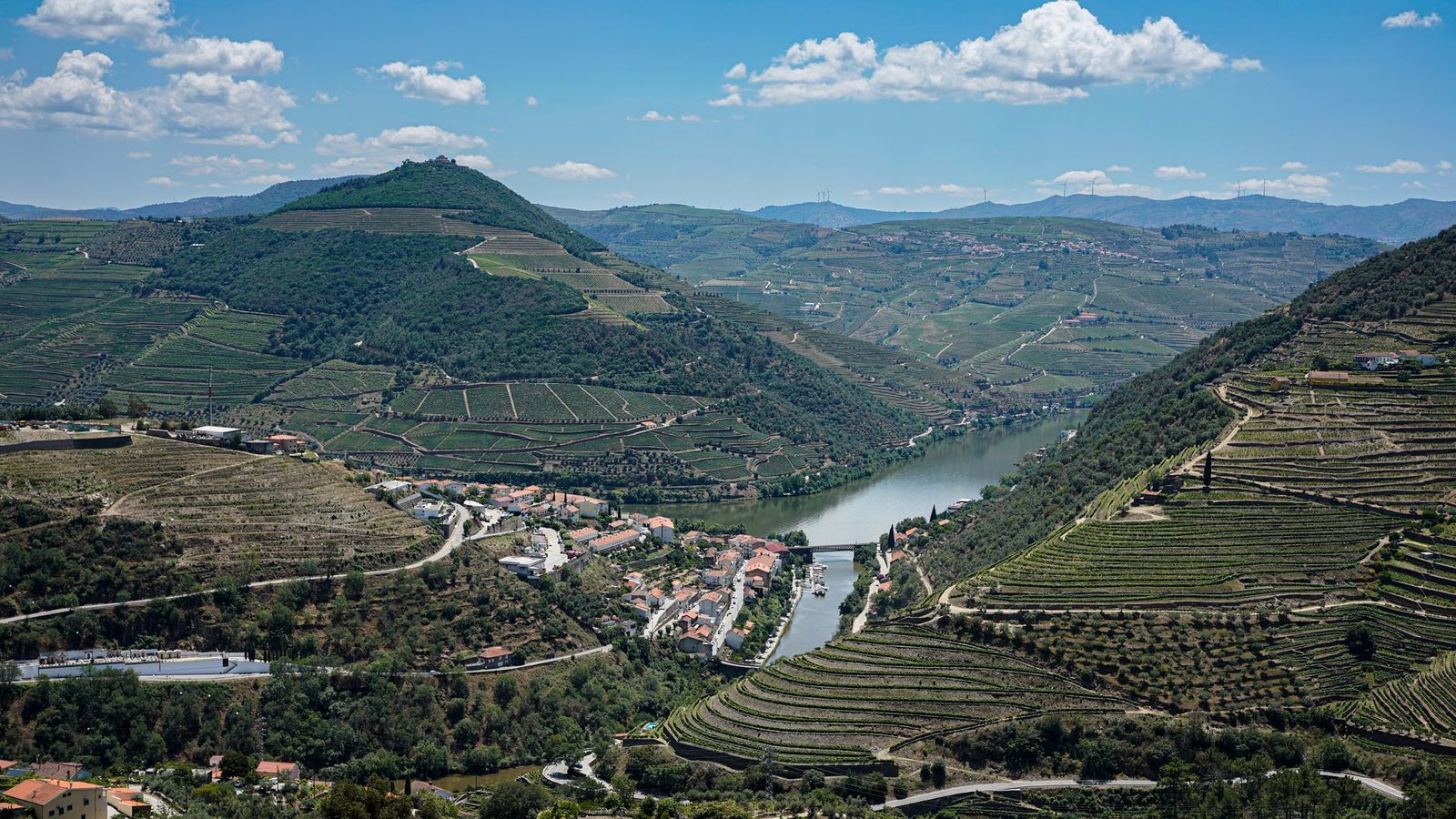
A Douro River cruise sails you through one of the world’s oldest demarcated wine regions — a UNESCO World Heritage landscape of impossibly steep terraced vineyards, schist villages, and centuries-old port wine estates. Most itineraries run 7–8 nights between Porto and the Spanish border, passing through five locks and stopping at Régua, Pinhão, and Barca d’Alva along the way.
- Why Cruise the Douro
- The Route: Porto to the Spanish Border
- Key Ports and What to Do at Each
- Visiting Quintas and Port Wine Estates
- What Life Onboard Looks Like
- Passing Through the Locks
- The Salamanca Extension
- Frequently Asked Questions
Why Cruise the Douro
The Douro Valley sits in northeastern Portugal, roughly 100 kilometers inland from Porto. What makes it unlike almost any other river cruise destination in Europe is what frames the water on both sides: steep hillsides of silver schist rock, hand-terraced over two millennia into vineyards that produce port wine and some of Portugal’s finest table wines.
That landscape earned UNESCO World Heritage status in 2001 — not for a single monument, but for the entire cultural landscape the people of this region have shaped since Roman times. From the deck of a ship, the effect is extraordinary. The terraces seem to stack straight up from the waterline, interrupted by the whitewashed walls of a quinta or the tower of a hilltop village. The river winds and narrows. Villages appear and disappear around each bend.
The cruise format suits the Douro well. The valley’s roads are narrow and winding — traveling it by river is genuinely the better way to see it. You move at a pace that matches the landscape: unhurried, stopping where the wine is good and the views are worth it.
The Route: Porto to the Spanish Border
Most full Douro itineraries cover around 200 kilometers of river, sailing from Porto in the west to Barca d’Alva near the Spanish border in the east (or the reverse). The Douro is not a free-flowing river for most of its navigable length — a series of five dams and their associated locks controls the water level, and passing through them is part of the experience.
From Porto, ships typically spend a day or two in the city before heading upstream. The landscape changes quickly east of Porto — within an hour of leaving the coast behind, you’re moving through increasingly dramatic valley terrain. By the time you reach Régua, roughly 100 kilometers upstream, the scenery has shifted completely: terraced vineyards rise on every slope, the villages are smaller, and the silence between each stop feels deliberate.
Continuing east from Régua, the river narrows further and the terraces grow steeper. Pinhão, about 25 kilometers beyond Régua, sits at the heart of the finest port wine country. From there, ships continue to Pocinho and on to Barca d’Alva, the last Portuguese town before the river crosses into Spain.
Key Ports and What to Do at Each
Porto
Porto is where most Douro cruises begin. The city sits at the mouth of the river, where it meets the Atlantic, and its historic Ribeira district — UNESCO-listed in its own right — is a warren of tile-fronted buildings, waterfront restaurants, and the wooden rabelo boats that once ferried port wine barrels downriver from the valley. Porto’s Vila Nova de Gaia neighborhood, directly across the river, is home to the port wine lodges of virtually every major house: Graham’s, Taylor’s, Sandeman, and dozens more, all open for cellar tours and tastings. Allow at least two full days here before the cruise begins.
Régua (Peso da Régua)
Régua is the largest town in the Douro wine country and serves as the administrative capital of the wine region. The train station here is worth visiting for its own sake — the platform walls are lined with azulejo tile panels depicting traditional harvest scenes. Régua is also where the Douro Wine Museum sits, offering a well-curated overview of the valley’s winemaking history. Day cruises between Régua and Pinhão are popular for travelers not on a full itinerary.
Pinhão
If Régua is the capital of the wine country, Pinhão is its heart. This small town sits at the confluence of the Douro and Pinhão rivers, surrounded on all sides by the most photographed vineyards in Portugal. The station here also features azulejo panels, though smaller in scale. This is the base for visits to some of the valley’s most celebrated quintas, including Quinta da Roêda, Quinta do Noval, and Quinta Nova. Wine tastings in Pinhão tend to be more intimate and producer-focused than those in Porto’s lodges.
Barca d’Alva
Barca d’Alva is a quiet village close to the Spanish border, often used as the turnaround point for full itineraries. The surrounding landscape — part of the Douro Internacional Natural Park — is wilder and more austere than the vineyards downriver. From here, excursions typically run to Castelo Rodrigo, a 12th-century walled hilltop village with panoramic views over both Portugal and Spain, medieval lanes, a Manueline church, and local producers selling almonds, honey, and olive oil.
Visiting Quintas and Port Wine Estates
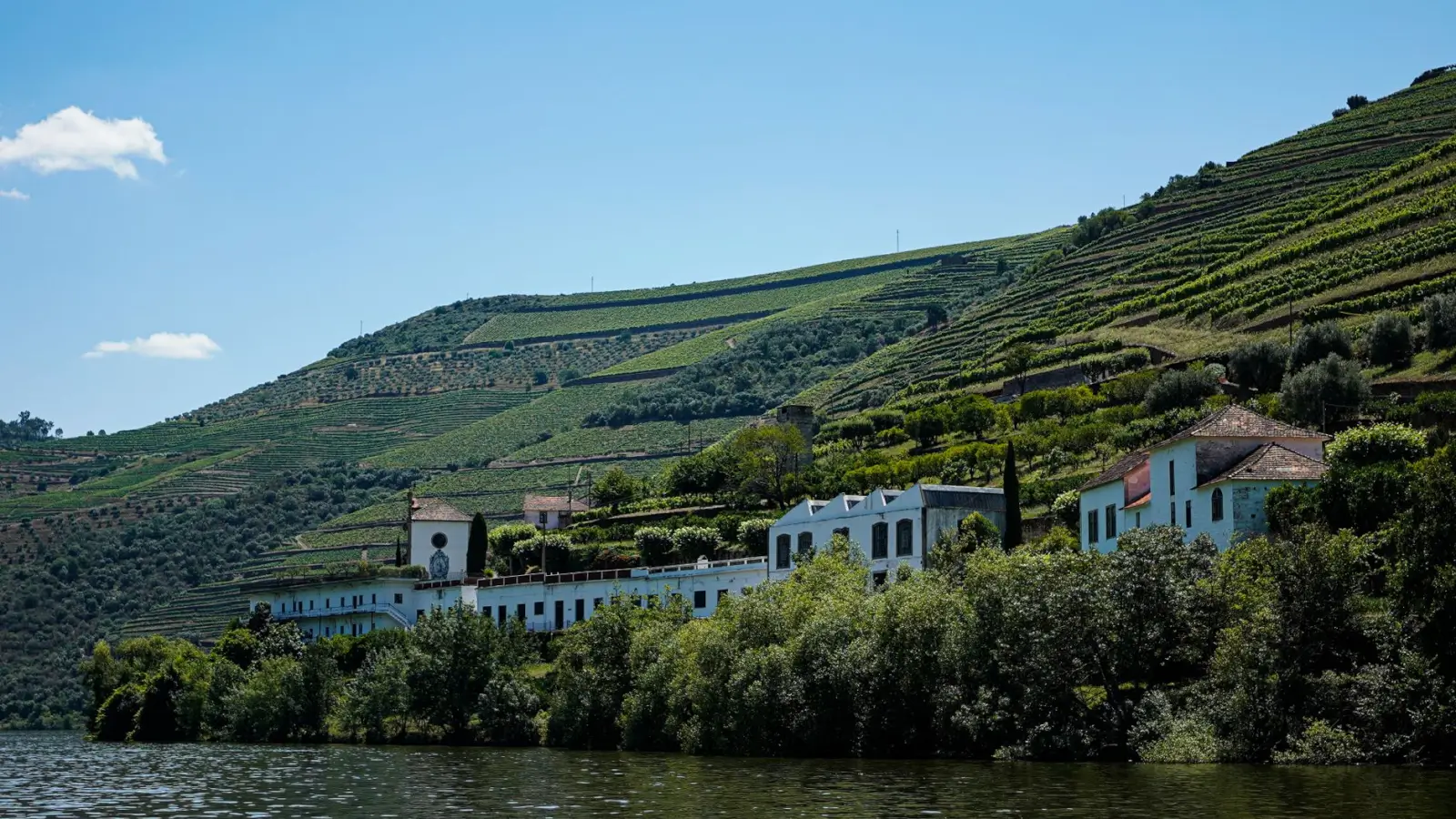
A quinta (plural: quintas) is a Portuguese wine estate, and visiting one is the defining shore excursion on a Douro cruise. These are working farms — not museums — and most have been producing wine for generations. The experience of walking through their stone-walled cellars, seeing the traditional granite lagares where grapes were once foot-trodden, and tasting port against a backdrop of terraced vineyards is difficult to replicate anywhere else in the world.
Several quintas stand out along the standard cruise route:
Quinta Nova sits on the north bank above Pinhão and was the first Douro estate to open formally to wine tourism. Its panoramic terrace views over the river are among the best in the valley, and it operates a small hotel for those wanting to stay over.
Quinta da Roêda, owned by Croft, occupies an extensive north-bank terrace just above Pinhão. The estate is known for its structured ports and offers tastings that focus on the relationship between the schist terroir and the resulting wine character.
Quinta do Noval is one of the most storied addresses in the valley, known internationally for its Nacional vintage port — produced from a small plot of pre-phylloxera ungrafted vines that survived the 19th-century vine disease that decimated European viticulture. The vineyard is among the most photographed in the Douro.
Most cruise excursions include at least one quinta visit with a guided tasting. If you have free time, the area around Pinhão rewards independent exploration — many smaller quintas welcome visitors without advance booking during the main season.
What Life Onboard Looks Like
Douro river ships are intimate by design — vessels on this route typically carry between 80 and 130 passengers, constrained by the river’s width and the lock chambers. Days follow a gentle rhythm: breakfast on board, a morning excursion to a town or winery, back for lunch, sometimes an afternoon second excursion or a leisurely stretch of navigation, then dinner as the ship moors for the evening.
The sun deck is central to the Douro cruise experience. Because the scenery is the point, most passengers spend significant time outdoors as the ship moves. The valley’s interior climate is warm and dry in the main season — temperatures regularly reach the mid-30s Celsius in July and August, and the schist terraces reflect additional heat. Mornings and evenings are considerably cooler.
Wine features heavily throughout. Beyond scheduled tastings at quintas and wineries, most ships serve Douro wines at dinner and run informal onboard sessions covering the basics of port production, the regional wine classifications (DOC Douro for table wines, Port DOC for fortified), and the grape varieties — Touriga Nacional, Touriga Franca, Tinta Roriz — that dominate the valley’s vineyards.
Passing Through the Locks
The Douro’s five lock-and-dam systems are engineering spectacles in their own right. Ships queue, enter the lock chamber, and the water level adjusts — sometimes by more than 30 meters — before the gates open on the other side. The Carrapatelo lock near Régua has one of the deepest chambers in Europe, rising and falling by approximately 35 meters. Passengers typically gather on deck to watch the process, and ships that operate at night will often time approaches to major locks for daylight hours specifically because of the viewing value.
The Salamanca Extension
Many Douro itineraries include an overland excursion from Barca d’Alva into Spain to visit Salamanca — a university city built almost entirely from golden sandstone, with a cathedral complex and Plaza Mayor that rank among the finest examples of Spanish baroque architecture. The drive takes around an hour each way through the Spanish meseta. Salamanca’s old town is also UNESCO-listed, making a single cruise itinerary capable of covering three separate World Heritage sites: Porto’s historic center, the Douro Valley, and Salamanca.
Frequently Asked Questions
How long is a typical Douro River cruise?
Most full Douro itineraries run 7 or 8 nights, covering the route from Porto to Barca d’Alva and back (or ending in Porto after a one-way journey). Shorter 3–4 night options focusing on the central wine valley also exist, as do day cruises between Régua and Pinhão for travelers based on land.
Do I need to know anything about wine to enjoy a Douro cruise?
No background knowledge is needed. Quinta visits and onboard sessions are designed for curious travelers rather than wine specialists. The tastings tend to be conversational and context-driven — guides explain what you’re drinking and why this particular valley produces it, rather than expecting you to arrive with vocabulary. The scenery and the sense of place are reason enough to come, wine knowledge or not.
What is the difference between port wine and Douro table wine?
Both are produced in the same demarcated valley from the same grape varieties. Port wine is fortified — grape spirit is added during fermentation to stop the process, leaving residual sugar and raising the alcohol level. Douro DOC wines are unfortified table wines (dry reds, whites, and rosés) that have grown significantly in quality and international reputation over the past two decades. Most quinta visits include both in their tastings.
Is the Douro cruise suitable for travelers with limited mobility?
The ships themselves are generally accessible. Shore excursions vary — Pinhão and Régua are relatively flat near the waterfront, while Castelo Rodrigo involves steep cobbled lanes that can be difficult. Most operators provide alternatives or modified versions of excursions for guests who prefer to avoid uneven terrain. It is worth asking specifically about accessibility when booking.
Can I combine a Douro cruise with time in Lisbon?
Yes — a common itinerary combines a Douro cruise with time in both Porto and Lisbon. Some operators run routes that start in Porto and end in Lisbon (or vice versa) by combining river travel with a coach or train connection. Porto and Lisbon are around three hours apart by high-speed train, making them easy to combine at the beginning or end of a cruise.