
Some links in this article may earn ToursZoom a commission at no extra cost to you — see our affiliate disclosure.
Last updated: April 2026
For a first Rhone River cruise, the classic 8-day Lyon to Arles (or reverse) itinerary covers the route’s essential stops — Lyon, Vienne, Tain-l’Hermitage, Viviers, Avignon, and Arles — at a pace that allows genuine exploration without feeling rushed. Departures from April through June and in September and October offer the best combination of comfortable weather, good wine experiences, and manageable crowds.
- Why the Rhone Works Well for First-Timers
- What a First-Timer’s Itinerary Looks Like
- What Is Typically Included
- How River Cruising Differs from Ocean Cruising
- Highlights Not to Miss
- Practical Tips for First-Timers
- Frequently Asked Questions
Why the Rhone Works Well for First-Timers
The Rhone is one of the most forgiving river cruise destinations in Europe for people doing this for the first time. The route is compact and logical — you are always moving between places with clear identities — and the combination of food, wine, history, and landscape means that whatever draws you to France, there is something here for you.
The ports are varied enough to prevent any sense of repetition. Lyon is a serious city with world-class food and a complex history. Vienne is a compact Roman town. Tain-l’Hermitage is all about wine. Viviers is a medieval village. Avignon is grand and papal. Arles is Roman, artistic, and opens onto the wild Camargue delta. This variety means that even travelers who are not dedicated wine enthusiasts or history lovers find the route engaging throughout.
France is also a practical destination for English-speaking first-timers. Infrastructure is good, menus and museum materials are usually available in English, and the general level of visitor experience at the key ports is high.
What a First-Timer’s Itinerary Looks Like
A standard 8-day itinerary runs roughly as follows (here shown southbound, from north to south, though many cruises run the reverse):
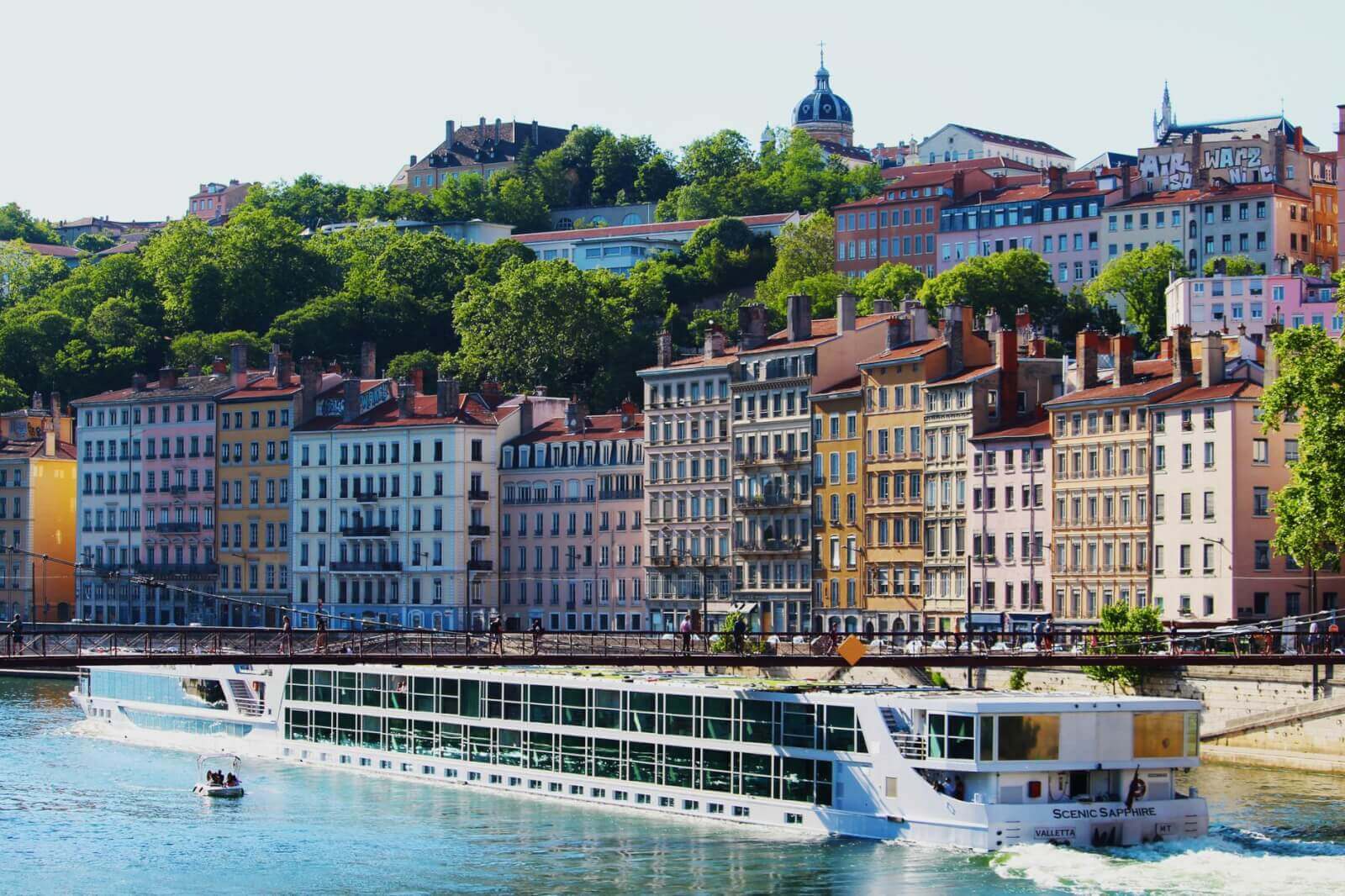
Day 1 — Embarkation in Chalon-sur-Saone or Lyon. Most passengers arrive a day early and spend the night in the embarkation city before boarding. Lyon is the more rewarding arrival city — an evening in Vieux-Lyon or dinner at a bouchon sets the tone for the whole trip.
Day 2 — Lyon. The ship is docked and the day is spent in the city. Vieux-Lyon, the Roman theater on the Fourviere hill, and the Les Halles de Lyon market are the anchor stops. The Musee des Confluences at the point where the two rivers meet is worth an hour for anyone interested in science or natural history.
Day 3 — Vienne. The ship moves south and calls at Vienne. The Roman temple, the 5th-century cathedral, and the hillside theater are all within easy walking distance of the dock. Optional excursions visit the Cote-Rotie vineyards above the town.
Day 4 — Tain-l’Hermitage and Tournon. The two towns sit on opposite banks of the Rhone. Tain is the wine center — a walk up the Hermitage hill with a tasting at the summit is one of the cruise’s best experiences. Tournon, across the bridge, has a chateau with views down the river. This is a day when the landscape becomes noticeably more dramatic.
Day 5 — Viviers. The ship typically arrives in the late afternoon or evening, leaving passengers time to walk the medieval village before dinner. Viviers is small but has a particular quiet charm that larger ports cannot offer. This is a slow day — often a sailing day in the morning — which first-timers usually appreciate as a chance to sit on deck and watch the Rhone gorges go past.
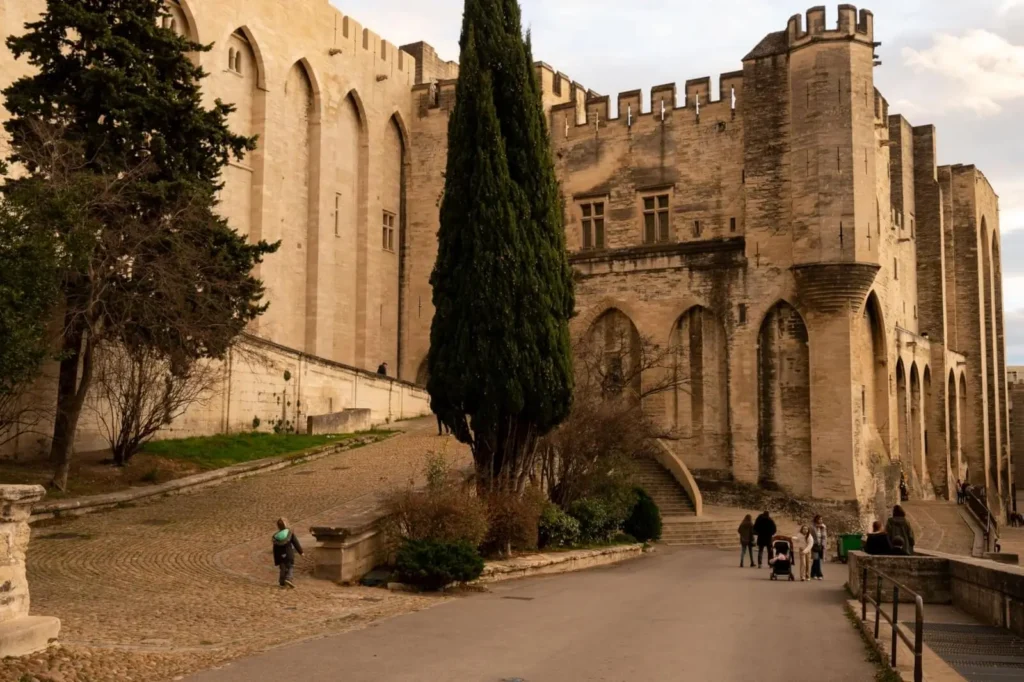
Day 6 — Avignon. A full day in Avignon. The Palace of the Popes, the Pont d’Avignon, and the old city walls make for a natural half-day walking tour. The afternoon might be spent at the Les Halles market, in a wine bar near the place de l’Horloge, or on an optional excursion to Chateauneuf-du-Pape.
Day 7 — Arles and surroundings. Arles requires at least a morning: the Roman amphitheater, the Foundation Van Gogh, and the old town are all concentrated in a walkable area. An afternoon excursion into the Camargue — by jeep, on horseback, or by bike — adds a completely different experience to the day. The Camargue’s salt marshes, flamingos, and wild white horses are unlike anything else on the cruise route.
Day 8 — Disembarkation in Arles or transfer to Marseille or Avignon. Most operators include a transfer to a nearby airport or train station. Marseille is roughly 90 minutes from Arles by road.
What Is Typically Included
Most Rhone river cruise packages include accommodation in a cabin with river views, all meals on board (breakfast, lunch, and dinner), basic wine and soft drinks with meals, one or two guided excursions at each port, onboard port talks and evening programming, and port taxes and docking fees.
What is generally not included: flights to and from France, travel insurance, alcoholic drinks beyond what is served with meals, premium wine tastings, optional excursions beyond the included program, gratuities, and personal spending ashore.
Excursions vary significantly by operator. Some include extensive wine tours and cooking experiences; others offer a standard walking tour and leave the rest to you. It is worth reading the excursion list carefully before booking, particularly if wine, cycling, or specific historical sites are priorities.
How River Cruising Differs from Ocean Cruising
First-timers who have only cruised on ocean ships sometimes arrive with expectations that do not quite fit. The differences are significant enough to mention directly.
River ships are much smaller — typically 100 to 160 passengers versus thousands on an ocean ship. There is no casino, no production show, and no formal dress code. Evenings on board are generally quiet: a port talk, dinner, perhaps a local musician or a wine presentation. The focus is entirely on the destinations.
Because the ship moves at night and docks in the morning, you wake up somewhere new each day without losing port time. The gangway goes down, and you walk off into the town. There is no tender process, no shuttle bus, and in most cases no significant distance between the dock and the main attractions.
Cabins are smaller than ocean ship cabins. Standard cabins on most Rhone river ships have a bed, a bathroom with shower, storage for two people’s luggage, and a window or sliding glass door. Upper-deck cabins are larger and have a full balcony in some cases. Luggage discipline matters — a medium-sized rollaboard and a day bag is the practical maximum for two people in a standard cabin.
Connectivity is variable. Many river ships offer Wi-Fi, but speeds can be inconsistent, particularly in rural sections between ports. Downloading offline maps, books, and podcasts before departure is a practical precaution.
Highlights Not to Miss
Lyon’s bouchon dinner. The traditional Lyonnais bistro — small, loud, unpretentious, with long tables and menus written on a chalkboard — is one of the most particular dining experiences in France. Book a table ashore on your Lyon evening rather than eating on the ship.
The Hermitage hill walk. The view from the top of the Hermitage hill above Tain-l’Hermitage — Syrah vines on one side, the Rhone curving away to the south, the Tournon chateau on the opposite bank — is one of the best on the whole route. The walk takes 30 to 40 minutes from the dock and the tasting at the summit rewards the effort.
Viviers at dusk. Most passengers visit the big ports with energy and purpose. Viviers, where the ship typically arrives in late afternoon, rewards a slower approach — a walk up to the cathedral, a glass of something local at a cafe on the square, and an early evening in a medieval village that feels genuinely undisturbed.
The Pont du Gard excursion from Avignon. The Roman aqueduct 20 kilometers west of Avignon is one of the most intact Roman structures in the world. Three tiers of arches, the tallest 49 meters high, span the Gardon River. It is an optional excursion from most Avignon stops and is worth the time even for travelers with limited interest in Roman history — it is simply impressive at human scale.
The Camargue from Arles. The flat, strange landscape of the Camargue — one of Europe’s most important wetlands — is unlike anything else on the cruise route. A morning jeep safari sees flamingos, wild horses, and gardians working cattle in a landscape that feels genuinely remote even though it is less than an hour from the city.
Practical Tips for First-Timers
Book excursions before you depart. Popular excursions — the Chateauneuf-du-Pape tasting, the Camargue safari, the Beaune wine tour — fill quickly. Most operators allow pre-booking through their website. If you leave it to the ship, the most appealing options may already be full.
Bring a windproof layer. The Mistral wind funnels down the Rhone valley from the Alps and can arrive without warning at any time of year. A light windproof jacket is useful on deck and in the ports of the middle and southern Rhone, even in spring and early summer.
Wear comfortable walking shoes from day one. Cobblestones, Roman ruins, and hillside vineyards are not forgiving on smart shoes. Most first-timers who have been on the cruise report that they walked significantly more than expected — typically 5 to 10 kilometers on active port days.
Arrive a day early at the embarkation city. Delays happen. Arriving the day before embarkation avoids the stress of a late arrival, and it gives you an evening in Lyon or Chalon-sur-Saone that would otherwise be missed. Lyon in particular deserves at least one evening before the cruise begins.
Try the onboard wine presentations. Many cruise itineraries include informal evening sessions with a wine expert covering the appellations you are sailing through. For first-timers who have not studied French wine, these sessions save significant time and confusion when you are tasting ashore the following day.
Frequently Asked Questions
Is a Rhone River cruise good for solo travelers?
Yes. The communal dining format means solo travelers share tables with other passengers and typically develop a social rhythm within the first two days. Most operators offer single cabins or charge a single supplement on standard cabins — it is worth asking about solo-specific pricing before booking. The organized excursions make solo port days straightforward without the logistical planning required on an independent trip.
What fitness level is needed for a Rhone River cruise?
A moderate level of fitness is helpful. Most port excursions involve 1 to 4 kilometers of walking on uneven ground. Specific highlights — the Hermitage hill walk, the Fourviere climb in Lyon, the Alpilles in Les Baux — require more effort. The ship itself is fully accessible, and most cruise programs include lower-intensity alternatives at each port for travelers who prefer a gentler pace. The key is knowing which excursions suit your physical comfort before you arrive.
How much should I budget for spending ashore?
With meals included on the ship, daily spending ashore covers wine tastings, entrance fees, cafe stops, and shopping. How much you spend depends heavily on how many optional excursions you join and how much wine you buy in Chateauneuf-du-Pape or Beaune. Optional shore excursions are priced separately from the cruise fare — ask your operator for a full list of included and optional excursions before booking.
Can I handle the food if I am vegetarian or have dietary requirements?
French cuisine is meat-heavy by tradition, but good cruise operators will accommodate vegetarian, vegan, and allergy requirements if notified in advance. Communicate your dietary needs when booking, confirm them again before departure, and remind the dining room on the first day. In port, vegetarian options are less consistent in smaller villages — Viviers and Tournon have limited restaurant choices — but Avignon and Lyon have no shortage of good vegetarian options.
Is it worth extending the trip before or after the cruise?
Yes, if time allows. Lyon rewards two to three days before or after the cruise — there is more to eat and explore than a single ship day covers. Avignon or Arles at the southern end works well as a base for a few days in Provence, including the Luberon villages, the Camargue, and the coastal towns near Marseille. Booking a TGV from Lyon to Paris at the end of the trip is also a popular choice — two hours by high-speed train, and the connection is seamless from Part-Dieu station.