
Some links in this article may earn ToursZoom a commission at no extra cost to you — see our affiliate disclosure.
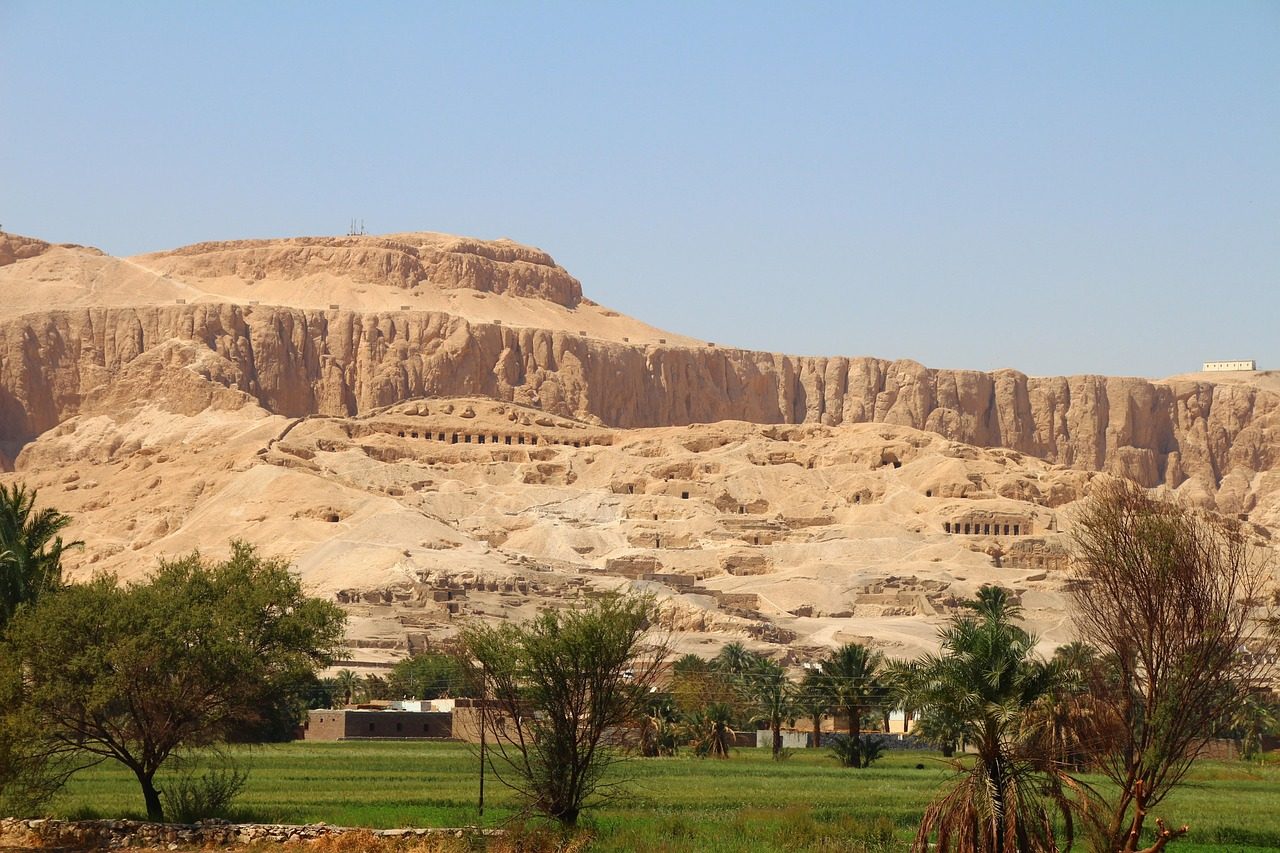
The sun rises over the Nile at 5:47 a.m. You’re still half-asleep on the upper deck, wrapped in a blanket, when the Valley of the Kings materialises from the sand-colored cliffs on the west bank, just a dark seam of rock catching the first pale light. No tour buses. No one else awake. Just the slow pull of the current and the smell of damp reeds.
That’s the moment most Egypt Nile cruise travelers remember more clearly than any temple interior. Not the hieroglyphs, though the detail carved into them will stop you cold, but the feeling of time bending. Of being somewhere genuinely old.
This guide tells you what an Egypt Nile cruise is actually like, how to choose the right boat, when to go, and what you’ll see along the classic Luxor-to-Aswan route.
What a Nile Cruise Actually Feels Like
The Nile between Luxor and Aswan is narrow enough that you can wave to farmers on the bank and wide enough to feel completely cut off from modern life. For most of the 200-kilometer route, the riverbank is green farmland, water buffalo knee-deep in irrigation channels, and children running alongside the slow boats. Then, without warning, a temple appears. Columns the height of a four-storey building rising from the reeds, placed there by a civilisation that no longer exists.
The pace is the thing people don’t expect. Even on larger cruise ships, the itinerary moves slowly. You dock, walk to a site, spend an hour or two with a guide who knows the temple’s mythology the way most people know their own street, then return to the boat. Lunch is on the water. You read. You watch the light change on the cliffs. In the afternoon there is another temple.
“Most travelers tell us the Nile itself surprised them more than the monuments. They came for the pharaohs. They left talking about the light at dusk on the water.”
— Hassan, licensed Egyptologist guide, 14 years in Luxor
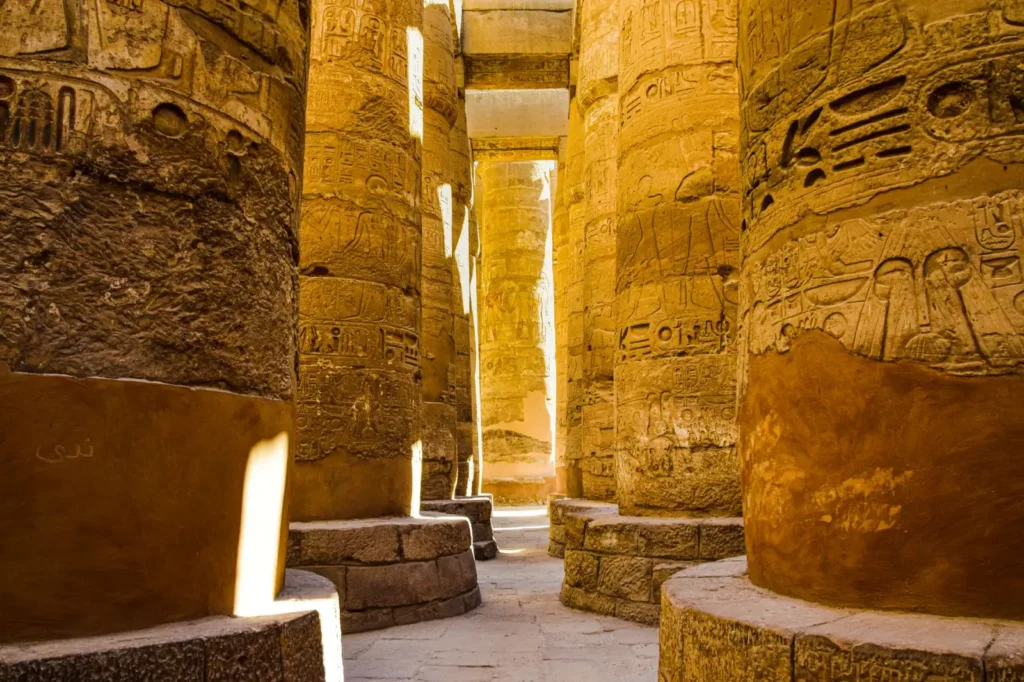
One honest note: the Karnak Temple Complex in Luxor attracts large tour groups, especially from 9am to 11am. Go early, before breakfast if you can convince your guide, and you’ll have sections of it mostly to yourself.
The Route: Luxor to Aswan (or Back)
The classic Egypt Nile cruise runs between Luxor and Aswan over four to seven days. Almost every day brings a new site. The itinerary below is typical, but your guide will shape it around group pace, the season, and what’s currently open for access.
Luxor (Days 1 to 2). The East Bank holds Karnak Temple Complex, one of the largest religious buildings ever constructed: 200 acres of columns, obelisks, and sacred lakes built over 2,000 years. The West Bank means the Valley of the Kings, 63 royal tombs cut into the limestone cliffs, including Tutankhamun’s, which still smells faintly of the resins used to seal it 3,300 years ago. That smell is real. It hits you as you go deeper into the passage.
Esna and Edfu (Days 3 to 4). The Temple of Horus at Edfu is the best-preserved temple in Egypt. Walking in feels like the priests just left: the inner sanctum is dark, the walls dense with ritual text, and a granite statue of Horus, falcon-headed and life-sized, watches the entrance. Worth two hours minimum. Don’t rush it.
Kom Ombo (Day 5). This temple is unusual: built for two gods simultaneously, split symmetrically down the middle, each half a mirror of the other. The Nile-facing terrace at sunset, with the river below and the sound of water against the stone foundations, is one of the quieter moments of the whole journey.
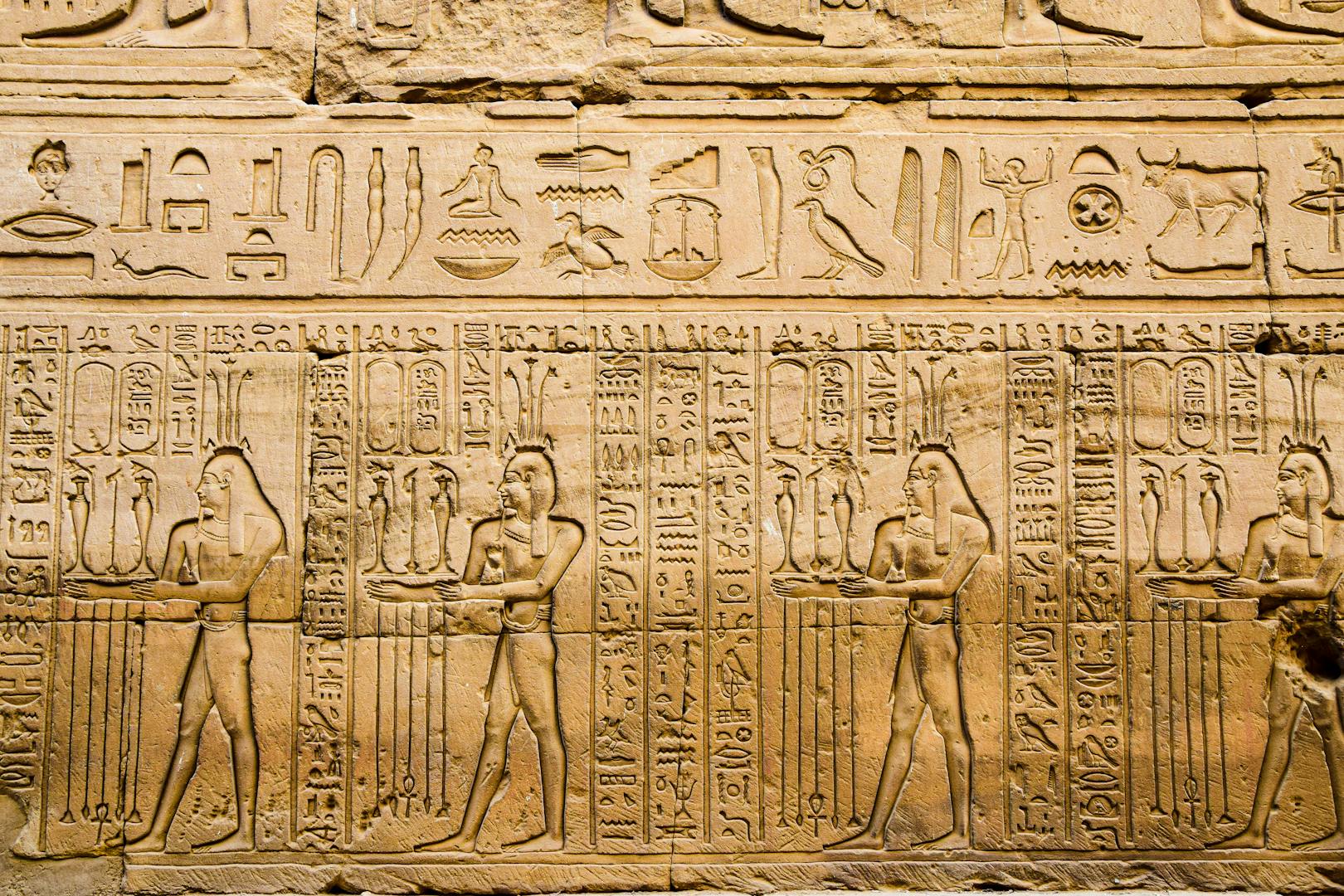
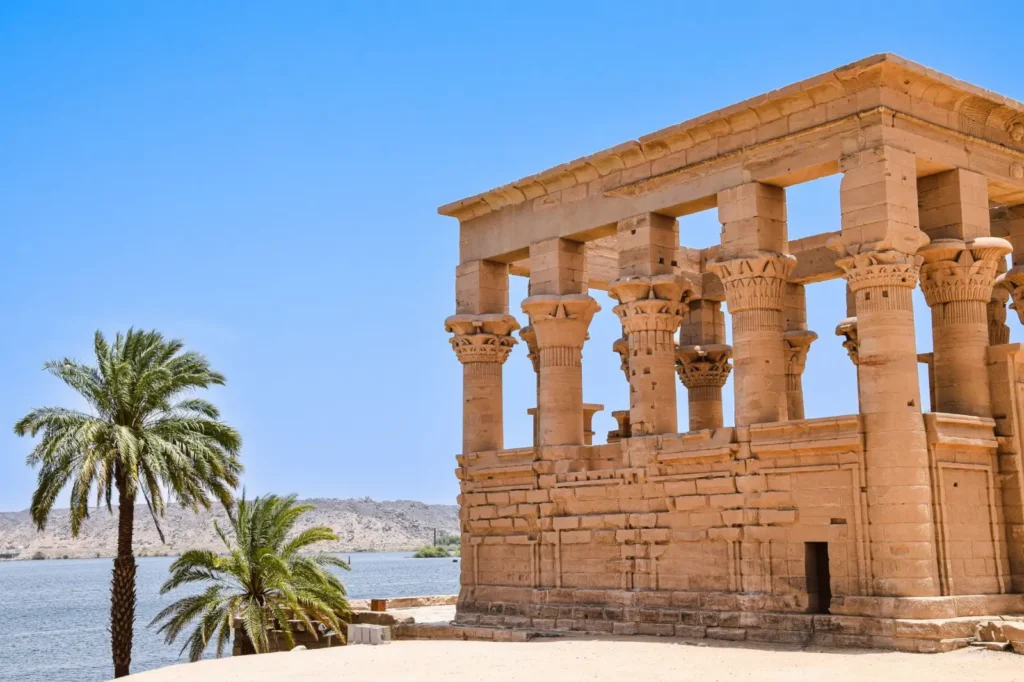
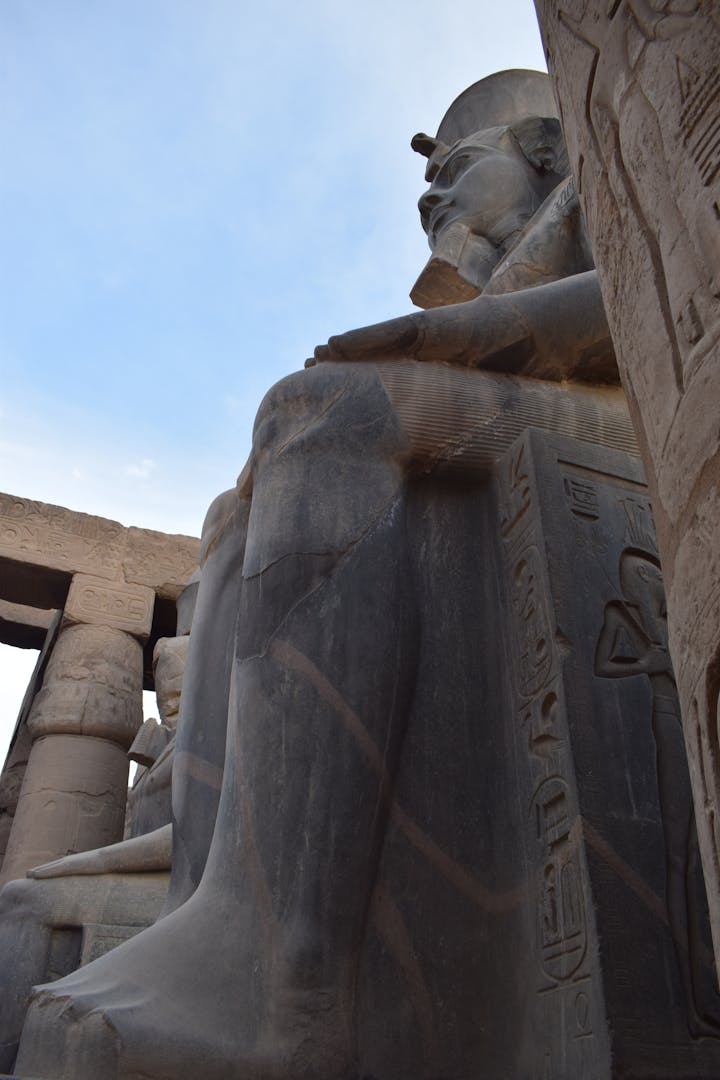
Aswan (Days 6 to 7). The tour ends here, or many travelers extend it. Aswan is warmer, slower, more Nubian in character. The Philae Temple, moved in its entirety to a higher island when the High Dam was built, rises from a lake that didn’t exist 60 years ago. If time allows, an early-morning flight extension to Abu Simbel to see Ramesses II’s colossal statues is worth setting the alarm for.
Dahabiya or Cruise Ship? How to Choose
Two main options. They suit very different travelers.
Large cruise ships (30 to 100 passengers) run a fixed schedule, cover the Luxor-Aswan route efficiently, and include meals, guides, and temple entry in most packages. Good if you want structure, company at dinner, and a reliable itinerary without managing logistics yourself.
Dahabiyas are traditional wooden sailing boats carrying 8 to 16 passengers. Slower, quieter, able to moor at spots large ships can’t reach. A dahabiya trip feels more like a private expedition: meals on deck, wind-dependent, genuinely unhurried. They cost more per person. For couples or small groups who want to feel like they’re on the river rather than a tour product, the cost difference is worth it.
Here’s the honest version: if you want guaranteed comfort, minimal planning, and a social atmosphere, go with a cruise ship. If you want to spend three days on the Nile with eight people you might actually remember, go dahabiya. Neither is wrong.
Local operators run both types. Before booking, check guide credentials, boat safety standards, and independent traveler feedback.
Best Time for an Egypt Nile Cruise
October to April is when most people go. Temperatures between Luxor and Aswan sit at 20 to 30°C, the morning light is something else entirely, and the temples aren’t overwhelmed with visitors.
November and February are the sweet spots. Cool, reliable, no school-holiday surges.
May to September is possible but temperatures regularly exceed 42°C in Upper Egypt. The Nile is calm in summer, but walking around exposed archaeological sites in that heat is genuinely taxing. Most experienced travelers skip it. If you’re set on going, book early mornings only and plan to rest through the middle of the day.
Ramadan timing shifts by year. Your operator will know whether your travel dates overlap and can flag how it affects logistics.
What’s Included on an Egypt Nile Cruise
Here’s what Egypt Nile cruise operators typically include:
- Airport transfers (Luxor or Aswan arrival and departure)
- Full-board accommodation on board, all meals, every day
- Licensed Egyptologist guide throughout the route
- Temple and site entry fees for the itinerary stops
- English-language commentary at every site
Not included: international flights, travel insurance, personal tips, and optional extensions. Abu Simbel flight, hot air balloon over Luxor, camel rides. Your operator lays all of this out before you pay anything, so you’re not discovering costs on arrival.
Deposit and balance terms are set by each operator and confirmed with you before you book.
Frequently Asked Questions
How long is a typical Egypt Nile cruise?
Most run 4 to 7 days between Luxor and Aswan. Four days covers the main sites quickly; seven lets you slow down and sit with each place. Most travelers find 5 to 6 days the right balance.
Is a Nile cruise good for first-time visitors to Egypt?
It’s one of the best entry points. The route is self-contained, logistics are handled, and the Luxor-Aswan stretch holds more ancient monuments per kilometer than anywhere else. Most first-timers add 2 to 3 days in Cairo.
What’s the difference between a Nile cruise and a dahabiya?
A Nile cruise is a larger motorised ship (30 to 100 passengers) on a fixed schedule. A dahabiya is a traditional wooden sailing boat for 8 to 16 people: slower, quieter, more personal. The right choice depends on what you want from the trip.
Is a Nile cruise safe?
The Luxor-Aswan corridor has operated continuous international tourism for decades and is considered stable. Reputable Nile operators are licensed by Egypt’s Ministry of Tourism and carry the required vessel safety certifications — confirm both before booking. Check your government’s current travel advisory before booking.
What should I pack for a Nile cruise?
Lightweight, modest clothing (shoulders and knees covered for temples), high-SPF sunscreen, a wide-brimmed hat, comfortable walking shoes, and a headlamp for tomb interiors. October to February, bring a light layer for evenings on the water.
Final Thoughts
There is no other trip quite like an Egypt Nile cruise. The temples are remarkable, not because they’re old, but because they’re still standing, still readable, still visited by people trying to understand where all of this came from. The Nile does something to that. It slows everything down. It gives you water and sky and the sound of the current, and then it gives you Karnak.